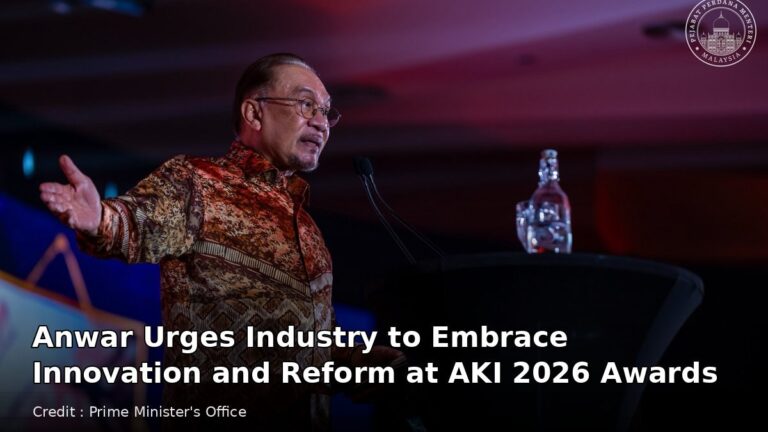
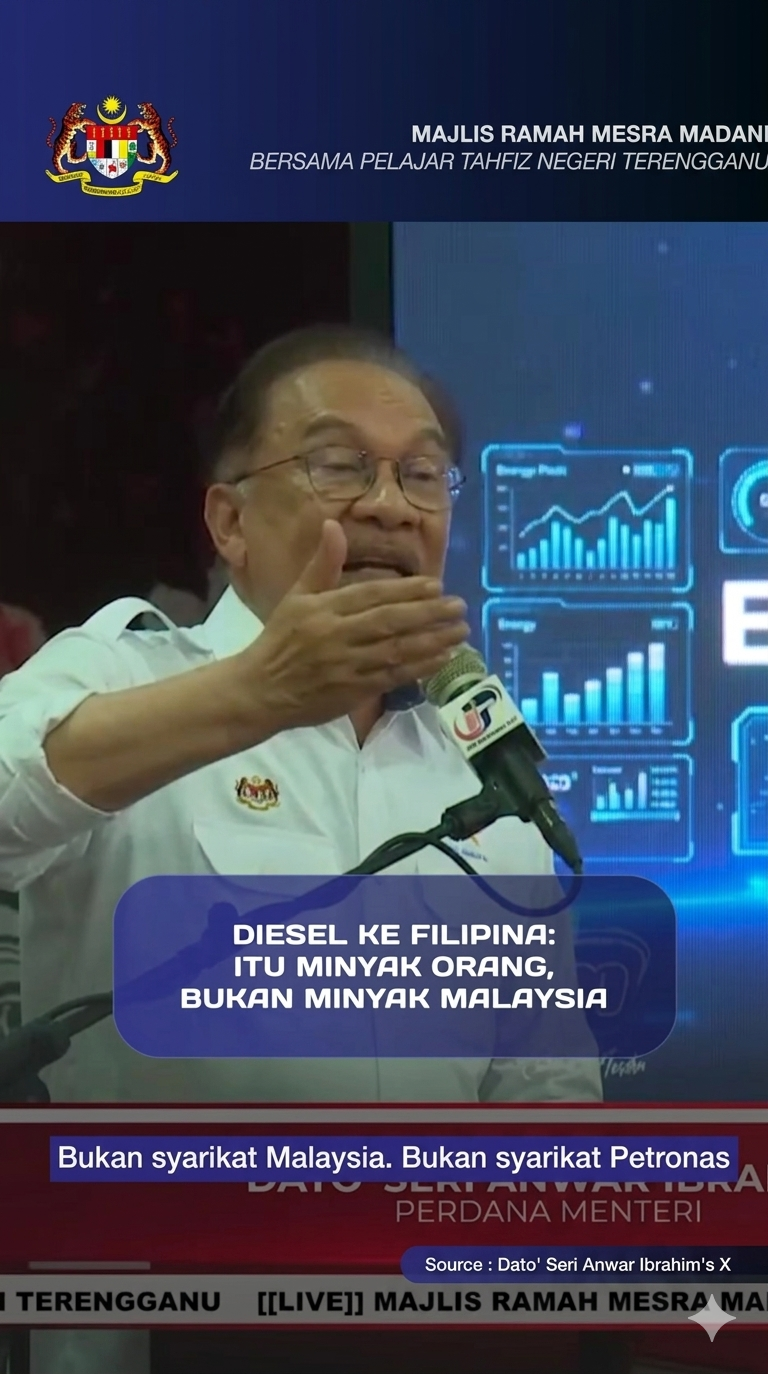
KUALA TERENGGANU April 13, 2026 – Prime Minister Dato’ Seri Anwar Ibrahim today dismissed recent allegations that Malaysia is supplying diesel to the Philippines, describing them as baseless slander spread by irresponsible parties.
Speaking at the Majlis Ramah Mesra Madani event with Terengganu state tahfiz students, Anwar clarified that the diesel in question does not originate from Malaysia, is not linked to national oil company Petronas, and was not authorised by the Malaysian government.
“It is not Malaysian oil, it does not involve Petronas, and it is not a government decision to supply diesel. This is purely the business of a foreign company, Vitol,” he said in a video statement posted on his official X account.
Anwar urged Malaysians to stop engaging with the controversy and instead focus on national development amid current economic challenges.
“Stop the slander and concentrate efforts on developing the country in these challenging economic times,” he added, ending with the hashtags #MalaysiaMADANI and #YakinMADANI.
The remarks come after Philippine media and the Department of Energy (DOE) reported receiving approximately 329,000 barrels (around 52 million litres) of diesel described as “from Malaysia” to help stabilise local fuel supplies. The disclosure triggered public backlash in Malaysia, where domestic diesel prices remain a sensitive issue and critics questioned whether subsidised or local resources were being diverted.
Petronas has previously denied any involvement in the transaction. Industry sources indicate the shipment was handled by international oil trader Vitol, which operates facilities in Pengerang, Johor, under private commercial arrangements for transit, storage, and trading — not as a direct Malaysian government or Petronas export.
Anwar’s statement echoes earlier official clarifications that no Malaysian state resources were used in the deal.
The Prime Minister’s office has not issued further comments, but the address is seen as an attempt to quell growing online speculation and political criticism.
About The Author