
By: Professor Dato Dr Ahmad Ibrahim
In the bustling coffee shops and heated social media threads of Malaysia, a disturbing trend has taken root. It is the habit of certain politicians and their followers to dismiss a leader’s capability by pulling out a dusty transcript and pointing at the major written on it. “He only has a degree in Malay studies,” they sneer. “She isn’t a Harvard lawyer.”
This mistaken judgement of the type of degree, as if learning freezes at graduation, is not just naive—it is dangerously anti-intellectual. It betrays a fundamental misunderstanding of what education actually is, and what leadership truly requires.
Let us be clear: learning never stops at the university gates. It continues in boardrooms, on factory floors, in the quiet hours of reading, and yes, on the infinite shelves of the internet. A degree is merely a receipt—proof that you paid for a ticket to a four-year-long conversation. It is not, and never was, a guarantee of wisdom, curiosity, or moral compass.
We have all seen the counterexample. The “high-flier” with a law degree from a prestigious London college who speaks eloquently about parliamentary procedure but loots the treasury with both hands. The engineering graduate who can calculate load-bearing walls but cannot bear the load of public trust. A credential is a data point, not a destiny. To judge a Prime Minister’s fitness by his undergraduate major is like judging a chef’s ability by his kindergarten finger painting.
The truth is that the internet has democratized genius. Today, a teenager in Penang can learn quantum physics from an MIT OpenCourseWare lecture. A retiree in Johor can master Stoic philosophy via a podcast. A self-taught programmer can build an app that serves millions. In this age, knowledge is no longer locked behind ivy-covered walls. It is available to anyone with the humility to ask, “What don’t I know?”
Therefore, the relevant question about a leader is not, “What did they study in 1970?” but rather, “What have they learned this week?”
Critics of the Prime Minister’s degree in Malay studies forget that Malay studies is, at its core, the study of culture, language, history, and societal nuance. In a multi-ethnic nation like Malaysia, understanding the texture of the majority culture is not a trivial pursuit—it is a strategic asset. More importantly, what matters is whether that leader has spent the decades since graduation broadening his horizons. Has he read about supply chain logistics during the pandemic? Has he studied climate science? Does he understand digital finance? Has he had the intellectual humility to unlearn old biases and relearn new realities?
The cult of the “elite degree” is a convenient shortcut for lazy minds. It allows critics to avoid the hard work of evaluating actual performance. Instead of analyzing GDP growth, inflation management, foreign policy wins, or the integrity of anti-corruption efforts, they simply wave a diploma in the air like a magic wand. “See? This one studied law, so he’s good. That one studied local studies, so he’s bad.” It is a reductive, classist, and ultimately useless metric.
If we are to demand anything from our leaders, let it be this: evidence of lifelong learning. Do they change their minds when presented with new facts? Do they surround themselves with experts, or only sycophants? Do they admit mistakes? These are the hallmarks of a modern leader, not the name of the university embossed on a piece of parchment.
So, to the politicians who question leaders based on old degrees, I say this: stop projecting your own intellectual stagnation. Just because you stopped learning the day you received your scroll, do not assume others did the same. In the age of the internet, the most dangerous person in the room is not the one with a “soft” degree. It is the one who thinks a hard degree means they have nothing left to learn.
Let us retire the degree delusion. Judge our leaders by their current knowledge, their adaptability, and their character—not by the footnote of their youth. Because in a world that changes daily, the only real qualification that matters is the relentless, humble, and lifelong pursuit of knowing better.
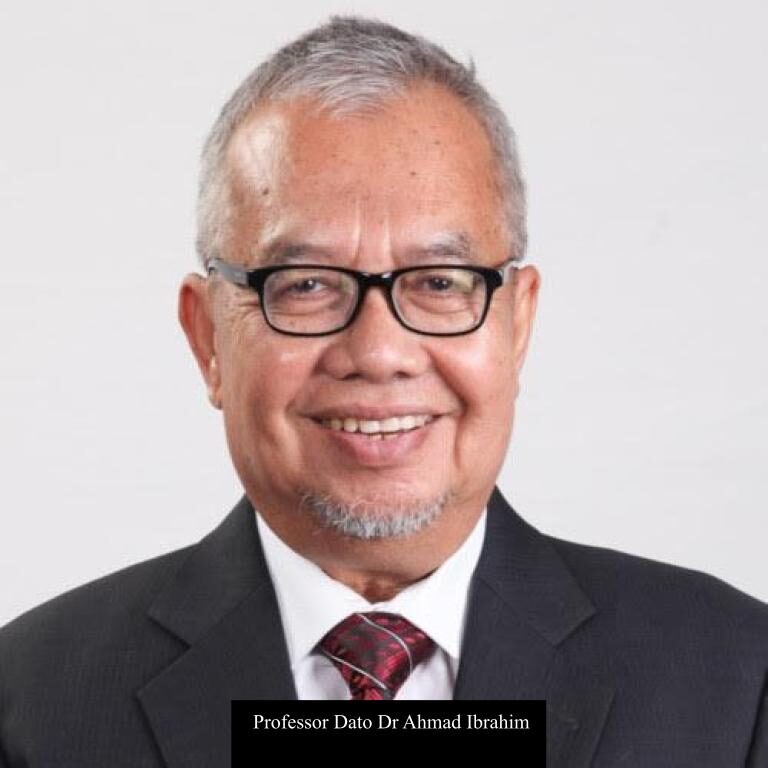
The author is affiliated with the Tan Sri Omar Centre for STI Policy Studies at UCSI University and is an Adjunct Professor at the Ungku Aziz Centre for Development Studies, Universiti Malaya.
About The Author