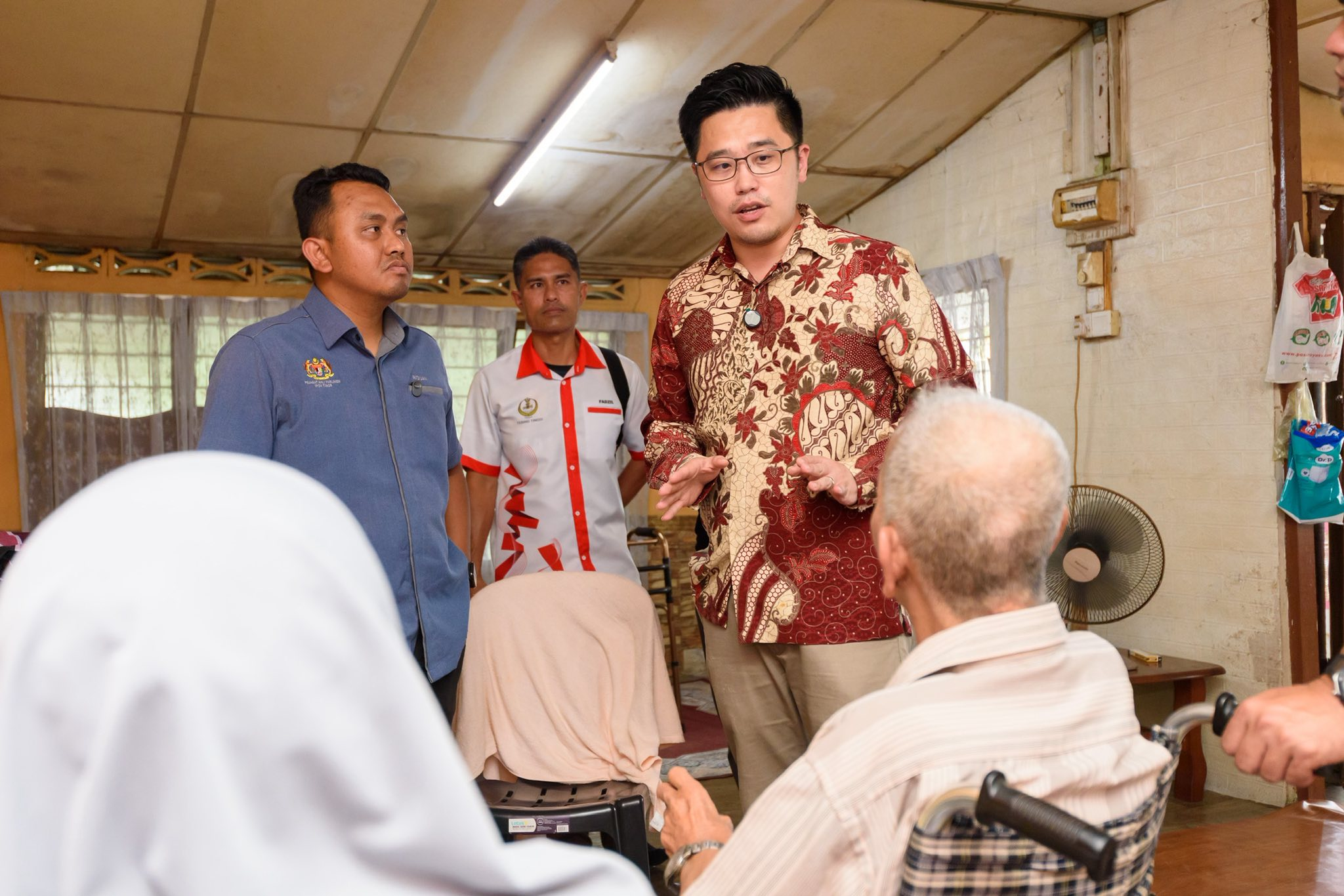
IPOH April 12, 2026 – Ipoh Timor Member of Parliament Howard Lee today reiterated his proposal for an Output-Based Strategic Stimulus Framework as the right measure to prevent necessary demand restraint from turning into widespread demand destruction amid global supply shocks and inflationary pressures.
In a media statement dated 11 April 2026, Lee welcomed the lively debate taking place both in public forums and behind closed doors — including among policymakers — regarding his proposal. He described the discussion as a reflection of a spirited, people-centred national conversation on inflation, fiscal discipline, and the government’s role in addressing global supply shocks.
“Concerns about inflationary pressure are legitimate and valid,” said Lee. He firmly rejected any form of poorly designed, blanket stimulus, untargeted cash injections, or bulk cash handouts, warning that such approaches could worsen inflation and distort markets.
He clarified that what he is proposing is a far more strategic, prudent, targeted, and time-bound approach. “The real issue before us is not whether to ‘flood’ the economy with money. The issue is whether we allow necessary demand restraint to turn into outright demand destruction,” he emphasised.
Lee illustrated the damaging effects when prices rise beyond a certain threshold: fishermen stop going to sea, lorries reduce their trips, farmers cut back on inputs, strategic operators become paralysed, and basic trade and services are disrupted. This does not solve the supply shortage; instead, it worsens the situation.
He repeatedly stressed the need for output-based support aimed at protecting critical sectors that the nation cannot afford to lose, including food production, logistics, public transportation, healthcare, and other strategic sectors.
Practical examples he cited include:
- Assistance to fishermen must be linked to verified catch volumes delivered into the domestic food supply chain, not merely cheap fuel for all boats regardless of activity.
- Support for the transport and logistics sector must be tied to actual deliveries of food, medicine, and essential goods, not just diesel consumption.
- Aid to farmers must be connected to planted acreage, actual harvest yields, or maintained food production, not blanket subsidies on every bag of fertiliser.
- Support for hospitals and critical industries facing shortages (such as helium) must be linked to the continued operation of MRI machines, diagnostics, and strategic production lines, not unconditional bulk assistance.
Without such targeted support, Lee warned that boats will remain docked, lorries will cut back on trips, planting will decline, medical screenings will be delayed, and production will slow down. The result would be tighter supply, even worse inflation, pressure on businesses, and job losses.
He noted that criticisms of his proposal would only be valid if they referred to large-scale, untargeted fiscal expansion — which is not what he is advocating. International institutions have also begun warning policymakers against allowing energy supply shocks to escalate into a broader demand crisis.
“The role of the government and us as policymakers is to balance the demand side — managing, restraining, or supporting demand when necessary — so that the economy does not slide from orderly adjustment into outright destruction,” Lee said.
He concluded by reaffirming his commitment to continue fighting for strategic, targeted, prudent, support-driven, and time-bound interventions under parliamentary oversight. “Caution must not become passivity. In a cascading crisis, the government’s responsibility is not merely to watch the market adjust, but to ensure the basic functions of the nation continue to operate,” he added.
About The Author