KUALA LUMPUR, 26 March 2026 – Companies worldwide are rethinking how much office space they need as rising costs, shifting work patterns and economic uncertainty reshape workplace strategies.
Rather than leaving offices, businesses are making smarter use of space to match how employees work today, according to a global survey by Knight Frank, the property consultancy.
The shift is not just about cost, but also resilience. Companies are under pressure to stay flexible in a more volatile environment. About 37.8 percent of corporate real estate leaders said improving efficiency and resilience is their top priority over the next three to five years.
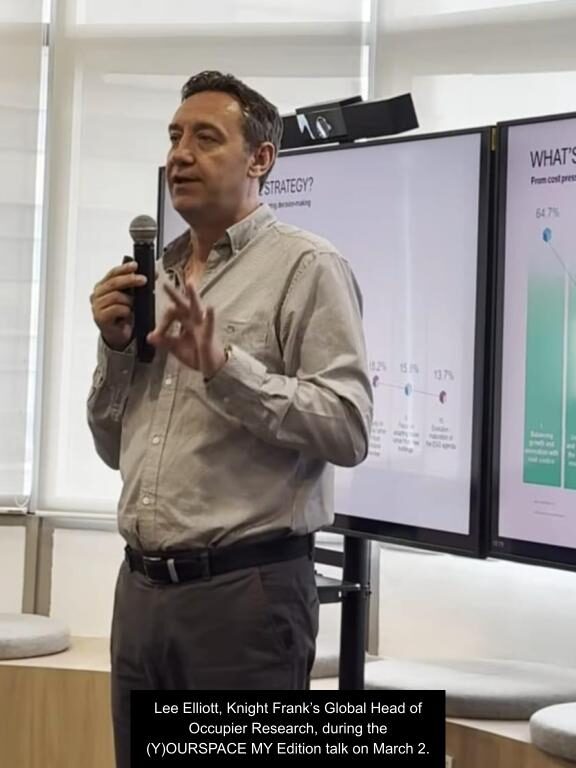
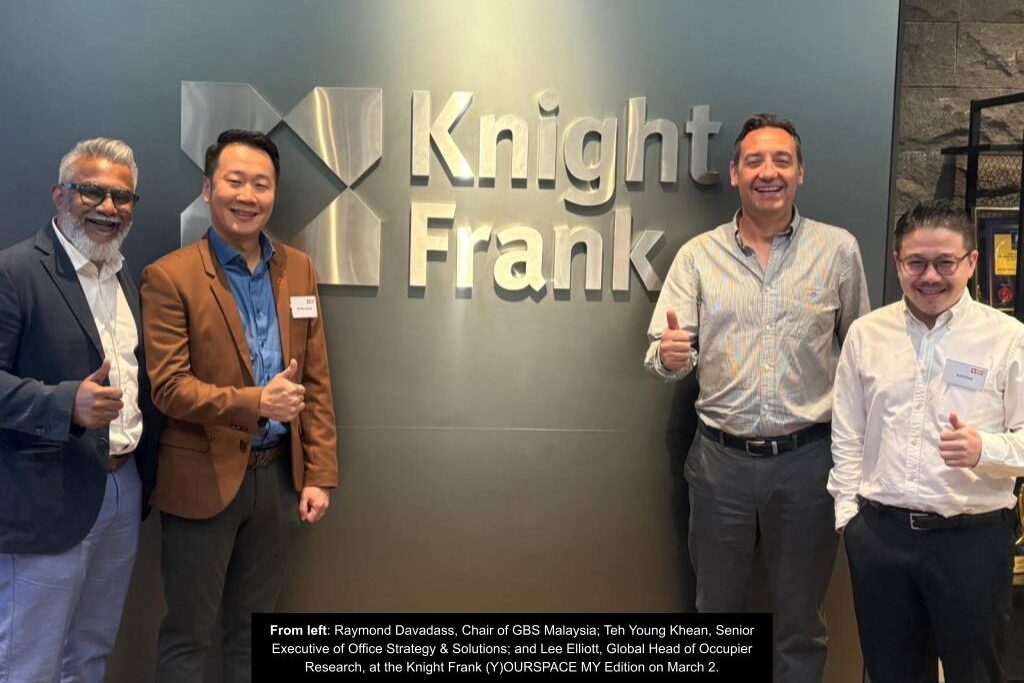
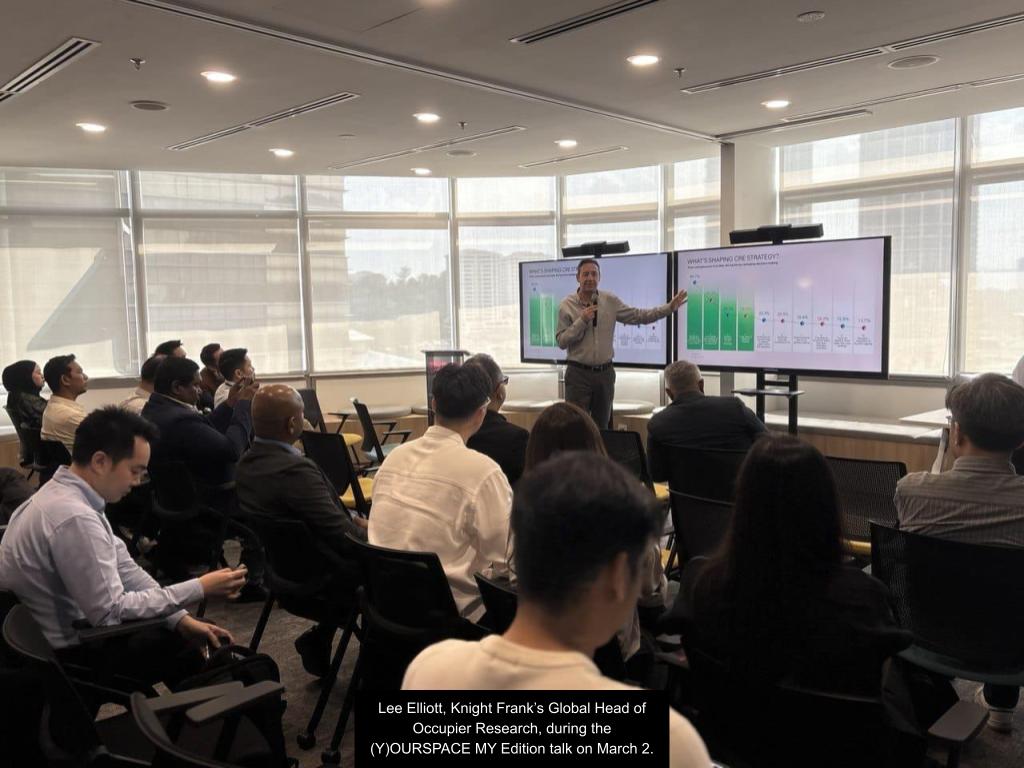
“There has been a lot of discussion around how the office is dying, but it hasn’t. What is quite clear from our survey is that how occupiers are thinking about space, and ultimately using it, is a dynamic that’s going to change,” said Lee Elliott, its global head of occupier research.
He was speaking at the “(Y)OURSPACE Malaysia Edition- From Desk To Dynamics: Shifting Work and Office Models in the GBS Era’ talk on March 2, hosted by Knight Frank Malaysia.
The survey shows that 55 percent of corporate real estate leaders see adjusting office space while maintaining flexibility as their biggest challenge. This reflects pressure to balance cost growth and evolving workstyles.
About 64.7 percent of companies are balancing growth and innovation with cost control, reflecting ongoing pressure on margins. At the same time, 43.2 percent cite uncertainty and volatility as key concerns, while 28.1 percent expect continued changes in how employees work, reinforcing the shift towards hybrid arrangements.
Hybrid work is here to stay and will continue to evolve. This has led many businesses to rethink layouts, reduce underused space and focus on efficiency. The office remains important, with about 20 percent of companies expecting their footprint to grow over the next three years.
Office space is also becoming more strategic, with about 90% saying it supports business strategy, including talent attraction, employee wellbeing and corporate brand image.
At the same time, about 70 percent of companies expect to undertake major transformation initiatives over the next five years. These include expansion, restructuring and digital transformation, which will affect how office space is used.
Economic volatility is expected to persist, with firms taking a more cautious approach focused on cost control and flexibility.
As companies navigate these pressures, they can no longer wait for stability before making decisions. The office is not disappearing, but is being reshaped for a more uncertain and flexible future.
About The Author