By Prof. Dr. Mohammad Tariqur Rahman
Generally speaking, a degree in a discipline represents an academic’s expertise. Originally, degree names such as “master” (magister) and “doctor” (Latin for teacher) were synonymous, representing the highest level of education. Offering the foundational degree as “doctor” was practiced in medieval Europe around 1150 as a license to teach.
The modern Doctor of Philosophy (PhD) degree, based on original research, was arguably first awarded around 1810 at the Friedrich Wilhelm University in Berlin.
Moving forward, the nature of the highest university degree has evolved in different dimensions. For example, different universities offer different degrees, such as Industrial PhD, PhD with research, PhD with coursework, and many more.
Nevertheless, every university requires someone with a higher degree to be appointed as a university lecturer, meaning they must be able to teach, and that requirement remains the same. Indeed, the teaching role should be limited to the course relevant to their degree. In addition to teaching, academics must also conduct research in their field of expertise aimed at publication or commercialization.
Now the question is: can academics express opinions or views on any issue or subject that might fall outside their academic expertise?
The answer could be yes or no. This can be exemplified by categorizing opinions or views as expert opinion and layman’s opinion. Here, expert opinion refers to that originated from an expert who have proven track record in the respective field. Layman’s opinion, on the other hand, does not necessarily mean only that which originated from someone who lacks any form of expertise. For instance, a medical doctor could be a layman in the field of computer science and vice versa.
Example 1: Authority to share expert opinion on certain aspects of ongoing wars—such as the emerging geopolitical crisis, potential economic impact, and offering a diplomatic resolution—requires relevant expertise. However, there is nothing wrong with peace-loving global citizens expressing their layman’s opinions on more common aspects and predicaments during a global or regional conflict. Any sensible academic could highlight the importance of humanity without taking sides.
Example 2: An expert with knowledge of leadership has the authority to engage in academic discourse on various aspects of leadership. However, it must not prevent ordinary employees from expressing their layman’s opinions on the empathy, professional decency, and altruism they expect from their leaders.
Example 3: Expert opinion is necessary to plan to eliminate the possibility of death due to a mass shooting in public. However, laymen’s views and opinions based on experiential learning might play a critical role in the expert planning.
Nevertheless, despite the possibility of a minimal or zero impact of a layman’s opinion on the respective stakeholders, such as policymakers, its importance lies in the fact that cumulative opinion matters when it comes from an educated society. In other words, opinion pieces with a reasonable rationale are expected to have an impact.
Such laymen’s opinions from different parts of society, especially from academics, may one day unfold as a new academic discourse on a given topic. Indeed, this is one of many ways knowledge evolves. This can be supported by the fact that much social science research follows a qualitative approach, meaning research based on the opinions of individuals, whether experts or laymen.
In fact, published opinions of academics both in their field of expertise and on topics of societal concern are an important source of qualitative research in social science. Such opinion pieces could be based on experiential learning or published empirical evidence from different sets of experts.
More importantly, academics entrusted with teaching and training future generations might have proven their wisdom and vision by acquiring a PhD degree. Hence, their views on different aspects, including emerging societal issues, are expected to have merit and thus become imperative for evolving a society.
It is most likely that opposing views will emerge regarding what others write in their opinion pieces, including the current one. As long as it follows professional norms and decency, such discourse should be allowed to continue. It should be noted that research-based empirical findings are also debatable; opposing views exist in the empirical scientific world, too.
After all, sharing views and opinions beyond an academic’s area of expertise will not be a total loss.
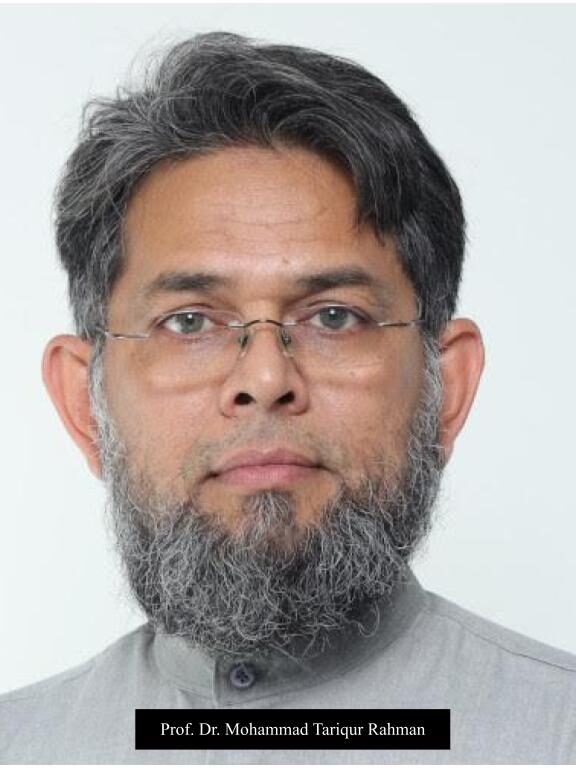
Prof Mohammad is the Deputy Executive Director (Development, Research & Innovation) at International Institute of Public Policy and Management (INPUMA), Universiti Malaya.
About The Author