NEW YORK March 2, 2026 – The United Kingdom has urged the international community to safeguard children’s right to safe, inclusive, and quality education amid ongoing global conflicts, warning that millions of children are being denied access to learning as schools are destroyed or become inaccessible.
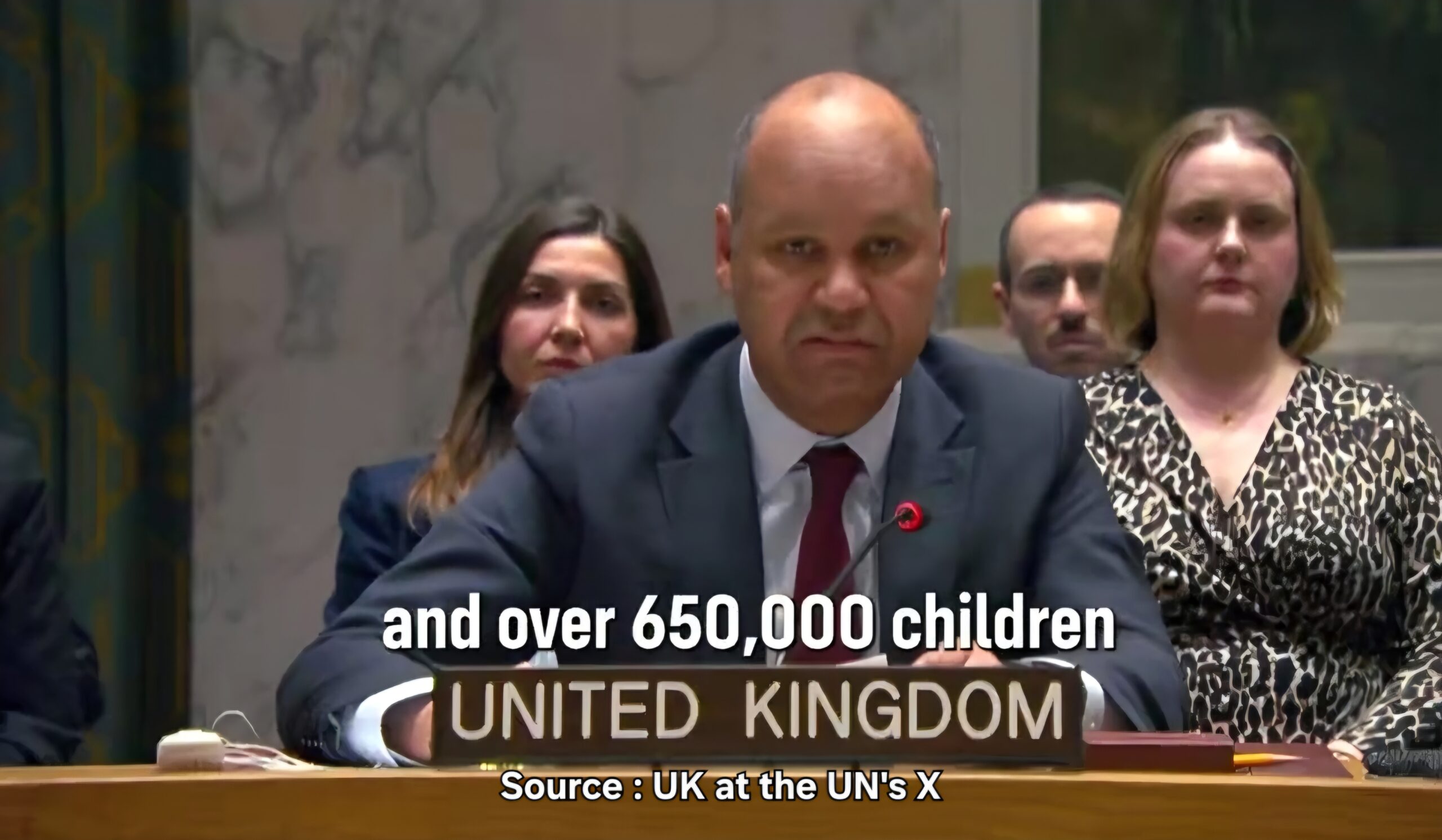
In a statement delivered at the UN Security Council on 2 March 2026 during a meeting focused on Children, Technology and Education in Conflict, UK Chargé d’Affaires to the UN, Ambassador James Kariuki, stressed that “protecting children’s right to safe, inclusive, quality education is critical.” He highlighted how conflict is causing education systems to collapse worldwide.
Ambassador Kariuki pointed to devastating statistics from active conflict zones:
– In Gaza , 97% of schools have been damaged or destroyed, leaving over 650,000 children out of school for more than two years.
– In Sudan, one in three schools has been damaged or destroyed, with 8 million children currently out of school.
– In Ukraine, 4.6 million children face barriers to learning due to Russia’s illegal and unprovoked full-scale invasion.
“The current conflict in the Middle East poses further risks,” he added, calling on all parties to conflict to uphold their obligations under international humanitarian law and protect children and civilian infrastructure, including schools.
The UK reaffirmed its strong support for the Safe Schools Declaration and urged other member states to endorse and implement it. The declaration aims to prevent attacks on schools and protect education from the effects of armed conflict. Britain also highlighted its ongoing financial support for global initiatives, including UNICEF and the Global Partnership for Education.
Kariuki further noted the potential of emerging technologies — such as digital tools, remote learning platforms, and AI-supported systems — to sustain education for children displaced by conflict. However, he warned of risks, including armed groups using online platforms for child recruitment, as seen in Colombia. The UK pledged continued support for the UN’s Monitoring and Reporting Mechanism to hold perpetrators accountable.
The statement also addressed the disproportionate impact of conflict on girls’ education, noting that girls are more likely to be out of school than boys in crisis settings and face heightened risks of exploitation, child marriage, trafficking, and gender-based violence. The UK has supported over 7 million girls through the Education Cannot Wait fund and called on the private sector to develop technology solutions tailored to girls’ needs.
The full UK statement is available on the UK Government website. The UK’s intervention comes as the Security Council, under the US presidency for March, examines the intersection of children, technology, and education in armed conflict.
The UK’s message echoes growing international concern that education must be treated as a fundamental right — not a casualty — of war.
About The Author