Why we fear the thing that keeps us young
 Professor Dato’ Dr. Ahmad Ibrahim
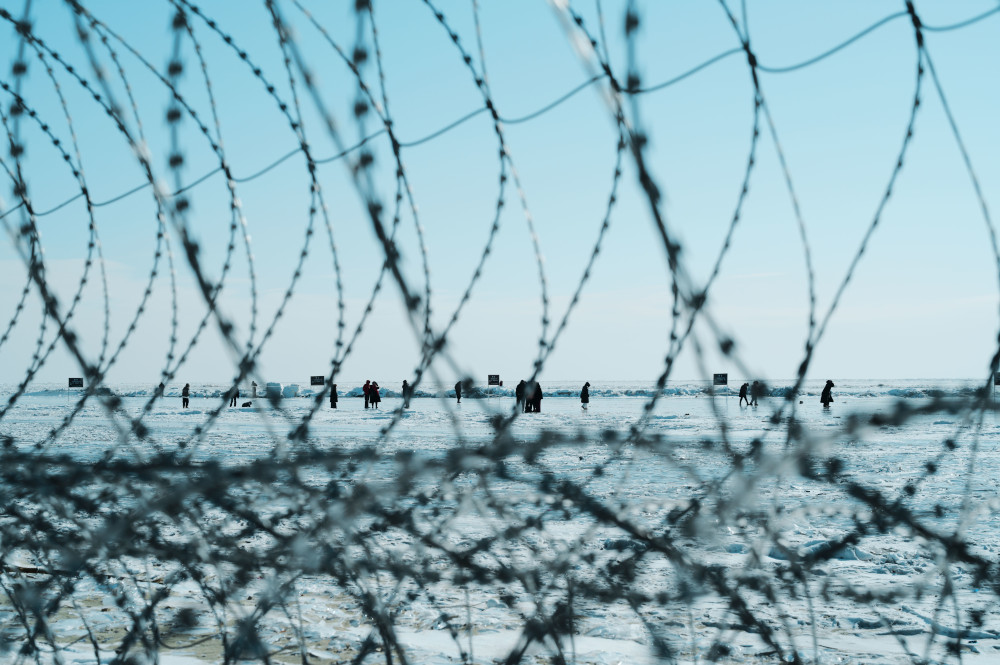
Photo: Pexels
Anti-immigrant sentiment is surging. In the United States and across Europe, hard-right parties have transformed migration from a policy debate into a civilisational referendum. The question is: if migration is natural, if it built the modern world, and if ageing societies desperately need young workers, why the resentment?
The resentment is real. Consider the evidence from Europe and the United States. The driver of far-right support is often not the arrival of immigrants itself, but the salience of immigration—how loudly and relentlessly the issue is amplified. In towns that voted overwhelmingly for restrictive immigration policies, residents have rallied to protect beloved immigrant neighbours from deportation. The abstraction terrifies; the concrete neighbor does not. This gap between perceived threat and lived experience is where the political poison festers.
The very countries convulsing over immigration are ageing out of economic viability. The OECD projects that by 2064, the working-age population will shrink by over 30 per cent in Estonia, Greece, Japan, the Slovak Republic, and Spain—and by more than 35 per cent in Italy, Korea, Latvia, Lithuania, and Poland. Japan, already the oldest society on earth, has an old-age-to-working-age ratio of nearly 55 people over 65 for every 100 workers; by 2054, Korea’s ratio is projected to hit 84.5. These are actuarial certainties that will determine whether pensions are paid, hospitals are staffed, and economies grow.
Now imagine the counterfactual: a world with zero migration. Oxford Economics modelled precisely this scenario, and the results are sobering. In destination economies—the advanced economies of the West—output per capita falls as the productivity gains from knowledge transfer and labour market allocation evaporate. Public finances deteriorate sharply because migrants tend to arrive at prime working age, paying taxes while consuming relatively little in social services. In the Eurozone alone, the old-age dependency ratio would rise by nearly 9 percentage points by 2060 in a zero-migration scenario. The countries that slammed the door would find themselves poorer, older, and less innovative—trapped in a demographic winter of their own making.
So what is the constructive path forward? The answer lies neither in open borders nor in fortress walls, but in a tough-minded, controlled, and deliberately inclusive approach.
First, control must be real and visible. The public will not tolerate mass migration if it believes the borders are chaotic. A policy that demonstrably regulates who enters, and removes those who abuse the system, creates the political space for generosity toward those who come legally. This is not a concession to nativism; it is the precondition for a sustainable immigration consensus.
Second, selection must serve genuine need. Canada, Australia, and New Zealand have maintained relatively high public support for immigration precisely because their systems are tightly controlled and selective, designed to fill specific labour gaps. This is not about importing “the best and brightest” to the exclusion of the desperate—refugee resettlement remains a moral obligation—but about ensuring that the immigration system is legible to the public as serving a purpose beyond cheap labour for employers who undercut domestic wages.
Third, integration must be resourced as seriously as border enforcement. The United States offers a cautionary tale in both directions: immigrants and their children have founded nearly half of Fortune 500 companies, and a quarter of venture-backed start-ups. But this success has occurred despite, not because of, integration policy. Immigrants are too often “left to their own devices.” The shift from demanding “assimilation” to enabling “participation”—language training, credential recognition, community sponsorship—produces better outcomes and, crucially, more contact between newcomers and natives. And contact, research consistently shows, reduces prejudice.
Finally, migration delivers aggregate economic gains, but those gains are not evenly distributed. The native worker in a declining industry who sees his wages pressured is not imagining things. A serious immigration policy must pair openness with robust domestic investment—in retraining, in wage supports, in the communities bearing the brunt of adjustment. Otherwise, the resentment will be rational.
The world as we know it was not built by people who stayed put. The Huguenots who fled France built Switzerland’s watchmaking industry; a Lebanese migrant gave the world the Swatch; Flemish weavers launched the British textile trade. The question before the West is not whether migration will continue—demography and economics guarantee that it must—but whether it will be governed with competence and humanity, or surrendered to the demagogues who profit from fear.
A world without migration would be older, poorer, and less free. The solution is not to stop the movement of people, but to make it orderly, purposeful, and paired with a genuine commitment to the communities—both native and newcomer—that must learn to live together.

The author is affiliated with the Tan Sri Omar Centre for STI Policy Studies at UCSI University and is an Adjunct Professor at the Ungku Aziz Centre for Development Studies, Universiti Malaya. He can be reached at ahmadibrahim@ucsiuniversity.edu.my.
Photo: Pexels
About The Author







 opinions

 Nahrizul Adib Kadri

 Laura AI
 Anna J

 Lina AI