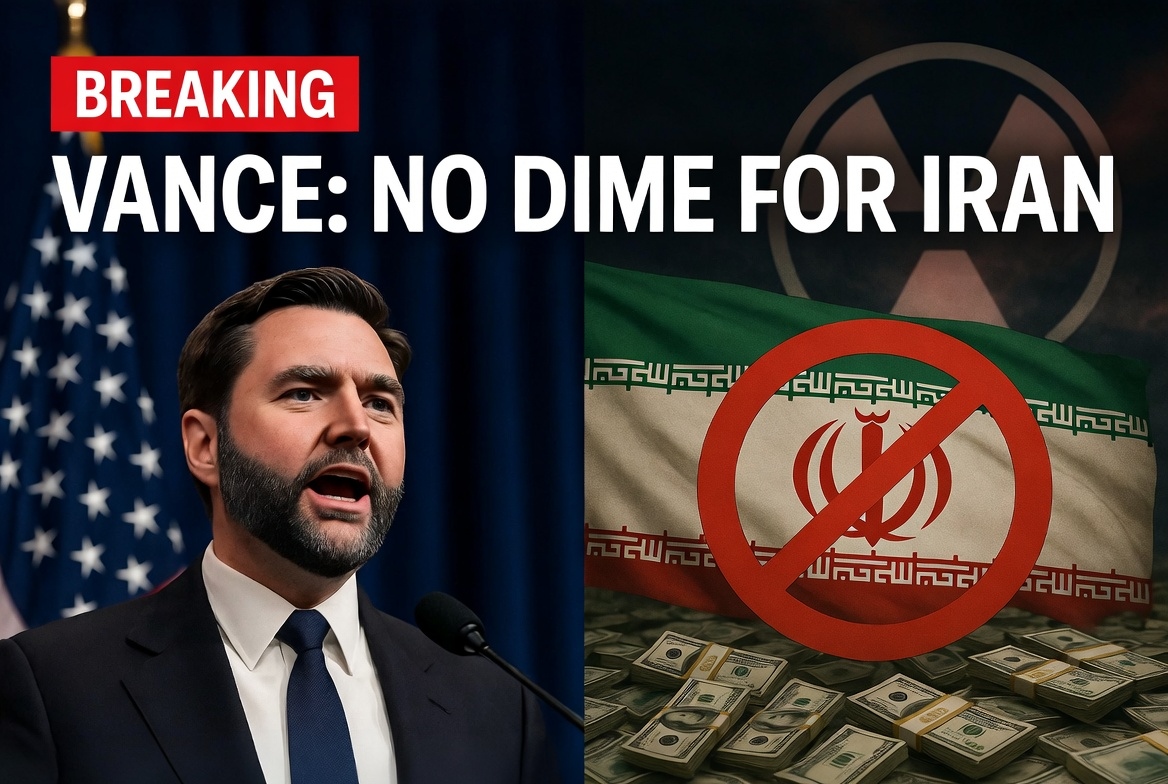
WASHINGTON D,C June 16, 2026 — Vice President JD Vance firmly stated on Monday that the United States will not provide any American taxpayer funds to Iran as part of the recently announced framework agreement aimed at halting hostilities and addressing Tehran’s nuclear program.
Speaking in multiple interviews, including on Fox News and CBS Mornings, Vance emphasized: “They never get a dime of American taxpayer money, ever. Full stop. Not even close.”
The comments come amid ongoing scrutiny of a U.S.-Iran memorandum of understanding (MoU), digitally signed by President Trump, Vice President Vance, and Iranian officials. The deal seeks to end recent conflict, reopen the Strait of Hormuz, and impose verifiable limits on Iran’s nuclear activities, including the elimination of highly enriched uranium stockpiles and enhanced inspections.
Vance clarified that while the agreement offers pathways for economic reintegration — such as sanctions relief and potential investment from Gulf states — these benefits are strictly conditional on Iran’s compliance. He explicitly rejected claims that billions in U.S. assets or direct payments would flow to Tehran.
Critics and some observers have pointed to reports of a potential $300 billion reconstruction fund or unfreezing of Iranian assets. Vance addressed this directly, noting that any such fund would be financed by Gulf nations (such as Qatar, UAE, or Saudi Arabia) rather than U.S. taxpayers, and only if Iran meets its obligations.
“Iran could have access to that sort of thing… so long as they honor their end of the obligation,” Vance said. He added that hardliners in Iran may overstate benefits while downplaying required concessions.
The administration plans to release the full text of the agreement this week for public review. Officials described the deal as placing Iran on a “probationary” period, with benefits tied to verifiable actions rather than promises.
The framework follows heightened tensions and aims to prevent nuclear escalation while opening economic opportunities for Iran if it abandons support for proxy groups and nuclear ambitions. No immediate funds have been released, and Vance stressed that sanctions relief would be reversible.
Republican lawmakers have expressed skepticism and demanded full details before any implementation. The White House maintains that the U.S. holds leverage and that the deal prioritizes American interests and regional stability.
This stance aligns with the Trump administration’s “maximum pressure” approach refined into conditional engagement, ensuring no unconditional windfalls for Tehran.
About The Author