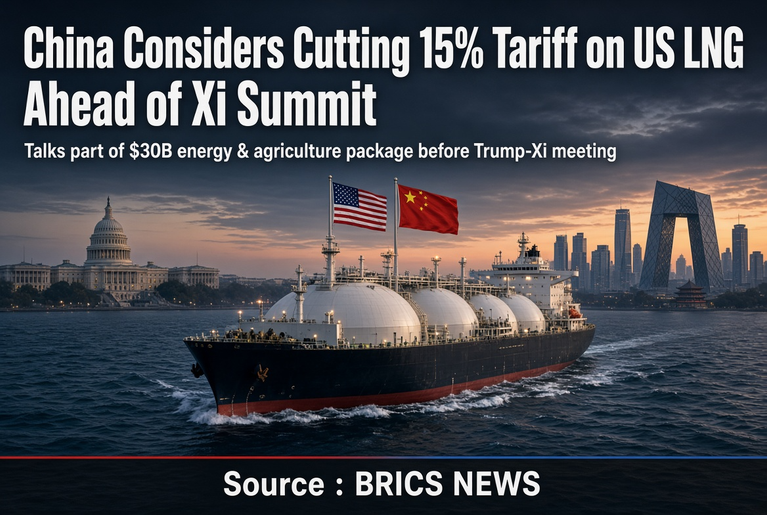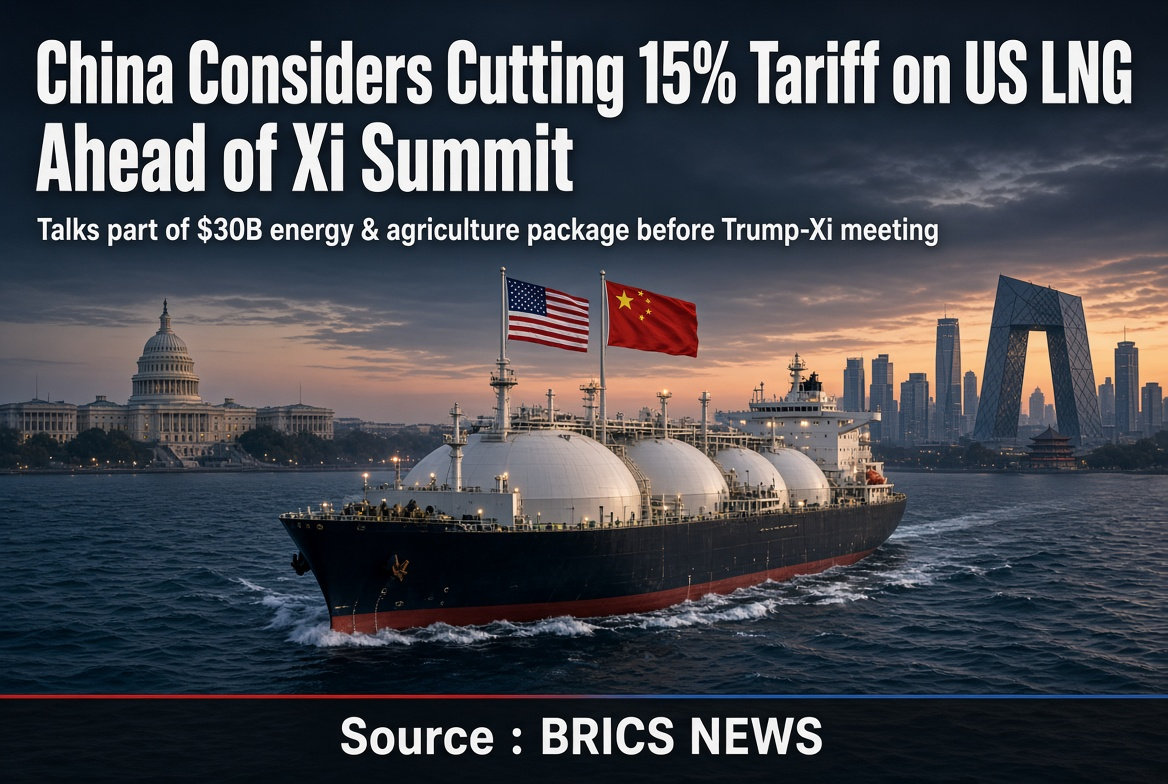
WASHINGTON D.C Sept 19, 2026 – The United States and China are discussing a plan to reduce or eliminate Beijing’s 15% retaliatory tariff on U.S. liquefied natural gas as part of a broader package of energy and agriculture agreements that could be announced when Chinese President Xi Jinping visits Washington next week.
The talks come ahead of a September 24 meeting between President Donald Trump and Xi and form part of efforts to stabilize trade ties. They are being held alongside a wider framework under which both sides would cut tariffs on roughly $30 billion of goods each. The proposals remain unfinalized. Neither the White House nor the Chinese embassy in Washington immediately commented.
China imposed the 15% tariff on U.S. LNG in February 2025 in retaliation for U.S. duties on Chinese goods. The levy effectively halted the trade. U.S. LNG shipments to China fell from 64 vessels in 2024 to effectively zero in 2025, according to U.S. government data. In 2021 the figure had reached a record 131 vessels.
American LNG producers are looking for new markets as export capacity expands by about 10 billion cubic feet per day through 2027. New and expanded facilities involving companies such as Cheniere Energy, Venture Global, Sempra, NextDecade and Exxon Mobil are coming online along the U.S. Gulf Coast. Years of trade tensions have made China, one of the world’s largest LNG markets, far less accessible.
Chinese Vice Premier He Lifeng is leading a delegation to the United States from September 19 to 23 for economic and trade consultations, the Chinese Embassy in the U.S. said. The two sides will discuss issues of mutual concern, guided by consensus reached by the two leaders.
The discussions reflect a broader attempt to keep a fragile trade truce intact. Agriculture, energy and rare earths have featured prominently in recent U.S.-China talks, with both sides treating commodity purchases and targeted tariff relief as possible areas of agreement. Any LNG deal would not immediately restore large volumes of trade, analysts note, but it would reopen a market that U.S. exporters have been shut out of for more than a year.
About The Author