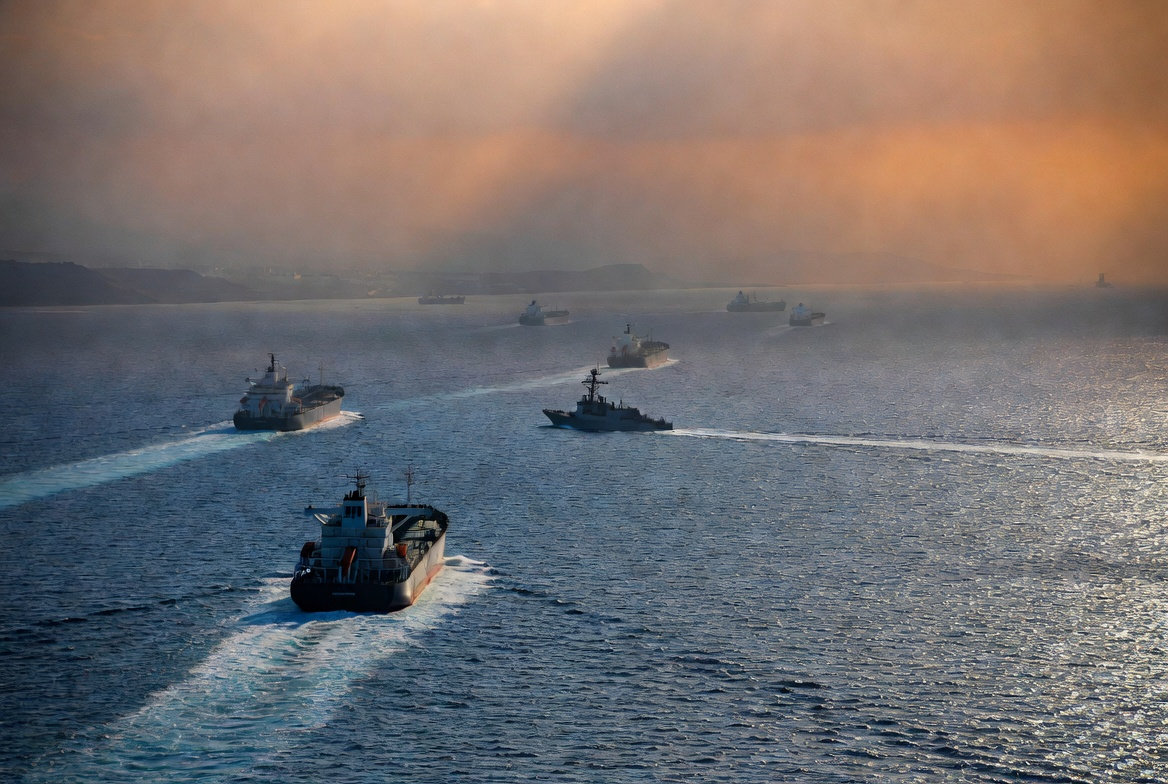
TAMPA, FLORIDA July 29, 2026 — U.S. Central Command said Wednesday that its forces have helped approximately 1,000 commercial vessels carrying nearly 500 million barrels of crude oil transit the Strait of Hormuz since early May, rejecting Iranian claims of control over the critical waterway.
In a statement posted on X, CENTCOM directly addressed assertions by Iran’s Islamic Revolutionary Guard Corps (IRGC) that international mariners must use only routes preferred by the IRGC. “The Strait of Hormuz is an international waterway. The IRGC has no authority to dictate routes for free and open traffic flow,” the command said. “Commercial vessels continue to use the strait with U.S. military support.”
The figures mark an increase from earlier CENTCOM updates, which in mid-July cited more than 900 vessels and around 450 million barrels facilitated since early May.
The effort forms part of ongoing U.S. operations to maintain freedom of navigation through the strait amid the wider conflict with Iran that began in late February 2026. The narrow waterway, which links the Persian Gulf to the Gulf of Oman and Arabian Sea, normally carries about one-fifth of the world’s oil supply.
U.S. officials have described the maritime support under initiatives such as Project Freedom, which began in early May. Defense Secretary Pete Hegseth told a Senate hearing last week that American forces had moved “between 400 and 500 million barrels of oil under the nose of Iran” through a combination of overt and later covert operations.
Tensions in the strait have fluctuated throughout the conflict. A 60-day ceasefire and memorandum of understanding signed in mid-June temporarily eased pressure, but the United States reimposed a naval blockade on Iranian ports in mid-July after renewed Iranian attacks on commercial shipping. CENTCOM has conducted multiple rounds of airstrikes on Iranian military targets, including coastal surveillance sites, drone facilities, and missile positions, aimed at degrading threats to merchant vessels.
Despite the disruptions, U.S. officials maintain that oil continues to flow. Pre-war volumes through the strait averaged around 20 million barrels per day. While traffic has not fully recovered, American military coordination—including communications support and presence in the southern lanes closer to Oman—has enabled significant volumes to pass.
Oil markets have remained sensitive to developments, with prices elevated at times due to the risk of further interruptions. The latest CENTCOM figures underscore Washington’s assertion that it, rather than Tehran, currently shapes the practical reality of transit through one of the world’s most strategically vital chokepoints.
About The Author