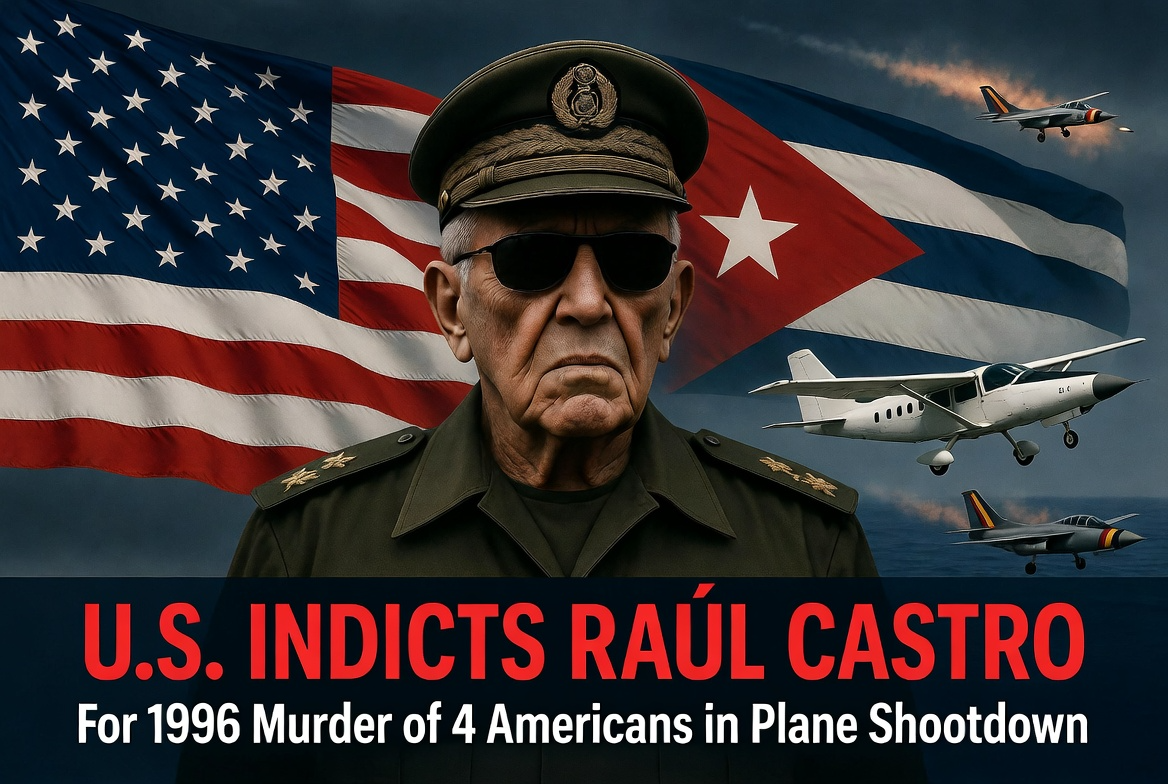
MIAMI, FLORIDA May 21, 2026 — The U.S. Department of Justice has indicted former Cuban President Raúl Castro and five others on federal charges including conspiracy to kill U.S. nationals, destruction of aircraft, and four counts of murder in connection with the 1996 downing of two unarmed civilian planes over international waters.
The indictment, returned by a grand jury in the Southern District of Florida on April 23, 2026, and unsealed on May 20, alleges that Castro — then Cuba’s defense minister — authorized the use of deadly force against planes operated by the Miami-based humanitarian group Brothers to the Rescue. On February 24, 1996, Cuban MiG fighter jets shot down two of the group’s Cessna aircraft, killing four people: three U.S. citizens and one resident.
Acting U.S. Attorney General Todd Blanche announced the charges at the Freedom Tower in downtown Miami during an event marking Cuban Independence Day. “If you kill Americans, we will pursue you — no matter how much time has passed,” Blanche stated.
In a press interaction captured in a video shared by the White House Rapid Response account, Secretary of State Marco Rubio confirmed the indictment and addressed questions about bringing Castro to justice.
“A grand jury in South Florida returned an indictment of Raúl Castro. The evidence is clear — he admits to it. Raúl Castro openly admits and brags about giving the order to shoot down civilian airplanes. I’m not going to talk about how we’re going to get him here. Why would I say to the media what our plans are? If there’s an announcement, we’ll tell you afterwards, not before.”
Rubio, a Cuban-American, has been a vocal critic of the Castro regime and recently released a video message to the Cuban people urging a “new path” amid the island’s ongoing economic struggles.
Background on the Incident
Brothers to the Rescue, founded in 1991 by Cuban exiles, conducted search-and-rescue flights over the Florida Straits to aid migrants fleeing Cuba by raft. By the mid-1990s, the group also engaged in non-violent protests, including dropping leaflets over Havana. The indictment claims Castro authorized force following such activities.
The four victims were: Pablo Morales, Carlos Costa, Mario de la Peña, and Armando Alejandre Jr. Their families and the Cuban-American community in South Florida have long sought accountability.
Reactions and Implications
The move represents a significant escalation in the Trump administration’s pressure on Cuba’s communist government. Cuban officials have dismissed the charges as a political stunt, and extradition of the 94-year-old Castro appears highly unlikely.
Florida Republicans and Cuban exile groups have praised the indictment as long-overdue justice. President Trump has referenced it in the context of broader efforts toward “freeing up Cuba.”
Castro, who stepped down from formal leadership roles but remains influential, faces an arrest warrant. The other named defendants are Cuban military pilots and officials allegedly involved in the operation.
This development comes as the U.S. continues to highlight human rights abuses and economic mismanagement under Cuba’s regime, with Secretary Rubio linking the country’s hardships to military-controlled entities like GAESA.
About The Author