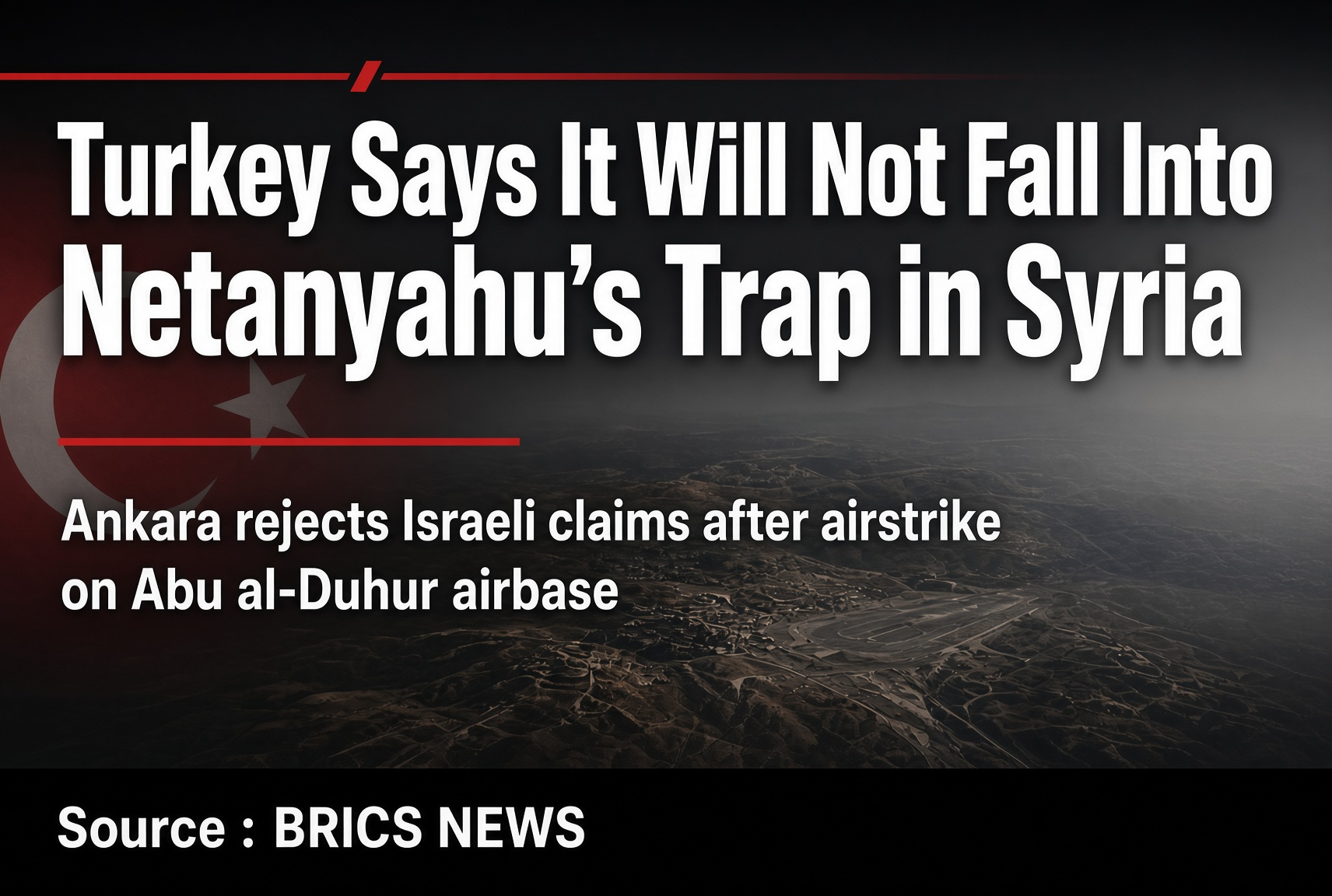
ANKARA August 20, 2026 — Turkey declared on Thursday that it “will not fall into the trap” set by Israeli Prime Minister Benjamin Netanyahu in Syria, rejecting Israeli claims that Ankara planned a military deployment at a northern Syrian airbase targeted in recent airstrikes.
Burhanettin Duran, director of communications for the Turkish presidency, said in an interview with state media: “We are experienced enough not to fall into the trap of figures like Netanyahu, who aim to undermine peace and stability in our region.” He accused the Israeli leader of stoking tensions for domestic political advantage ahead of Israel’s October 27 parliamentary elections, citing Netanyahu’s growing international isolation and internal pressures.
Duran added that Turkey would continue “to combat the destabilizing activities of the genocidal Netanyahu and to stand alongside all states, particularly Syria, that pursue peaceful policies in our region.” He emphasized Ankara’s commitment to supporting Syria’s sovereignty and reconstruction efforts.
The comments follow Israeli airstrikes on August 18 against the Abu al-Duhur airbase near Aleppo in northwest Syria. Syrian state media reported eight strikes that damaged the runway and storage facilities. No casualties were reported.
Israel’s Prime Minister’s Office stated that Syria was “on the verge” of allowing Turkish forces to deploy at the base, violating an agreed security status quo and posing a threat to Israeli national security. Netanyahu later said Israel had repeatedly warned both Damascus and Ankara against such a move. “We will not tolerate a Turkish military entrenchment moving southward, because it threatens us,” he told an army radio podcast, adding that the strike conveyed the message “more clearly.”
Turkey’s Defense Ministry firmly denied any Turkish military presence at the base before or during the attack and rejected claims of planned troop deployment. It called on Israel to halt “reckless attacks” and respect international law, while reaffirming support for Syria’s military capability development.
Syrian Foreign Minister Asaad al-Shaibani told Axios that Turkish officers had visited the site days earlier as part of routine military cooperation and training, but there were “no plans to establish a Turkish military base” or permanent presence. The facility was being rehabilitated for use by the Syrian Air Force and was largely empty at the time of the strike, he said.
The incident marks the first major Israeli strike on Syrian government assets since March and has heightened tensions between two key U.S. allies in the post-Assad era. Assad’s government fell in late 2024, and the new transitional authorities in Damascus maintain close ties with Turkey. U.S. Special Envoy for Syria Tom Barrack described the Israeli action as an “unnecessary escalation” that does not advance regional stability.
Analysts note that Israel is determined to prevent any expansion of Turkish influence deeper into Syria that could constrain its freedom of aerial operations, while Ankara prioritizes Syria’s territorial integrity and opposes what it calls Israeli efforts to fragment the country. Both sides have signaled interest in deconfliction mechanisms, with the United States reportedly working to facilitate contacts.
The developments come amid broader regional realignments, with Israel maintaining security control in southern Syria and Turkey exerting significant influence in the north.
About The Author