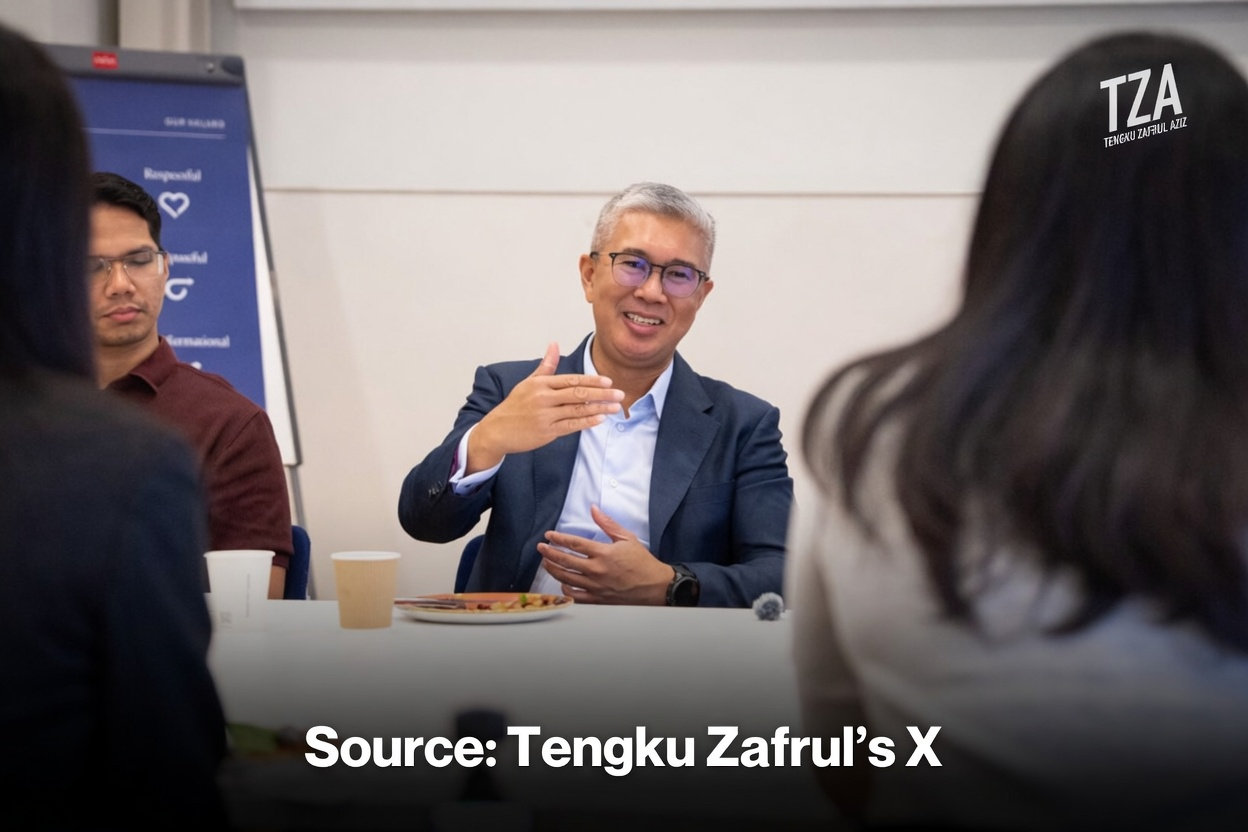
OXFORD, UNITED KINGDOM June 11, 2026 – Senior Political Advisor to Malaysian Prime Minister and Chairman of the Malaysian Investment Development Authority (MIDA), Datuk Seri Utama Tengku Zafrul Aziz, recently participated in a candid roundtable discussion with MBA students at the University of Oxford’s Saïd Business School.
In a post shared on X (formerly Twitter), Tengku Zafrul highlighted the sharp, direct questions posed by the students: Why Malaysia? Why should investors choose the country over other regional peers? And how can a developing nation execute bold economic reforms without overlooking political pressures, rising living costs, and public confidence?
Tengku Zafrul emphasized that Malaysia’s core strength lies in its established electrical and electronics (E&E) and semiconductor ecosystem, built over decades, combined with its strategic position within ASEAN. This positions the country as a credible partner for investors across diverse economic blocs amid global fragmentation.
However, he stressed that macroeconomic figures alone are insufficient. “The real challenge is not just knowing what reforms are needed, but implementing fiscal, industrial, and institutional reforms simultaneously while ensuring the public understands, trusts, and ultimately benefits from them,” he noted.
High-quality investments, he added, must translate into quality jobs, better wages, opportunities for local companies, and tangible improvements in daily lives — serving as the true measure of successful reforms.
The session underscored Malaysia’s ongoing push under the Madani government to attract strategic, high-value investments through initiatives like the New Industrial Master Plan 2030 and the National Semiconductor Strategy. Tengku Zafrul expressed gratitude to Saïd Business School for the meaningful dialogue, noting that leaders must continually face tough questions in an increasingly complex world.
Tengku Zafrul, who previously served as Minister of Investment, Trade and Industry, has been instrumental in driving record investment approvals and industrial upgrading in Malaysia. His Oxford engagement reflects continued efforts to showcase the country’s reform momentum and investment potential to global audiences.
About The Author