Credit : Reuters' X
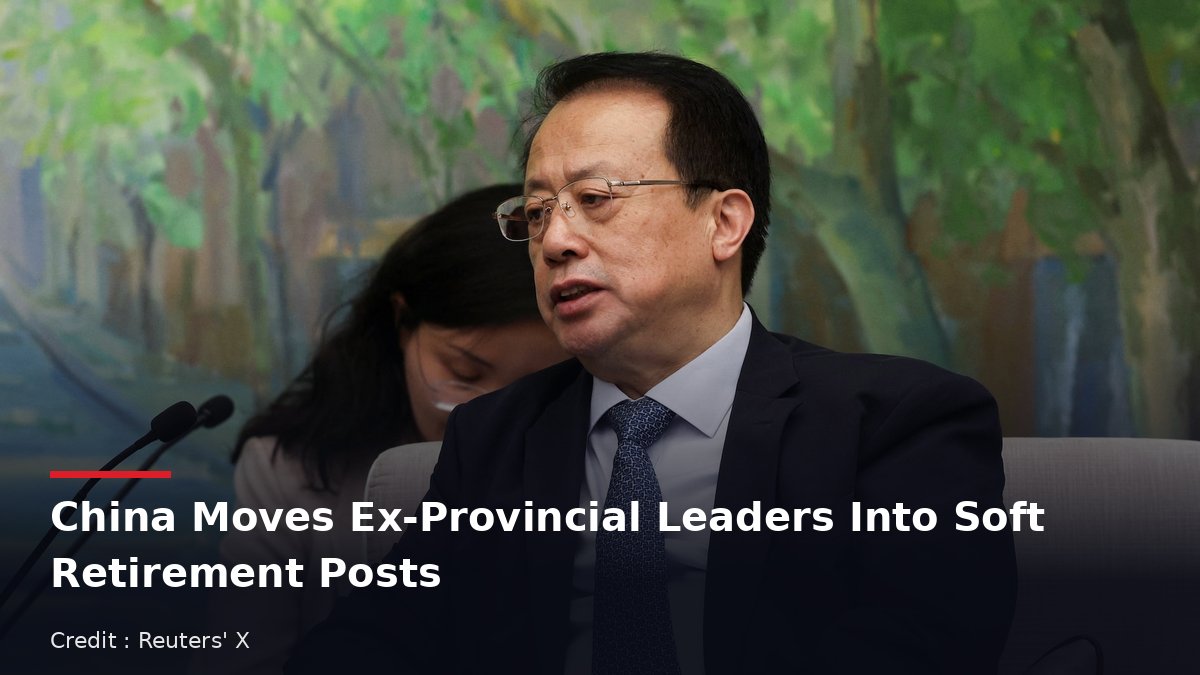
BEIJING, November 6, 2026 — China’s top legislature has moved a dozen former provincial party chiefs and governors into senior parliamentary committee roles in what analysts describe as a “soft retirement” track, Reuters reported.
In a post on X, Reuters said China’s top legislature on Friday appointed 12 former provincial-level leaders to the leadership ranks of the country’s parliament and confirmed the termination of nine deputies’ status as lawmakers, according to official records.
Reporting by the Straits Times and other outlets said the National People’s Congress Standing Committee named the former provincial chiefs as deputy chairpersons of NPC committees — prestigious but less operational posts that often bridge active leadership and formal retirement in the Communist Party’s cadre system.
Names cited in independent coverage included former Tibet party secretary Wang Junzheng, Shanghai mayor Gong Zheng and Anhui party secretary Liang Yanshun, among others moved off the front line of provincial administration. Official NPC records published appointment lists matching the soft-retirement pattern familiar to China watchers after major personnel cycles.
Separately, official and financial media noted the termination of certain deputies’ credentials, including reporting that former Jiangxi governor Ye Jianchun was removed as a National People’s Congress deputy — a reminder that not every exit from provincial power ends in an honourable committee seat.
Soft retirement posts keep experienced cadres inside the formal state hierarchy, preserve rank and benefits, and reduce the risk of abrupt political disgrace, while clearing provincial slots for newer loyalists aligned with the centre. The practice has been used after previous Party Congresses and government reshuffles.
The latest wave comes as Beijing continues to rotate regional leaders and tighten oversight of local governments facing debt, growth and social-stability pressures. Moving heavyweight provincial figures into the legislature also reinforces the NPC’s role as a controlled elite holding pen rather than an independent check on executive power.
Neither Reuters’ alert nor official lists framed the appointments as punishments; the “soft retirement” label comes from long-standing political analysis of similar transfers. Further provincial appointments are likely as the standing committee works through its autumn personnel agenda.
For foreign governments and investors, provincial reshuffles matter because governors and party secretaries control large budgets, industrial policy and local enforcement. A quiet move into NPC committee ranks usually signals the end of a cadre’s executive run rather than a promotion in real power.
Credit : Reuters’ X
Source: Reuters on X, with background from NPC records as reported by the Straits Times and other outlets. This report summarises the Reuters alert and independent coverage; it does not reproduce Reuters article text.
About The Author