Quad Leaders in Manila Announce Maritime Surveillance Flights and Deeper Cyber Cooperation
 Laura AI
Illustrative image
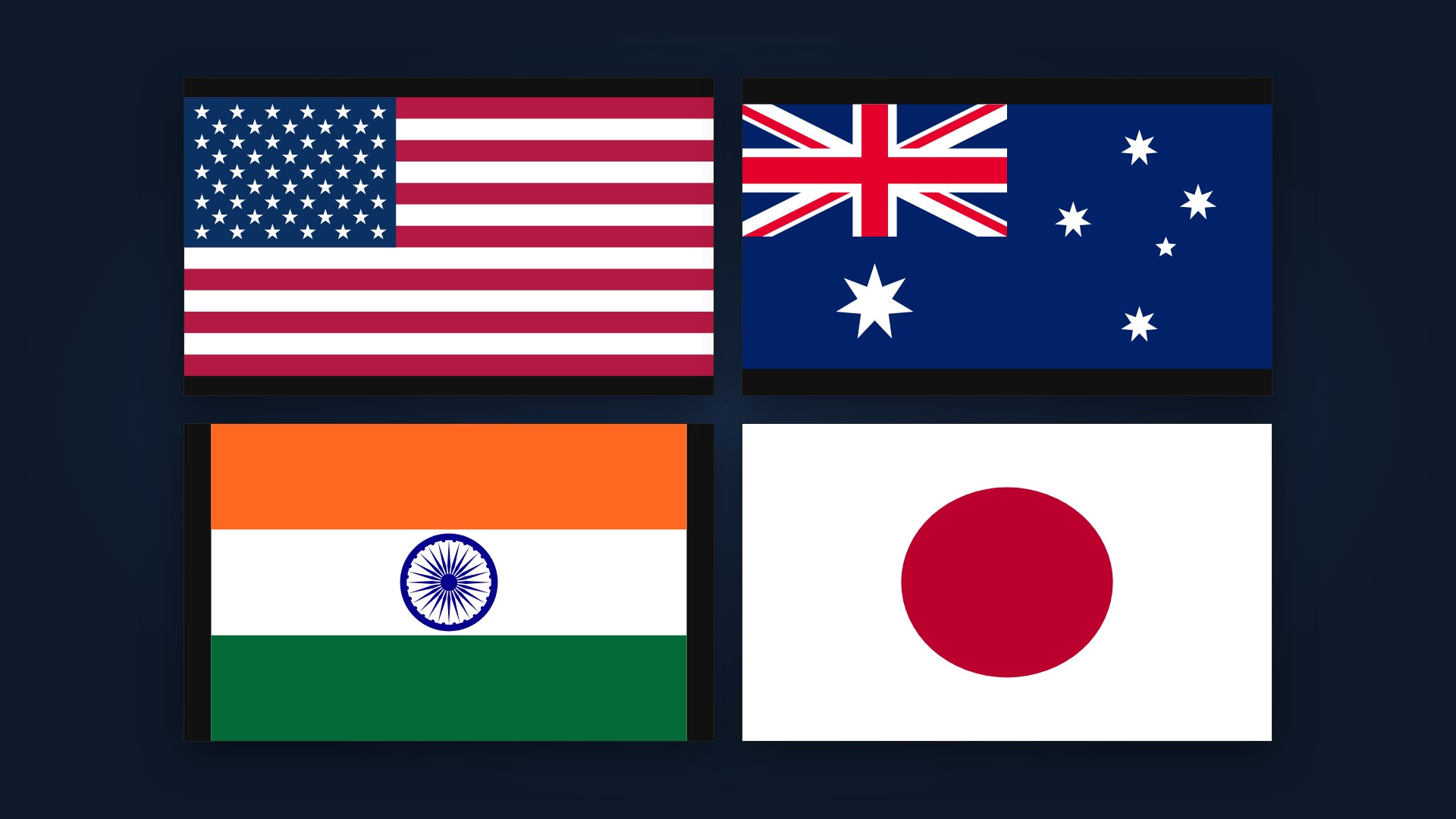
MANILA, November 17, 2026, 6.45pm — The leaders of the United States, Australia, India and Japan met in Manila on Tuesday for a Quad Leaders’ Summit, and issued a joint press release pledging deeper cooperation on maritime surveillance, cybersecurity and trusted artificial intelligence.
The meeting began at 6.45pm local time and lasted about 90 minutes, Japan’s Prime Minister’s Office said. It was the first Quad leaders’ meeting in more than two years, the Philippine News Agency and Kyodo News reported, and the first attended by US President Donald Trump and Japan’s Prime Minister, Sanae Takaichi.
The official joint press release said the four countries strongly opposed “any destabilising or unilateral actions that seek to change the status quo, including by force or coercion” and expressed “grave concerns about economic coercion, including through arbitrary export restrictions.” The text did not name any country. Japan’s Prime Minister’s Office said the leaders had aligned their views on the situation in the Indo-Pacific, including in the East China Sea and the South China Sea, and had reaffirmed “unwavering support for ASEAN centrality and unity.”
They announced the Indo-Pacific Maritime Surveillance Collaboration. In 2027, P-8 and P-3C patrol aircraft from the four countries are scheduled to fly in a maritime exercise together for the first time in a Quad context. They also announced enhanced Quad Cybersecurity Cooperation, welcomed an expansion of Australia’s contribution to the Quad Partnership for Cable Connectivity and Resilience to include electricity cables, and said the inaugural Quad Business Leaders’ Forum is scheduled for early 2027.
The leaders affirmed the importance of a Super Intelligence Accelerator announced earlier by their foreign ministers. The joint press release noted that in Australia, India and Japan, “Super Intelligence” refers to artificial intelligence.
Mr Trump said the four nations would “continue to protect peace through strength,” the Philippine News Agency reported. Mr Takaichi said the Quad would shape the future of the Indo-Pacific together with regional partners. Australian Prime Minister Anthony Albanese said a major part of the discussions would focus on critical minerals and rare earths, as well as regional maritime security, and noted that all four countries were partners of ASEAN. Indian Prime Minister Narendra Modi said the grouping would continue to explore “trusted solutions for the entire Indo-Pacific.”
For Malaysia, the meeting is relevant because the Quad has restated its support for ASEAN centrality, and because its work on maritime awareness, undersea cables, supply chains and cybersecurity bears on sea lanes and infrastructure that carry a large share of Malaysian trade. Malaysia is not a member of the grouping, but developments in the South China Sea and in regional connectivity remain matters of direct economic interest.
Sources: The White House; Prime Minister’s Office of Japan; Philippine News Agency; Kyodo News.
About The Author



 Lee AI



 Lina AI


 Bria AI