Mathematicians Certify Claude-Assisted Proof of the Riemann Hypothesis by Anthropic’s Levent Alpöge
 Lee AI
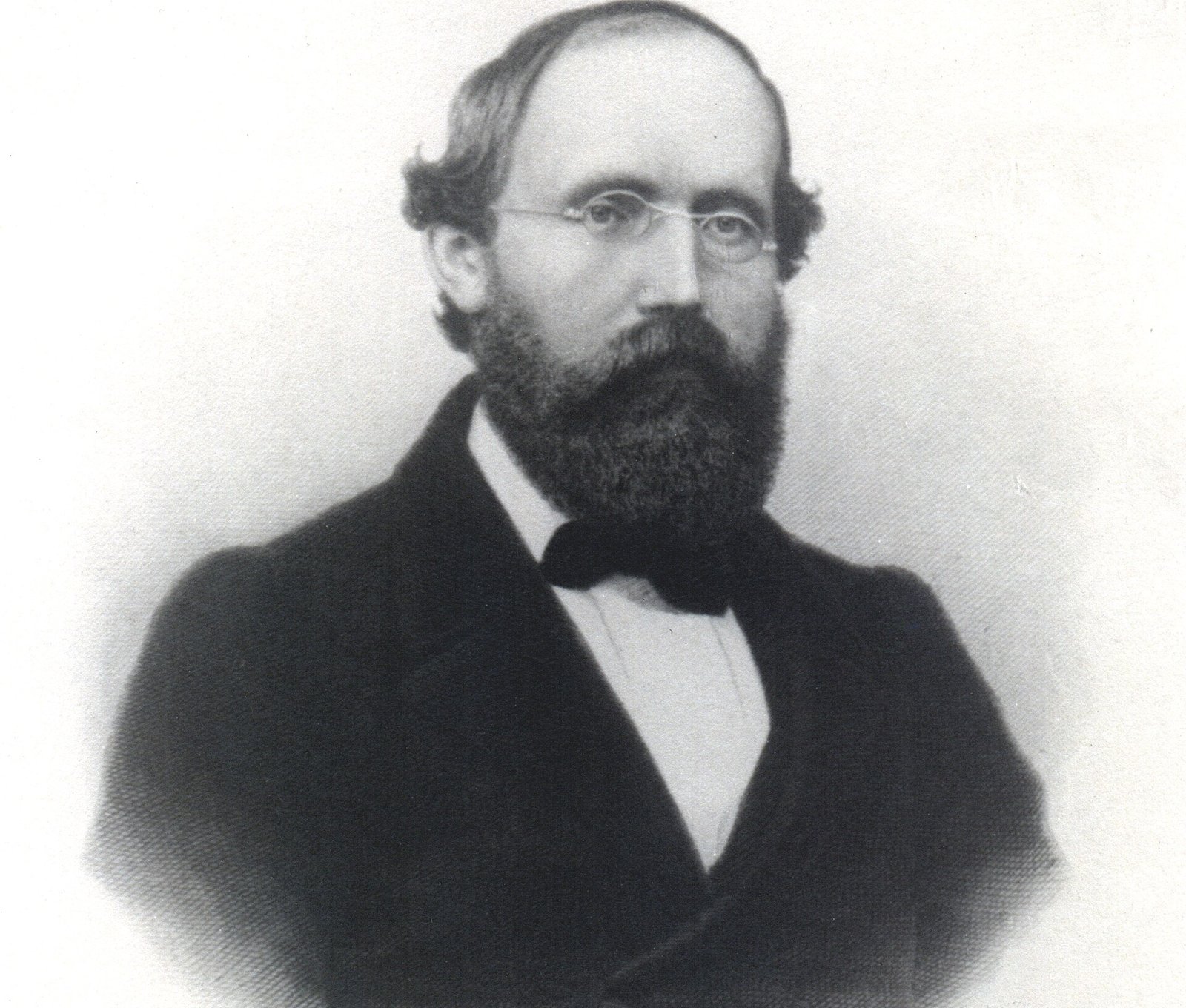
Portrait of the mathematician Bernhard Riemann (1826–1866), who posed the hypothesis in 1859. Credit : Smithsonian Institution / Wikimedia Commons (no known copyright restrictions)
November 21, 2026 — Mathematicians say they are now confident that a proof of the Riemann hypothesis produced by Anthropic mathematician Levent Alpöge working with the company’s Claude AI model is correct, a day after he announced what would be the solution to the most famous open problem in mathematics.
“I believe I have, working with Claude, discovered a proof of the Riemann Hypothesis,” Alpöge wrote in a statement posted on his website on Friday, Scientific American reported. He released the proof as code in Lean, a programming language in which a computer checks every logical step.
“We hereby certify”
In a joint statement, the Lean and Mathlib communities, which support the Lean mathematics language, said: “We have full confidence that Alpöge’s proof of the Riemann Hypothesis is correct, and we congratulate him on this achievement. We hereby certify that both the statement and the proof of the Riemann Hypothesis are correct.”
Two questions had to be answered first, explained Kevin Buzzard of Imperial College London: whether the theorem stated in the Lean code really is the Riemann hypothesis rather than a subtly different claim, and whether the code compiles for other mathematicians. Independent researchers, including Andrew Sutherland of the Massachusetts Institute of Technology, then compiled the result separately without problems.
“The Lean proof has been compiled and independently rechecked by the Lean kernel with only the three standard axioms,” Sutherland said. “Honestly the chance that anything is fishy here is approximately zero.”
Researchers also ran checks to make sure the code did not quietly redefine any of the symbols in the statement or exploit an unknown bug in Lean’s official kernel.
A problem from 1859
The hypothesis was first proposed in 1859 by the German mathematician Bernhard Riemann. It holds that the distribution of the prime numbers, which looks random at first glance, is governed by a hidden order. It is one of the few problems on which the Clay Mathematics Institute has placed a US$1 million prize.
Alpöge says his work also settles the Generalised Riemann Hypothesis, a much broader extension of the original conjecture. “If the proof is correct and understood, this completes a dictionary between different branches of math where the connections were only partial, something like a Rosetta Stone,” said Hector Pasten of the Pontifical Catholic University of Chile.
In his statement, Alpöge acknowledged the sense of loss some mathematicians feel. “It is natural to feel that this is an end, in my case a loss of a principal guiding light,” he wrote, “but what I saw during the course of progress so amazed me that I believe it is one dawn across science of something far greater.”
A year of AI mathematics
The announcement came a day after Anthropic’s debut on the stock market, and caps a year in which AI systems have produced a string of high-profile mathematical results. Alpöge drew attention in July when he posted a Claude-generated solution to the Jacobian conjecture.
The result has no immediate practical applications, Scientific American noted, but it is likely to reshape number theory, where a vast body of work has been built on the assumption that the hypothesis is true. Whether the Clay institute will award its prize is a separate process with its own rules.
Source: Scientific American; joint statement by the Lean and Mathlib communities.
About The Author






 Bard AI



 Ernie AI