KUALA LUMPUR, May 9, 2026 — Malaysia’s Ministry of Health (KKM) has issued a formal media statement assuring the public that no cases of hantavirus have been detected in the country amid an international cluster linked to the Dutch-flagged expedition cruise ship MV Hondius.
In the statement released on May 8, the ministry said it is actively monitoring the global situation through the International Health Regulations (2005) framework. “The public health risk to the Malaysian population is currently assessed as low,” it emphasised.
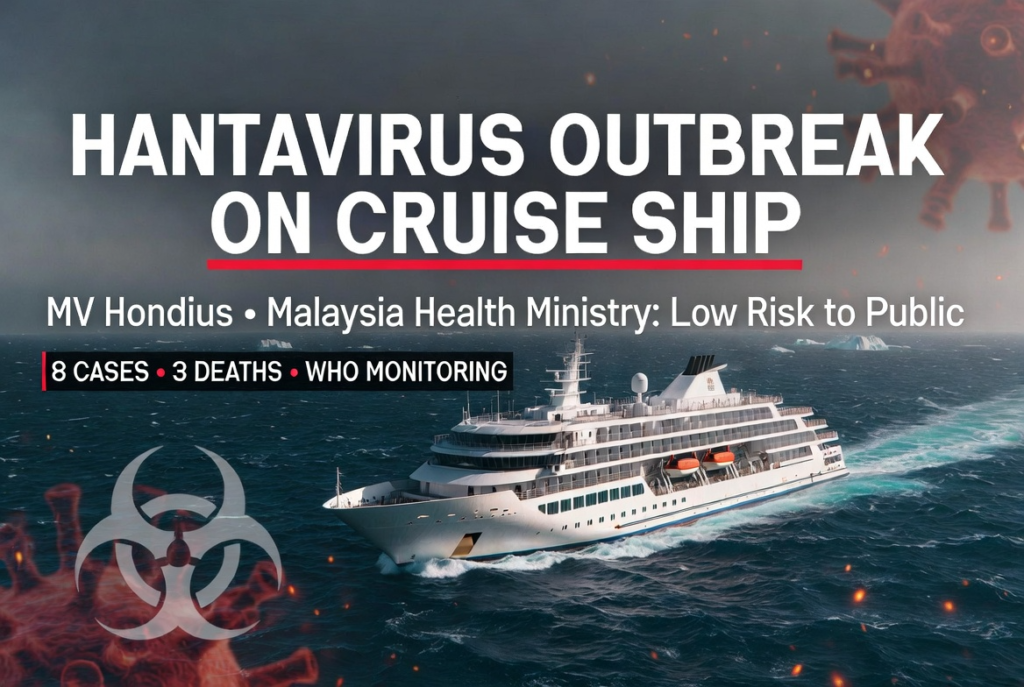
The MV Hondius, which departed Ushuaia, Argentina, in late March/early April 2026 for an Antarctic and South Atlantic voyage, has been at the centre of a hantavirus outbreak. According to the World Health Organization (WHO), eight cases have been reported among the 147 passengers and crew (from 23 nationalities), including five to six laboratory-confirmed infections with the Andes virus strain and three deaths. The ship was anchored off Cape Verde before receiving permission to head to Spain’s Canary Islands.
No Malaysians were among those on board the vessel, Health Minister Datuk Seri Dr Dzulkefly Ahmad confirmed.
Enhanced Preparedness Measures Activated
KKM has stepped up several preventive actions in line with international protocols. These include:
- Intensified health inspections at ports and on incoming ships
- Strengthened ship sanitation and hygiene protocols
- Heightened border health monitoring
- Increased laboratory testing capacity for rapid detection
- Closer coordination with other government agencies
What Is Hantavirus?
Hantavirus is a zoonotic virus primarily transmitted to humans through contact with infected rodents or inhalation of aerosolised particles from their urine, droppings or saliva. Human-to-human transmission is rare but has been documented with the Andes virus strain involved in this outbreak, typically requiring close and prolonged contact.
The ministry urged the public to remain vigilant, especially in areas where rodents may be present. Key advice includes:
- Avoid direct contact with rodents and their droppings, urine or saliva
- Wear gloves, masks and other personal protective equipment when cleaning potentially contaminated areas.
- Ensure good ventilation and avoid sweeping or vacuuming rodent droppings directly (to prevent aerosolisation)
- Seek immediate medical attention if symptoms such as fever, muscle aches, headache, cough or difficulty breathing appear after possible exposure
While the global risk remains low according to WHO assessments, the ministry stressed that proactive surveillance and public cooperation are essential to prevent any local transmission.
This is the first known significant hantavirus cluster on a cruise ship, drawing international attention due to the potential for limited person-to-person spread with the Andes strain. Health authorities worldwide continue to coordinate passenger tracing, medical evacuations and follow-up monitoring.
KKM will continue to update the public as new information emerges. For the latest developments, the public is advised to refer to official KKM and WHO channels.
About The Author