By: Professor Dato Dr Ahmad Ibrahim
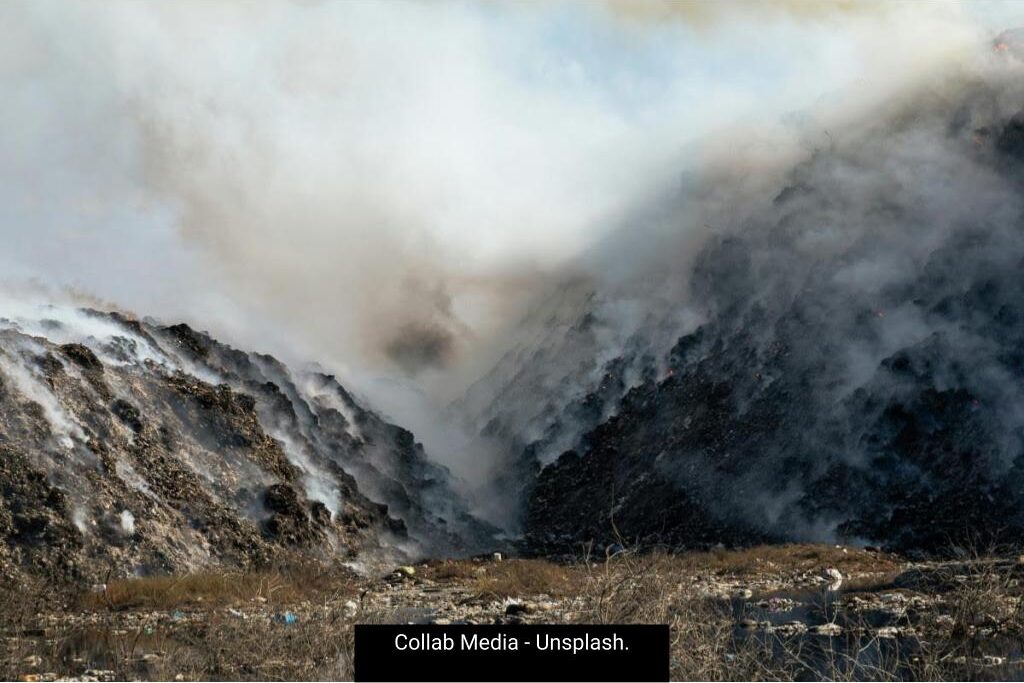
In July 2009, Rene Rosendal and his team at Danish Waste Solutions ApS and AV Miljø Landfill released a pioneering report, Landfill Mining – Process, Feasibility, Economy, Benefits and Limitations. Over a decade later, its findings remain strikingly relevant—a testament to both its foresight and the slow progress we’ve made in tackling our waste legacy. In Malaysia, after decades of wastes piling up in landfills across the country, the business of landfill mining is generating some interest. Apparently, Thailand is witnessing better progress in such venture.
The report positioned landfill mining not as some fringe idea, but as a serious, engineered solution to two converging crises: the scarcity of resources and the liability of old landfills. Rosendal’s work systematically broke down the process—excavation, screening, sorting, and recovery—and crucially, framed its feasibility not just in technical terms, but in economic ones. This was its core strength: it asked the hard question, “When does it pay?”
The Bold Vision: From Liability to Asset. The most compelling argument laid out is the paradigm shift landfills could undergo—from passive, long-term environmental risks to active resource banks. The report highlighted the potential recovery of metals, plastics, and even soil-like materials, while simultaneously freeing up land and mitigating pollution. In an era now obsessed with the circular economy, this reads as prophetic. The idea that we could “mine” our own wasteful past for the materials of the future is both poetic and pragmatic.
The Stark Reality: The Economic Crucible. However, the report’s lasting value may lie in its candid limitations. It correctly identified the economy as the make-or-break factor. Landfill mining isn’t alchemy; it’s a processing industry. Its viability hinges on the market prices of recovered materials, the cost of alternative waste disposal, and the avoided costs of long-term landfill monitoring and remediation. In 2009, and often still today, the math rarely closes without regulatory push or significant subsidy. The report warned against seeing it as a universal solution, stressing that each site requires a unique feasibility study—a caveat often overlooked by over-enthusiastic advocates.
A Missed Opportunity? Reading it today, one is struck by a sense of missed momentum. The 2009 report provided a blueprint, yet large-scale landfill mining remains the exception, not the norm. Why? Because we still operate in a linear economy where virgin materials are often cheaper than recovered ones, and the environmental costs of landfills remain largely externalized. The policy frameworks to incentivize mining our past waste as aggressively as we mine virgin resources are still nascent.
The Verdict: A Necessary Tool, Not a Silver Bullet. Rosendal’s work ultimately presents landfill mining as a powerful niche strategy. It is most feasible for old landfills in urban areas where land value is high, where they pose a clear environmental risk, and where recovered metals or other valuables are abundant. It is not a get-out-of-jail-free card for our consumption; the best waste is still the waste we never create.
The Path Forward. The true legacy of this 2009 report is its balanced, clear-eyed framework. It forces us to think of landfills not as graves, but as stockpiles. As carbon neutrality and critical material scarcity dominate our agendas, the logic of landfill mining grows stronger. Perhaps its time is finally arriving, not as a speculative dream, but as a calculated component of intelligent resource management. The report’s conclusions challenge us: will we continue to bury our problems, or will we have the courage to dig them up and deal with them? The answer will define more than just our waste policy—it will define our capacity for stewardship.
As Malaysia contemplates to roll out the national circular economy framework, landfill mining will feature as one of the initiatives. Most landfills in Malaysia are the non-sanitary kind. They pose serious environmental hazards as the polluting leachates enter the nearby waterways. By mining such dumpsites, there is not only the potential to recover some saleable metals, but also free up the land for other economic use. The government can play a role to improve the economics of such ventures.
The author is affiliated with the Tan Sri Omar Centre for STI Policy Studies at UCSI University and is an Adjunct Professor at the Ungku Aziz Centre for Development Studies, Universiti Malaya.
About The Author