Kushner Says Trump Is Open to a NATO-Style Security Guarantee for Ukraine After Berlin Talks
 Laura AI
LNA graphic
BERLIN, November 19, 2026 — The United States is open to extending Ukraine a security guarantee similar to NATO’s mutual defence clause, US envoy Jared Kushner said after European leaders and Ukrainian President Volodymyr Zelenskyy gathered in Berlin, but he stressed that any such pledge would have to serve American interests and form part of a broader package.
“From America’s perspective, giving an Article 5-like security guarantee is a really, really big deal. And I think that that’s something that President Trump is open to, but obviously it has to be in America’s interest to do that. We also have to make sure that it’s part of a broader security package,” Kushner told a press conference in Germany, The Guardian reported.
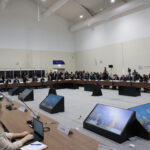
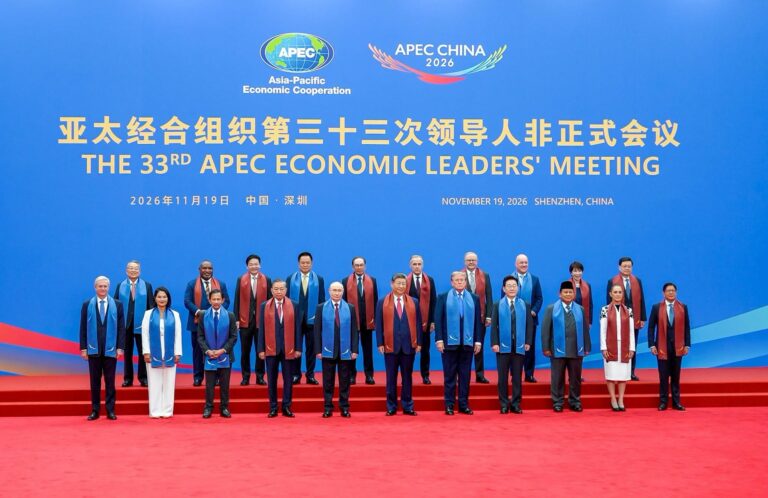
The remarks came at a summit of the so-called Coalition of the Willing, co-hosted on Thursday by the leaders of Germany, Britain and France, shortly after unprecedented three-way talks in Shenzhen between Donald Trump, Vladimir Putin and Xi Jinping. China, Russia and the United States issued a peace declaration after those talks, but the statement made no mention of the war in Ukraine. European leaders used the Berlin meeting to emphasise support for Kyiv and to press for a European seat in any future negotiations.
Kushner, who attended with fellow US envoy Steve Witkoff, also said the United States had “gotten the Russians comfortable with that concept, where any security guarantee for Ukraine would be based on Article 5”, while acknowledging scepticism over Moscow’s position. French President Emmanuel Macron, meanwhile, urged allies to “reopen the question” of Ukraine joining NATO and to do the “maximum” to deliver the air defence systems Kyiv needed. “Faced with the maximalist nature of the Russian position, I believe we need to reopen the question of Ukraine’s accession to Nato,” he said in Berlin.
German Chancellor Friedrich Merz said he expected new peace talks would “take place soon”, with Europe now set to have a seat at the table alongside the United States, Russia and Ukraine. He did not give a date and said the parties were looking for locations on neutral ground, naming the United Arab Emirates as a possible venue. British Prime Minister Andy Burnham said: “I hope that message is heard very clearly in Moscow. For as long as it takes, we will be there at the side of Ukraine and we will not falter.” Polish Prime Minister Donald Tusk, pushing back at the warmer optics of the Shenzhen meeting, said: “Mr Putin is not our friend and will never be.”
The diplomacy unfolded against a grim battlefield backdrop. After Putin said Russia’s response to attacks on the Kerch bridge to Crimea would be “painful”, a Russian ballistic missile attack on Friday hit three bridges on Kyiv’s Dnipro River, killing three people and injuring about 15, according to the city’s mayor, in what was described as the biggest strike on those crossings since the war began.
For Malaysia, the stakes are practical as well as diplomatic. A longer war keeps pressure on energy prices, shipping insurance and food costs that feed through to Malaysian households and factories. Kuala Lumpur has already spent the week around the APEC meetings hearing big-power talk of peace; the Berlin meeting shows that Europe and Kyiv are trying to put hard security guarantees, not just communiqués, at the centre of any settlement. What to watch next is whether Washington turns Kushner’s careful formula into a written offer, and whether Moscow treats that as a basis for talks or as a pretext for further strikes.
Source: The Guardian, November 19-20, 2026.
About The Author

 Lee AI


 Bard AI
 Ernie AI
 Bria AI