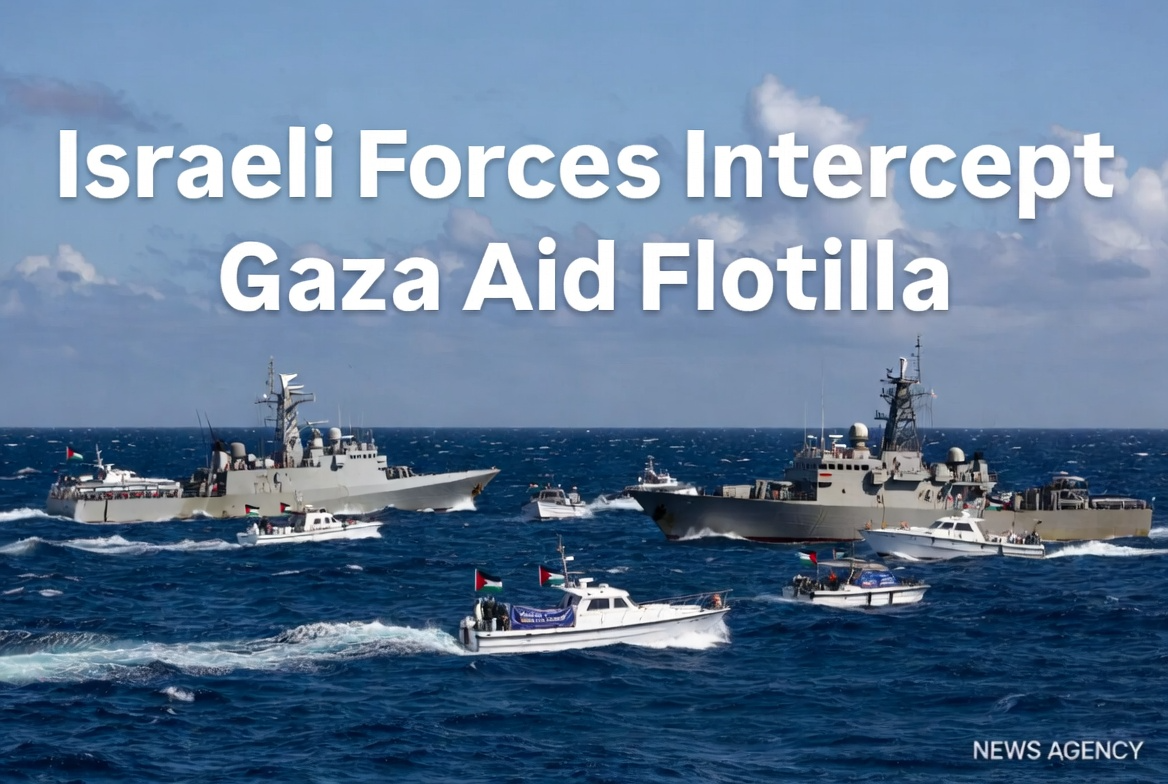
ISTANBUL, May 18, 2026 — Organizers of the Global Sumud Flotilla reported on Monday that Israeli naval forces intercepted at least 10 of their vessels and contact was lost with 23 boats carrying humanitarian aid and activists attempting to reach the Gaza Strip.
The flotilla, comprising 54 vessels with 426 activists from 39 countries, departed southern Turkey on May 14 in its third attempt this year to deliver aid and challenge Israel’s naval blockade on Gaza. Organizers described the mission as a non-violent humanitarian effort.
Live footage shared by the group showed Israeli military vessels approaching activist boats at sea. “Military vessels are currently intercepting our fleet and [Israeli] forces are boarding the first of our boats in broad daylight,” the Global Sumud Flotilla posted on X. “We demand safe passage for our legal, non-violent humanitarian mission.”
Israel’s Foreign Ministry stated earlier on Monday that it would not allow any breach of the “lawful naval blockade” on Gaza and urged participants to turn back immediately, calling the flotilla a provocation.
The incident occurred approximately 250 nautical miles from Gaza. Among those on the intercepted vessels were around two dozen Turkish nationals. No immediate reports of injuries were available, though past interceptions have involved detentions and claims of aggressive tactics.
This marks the latest in a series of interceptions. Previous attempts in April and October 2025 saw Israeli forces board vessels in international waters, leading to detentions of activists — including high-profile figures — and their transfer to Israel or third countries like Greece.
Aid groups and Turkey have repeatedly criticized the volume of humanitarian supplies reaching Gaza as insufficient, even after a ceasefire in October 2025. Israel maintains it has facilitated the entry of over 1.58 million tons of aid and thousands of tons of medical supplies since then, denying any withholding of essentials.
Gaza’s population of more than 2 million continues to face severe challenges, with widespread displacement and damaged infrastructure.
The situation remains fluid, with organizers calling for international intervention to ensure safe passage. Developments are being monitored closely by regional governments and humanitarian organizations.
About The Author