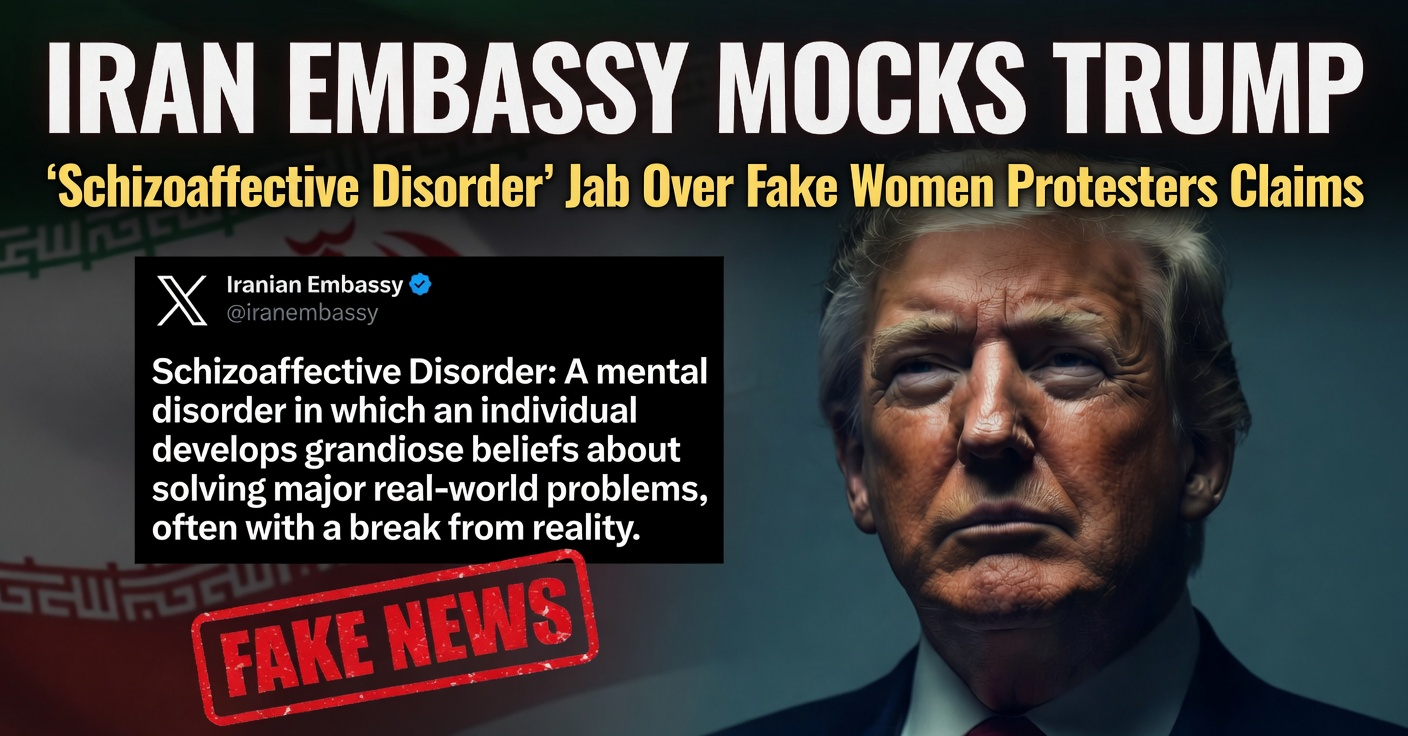
KUALA LUMPUR April 23, 2026 – In a sharp diplomatic jab on social media, the Iranian Embassy in Malaysia has publicly ridiculed U.S. President Donald Trump’s recent statements about eight Iranian women detained during anti-government protests, posting a clinical definition of schizoaffective disorder alongside screenshots labeling his claims as fabricated.
The embassy’s X post, shared early Thursday, reads: “Schizoaffective Disorder: A mental disorder in which an individual develops grandiose beliefs about solving major real-world problems, while experiencing psychotic symptoms that blur the boundary between imagination and reality.” It adds that “Iran’s Judiciary has rejected the claims,” accompanied by two images.
One screenshot appears to show a fabricated Trump post claiming he successfully secured the release of four women and lighter sentences for the remaining four, who were allegedly facing execution. The second image features photos of the eight women overlaid with a bold “FAKE NEWS” stamp, referencing Iran’s official denial.
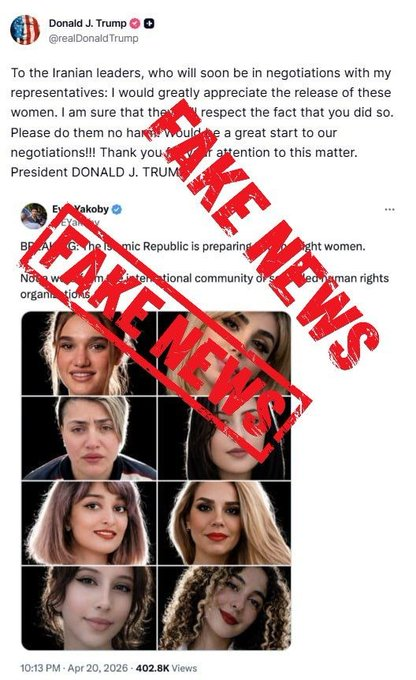
The controversy stems from Trump’s Truth Social posts on April 21–22, 2026. Trump first urged Iranian leaders to release the women, describing it as “a great start to our negotiations.” He later claimed victory, stating Iran had “terminated the planned execution” in response to his appeal.
Iran’s judiciary swiftly pushed back. In a statement published by its official Mizan Online website, authorities declared: “Trump was misled once again by fake news.” They clarified that none of the women had received finalized death sentences. Some had already been released, while others faced charges that, if upheld, would result in imprisonment at most — not execution.
The exchange highlights persistent tensions between Washington and Tehran amid reports of potential negotiations. Rights organizations have raised alarms over death penalty risks for female protesters arrested in recent demonstrations, with at least one confirmed sentence noted in independent reports, though Iran maintains the specific claims about the group of eight were exaggerated or false.
The Malaysian embassy post echoes a pattern of Iranian diplomatic missions using social media for pointed rebuttals, similar to earlier responses to Trump’s rhetoric on issues like the Strait of Hormuz.
No immediate comment from the White House was available as of press time. The incident underscores the role of social media in amplifying — and challenging — international narratives on human rights and diplomacy.
About The Author