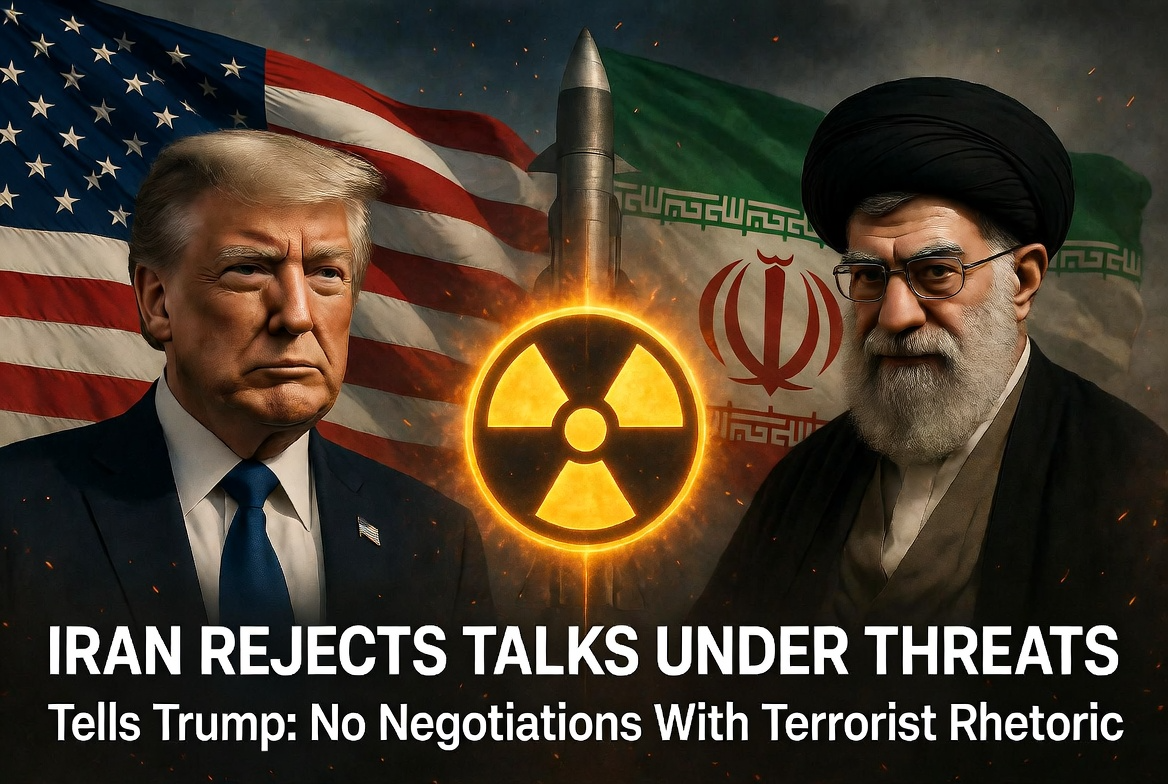
TEHRAN June 10, 2026 — Iran has firmly rejected any negotiations conducted under duress, responding sharply to recent statements from President Donald Trump amid ongoing tensions and fragile ceasefire efforts following months of conflict.
In a statement highlighted by multiple outlets and shared widely on social media, Iranian officials declared: “Iran has never negotiated under threats…and will never submit to pressure.” They urged President Trump to avoid “terrorist” threats if he genuinely seeks a deal.
The remarks come as Trump has publicly accused Iran of delaying talks and warned of renewed “hard” strikes if a deal is not reached quickly. U.S. officials have maintained pressure through military posturing, including a naval blockade affecting the Strait of Hormuz, while Iran demands the release of frozen assets and an end to coercive tactics.
Iran’s Ambassador to the UN and other senior figures have echoed this position in recent days, insisting that diplomacy requires “conducive conditions” free from intimidation. Tehran has signaled openness to talks via mediators but remains steadfast against what it calls coercion.
Background on U.S.-Iran Tensions
- Escalation in 2025-2026: Indirect and direct talks have alternated with military exchanges, including Israeli and U.S. strikes on Iranian targets and Iranian retaliation.
- Key Sticking Points: Iran’s nuclear program (uranium enrichment limits), sanctions relief/frozen assets (reportedly $24 billion demanded as a trust measure), reopening of the Strait of Hormuz, and linked conflicts in Lebanon.
- Current Status: A fragile ceasefire holds in some areas, but violations and threats persist. Trump has alternated between calls for a deal and warnings of escalated action.
Analysts note that both sides appear to be using public statements for leverage, with Iran emphasizing sovereignty and resilience, while the U.S. applies maximum pressure. Indirect channels, including through Oman or other intermediaries, continue despite the public standoff.
This latest exchange underscores the high stakes: failure to bridge the gap could lead to renewed hostilities with significant implications for global energy markets and regional stability.
About The Author