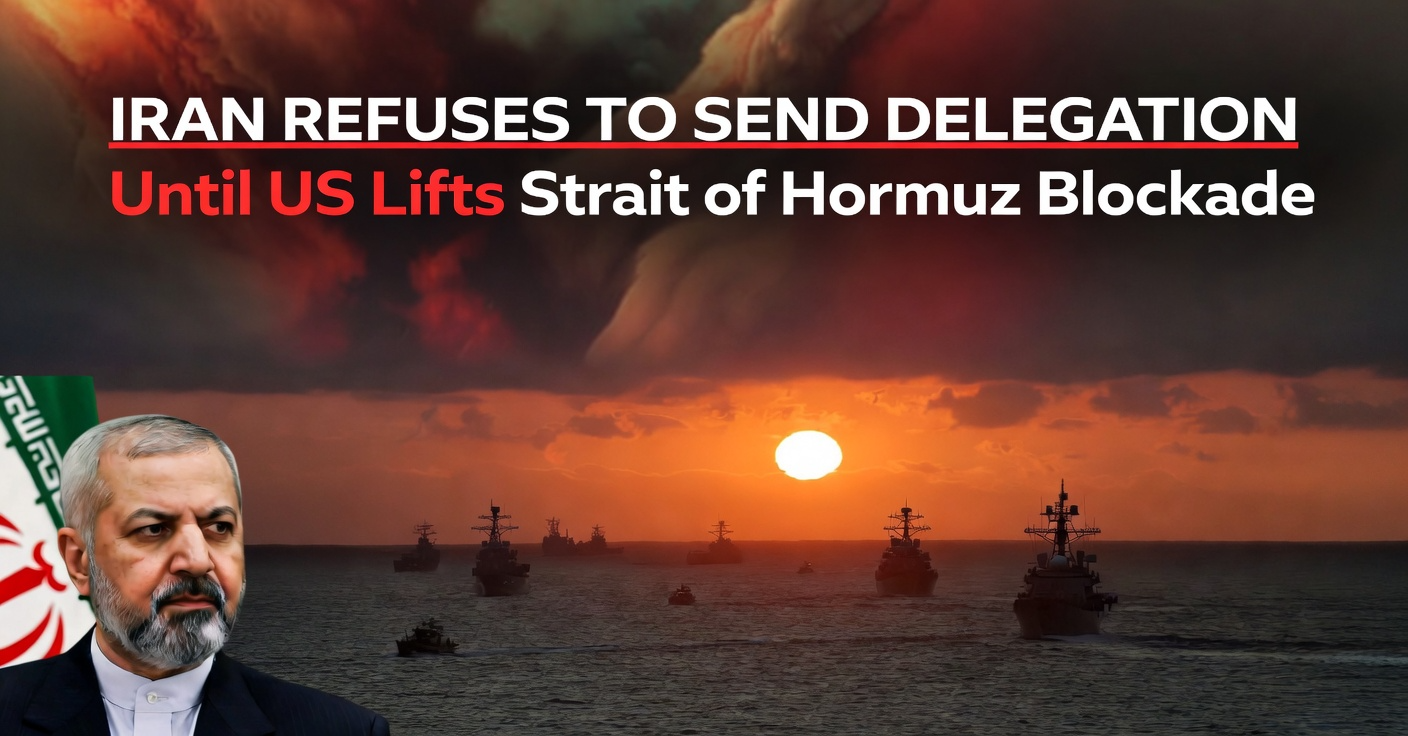
ISLAMABAD/TEHRAN – April 21, 2026 In a significant setback to fragile diplomatic efforts, Iran has declared it will not dispatch a delegation to the next round of peace talks with the United States unless Washington immediately lifts its naval blockade of the Strait of Hormuz and Iranian ports.
The announcement, reported moments ago by BRICS News and corroborated by multiple regional sources, comes as a two-week ceasefire between the two longtime adversaries teeters on the brink of collapse. The truce, brokered earlier this month, is scheduled to expire within hours.
“Iran will not consider negotiations until the US naval blockade on Iranian ports is completely lifted,” Iranian officials told mediators, according to diplomatic sources. Tehran views the blockade as a direct violation of the ceasefire agreement and an act of economic warfare.
The development was illustrated in social media reports with images of a senior Iranian diplomat and U.S. Navy destroyers patrolling the strategic waterway — a visual reminder of the high-stakes standoff in one of the world’s most vital oil chokepoints.
Background to the Stalemate
The latest impasse follows weekend escalation in the Gulf. The U.S. seized an Iranian-flagged cargo vessel attempting to navigate near the Strait of Hormuz, prompting Tehran to accuse Washington of “armed piracy.” Iran briefly reopened the strait last week only to reimpose restrictions after the U.S. refused to end its blockade.
U.S. President Donald Trump has repeatedly stated that the blockade will remain in place until a comprehensive deal is reached. Washington is demanding limits on Iran’s uranium enrichment program and other security guarantees in exchange for sanctions relief.
A first round of face-to-face talks held in Islamabad, Pakistan, failed to produce a breakthrough. U.S. Vice President JD Vance has yet to depart Washington for a planned second round, and Iranian officials have not confirmed participation.
Pakistan, acting as key mediator, has already begun security preparations in Islamabad, but sources say negotiating positions remain “far apart.”
Global Implications
The Strait of Hormuz carries nearly 20% of global oil trade. Renewed closure or continued blockade risks sending energy prices soaring and disrupting international shipping lanes.
Oil markets reacted sharply to the latest reports, with prices jumping amid fears that the fragile ceasefire could unravel into full-scale confrontation.
Iranian Parliament Speaker Mohammad Bagher Ghalibaf stated on social media that Tehran “does not accept negotiations under the shadow of threats” and is prepared to respond on the battlefield if necessary.
As the ceasefire deadline looms, international observers are watching closely to see whether back-channel diplomacy — or escalation — will prevail in the coming hours.
Life News Agency will continue to monitor developments from Islamabad, Tehran, and Washington.
About The Author