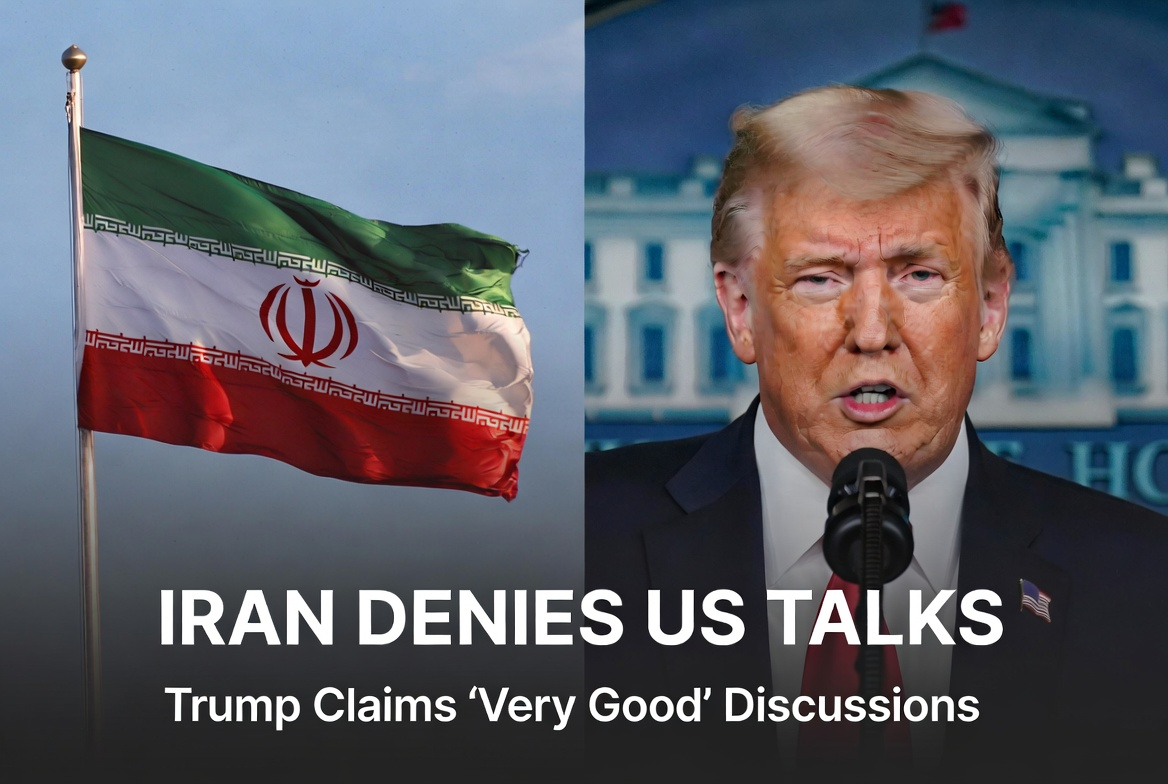
TEHRAN Aug 5, 2026 – Iranian media and officials on Wednesday rejected claims of active negotiations with the United States, directly contradicting U.S. President Donald Trump’s assertion that the two sides are holding “very good” discussions aimed at ending the ongoing conflict and reopening the Strait of Hormuz.
In a report circulating widely on social media, including a post by the geopolitics-focused account @BRICSinfo, Iranian outlets stated there are no ongoing talks with Washington. Iranian Foreign Ministry spokesperson Esmaeil Baqaei and state-linked media, including Mehr News Agency, emphasized that Tehran’s current diplomatic efforts are limited to discussions with Oman focused solely on securing safe passage through the strategic waterway.
Trump, speaking to Fox News, said his administration had conducted “very good discussions” with Iran during all-day negotiations on Tuesday. He expressed optimism that the Strait of Hormuz “is going to be open very soon,” while warning that any Iranian pullback would result in a hard military response. The comments came as oil prices dipped and Asian markets rose on hopes of a potential breakthrough after months of hostilities.
The public disagreement highlights a recurring pattern in the five-month-old conflict, which began with U.S.-Israeli strikes on Iran earlier this year. Trump has repeatedly announced progress in talks or pauses in planned strikes, only for Iranian officials to deny direct negotiations and insist any contacts are mediated or restricted to specific issues like maritime security. Tehran has consistently maintained that broader U.S.-Iran talks are not underway and that progress on Hormuz depends on an end to what it calls U.S. aggression.
The Strait of Hormuz, a critical chokepoint for global oil and gas shipments, has been heavily disrupted during the conflict, contributing to energy market volatility. Both sides have used public statements to shape narratives around diplomacy, with Trump framing talks as productive and Iran portraying any U.S. claims as efforts to influence markets or pressure Tehran.
As of Wednesday, no independent confirmation of direct high-level U.S.-Iran negotiations had emerged, leaving the path to de-escalation uncertain amid continued regional tensions.
About The Author