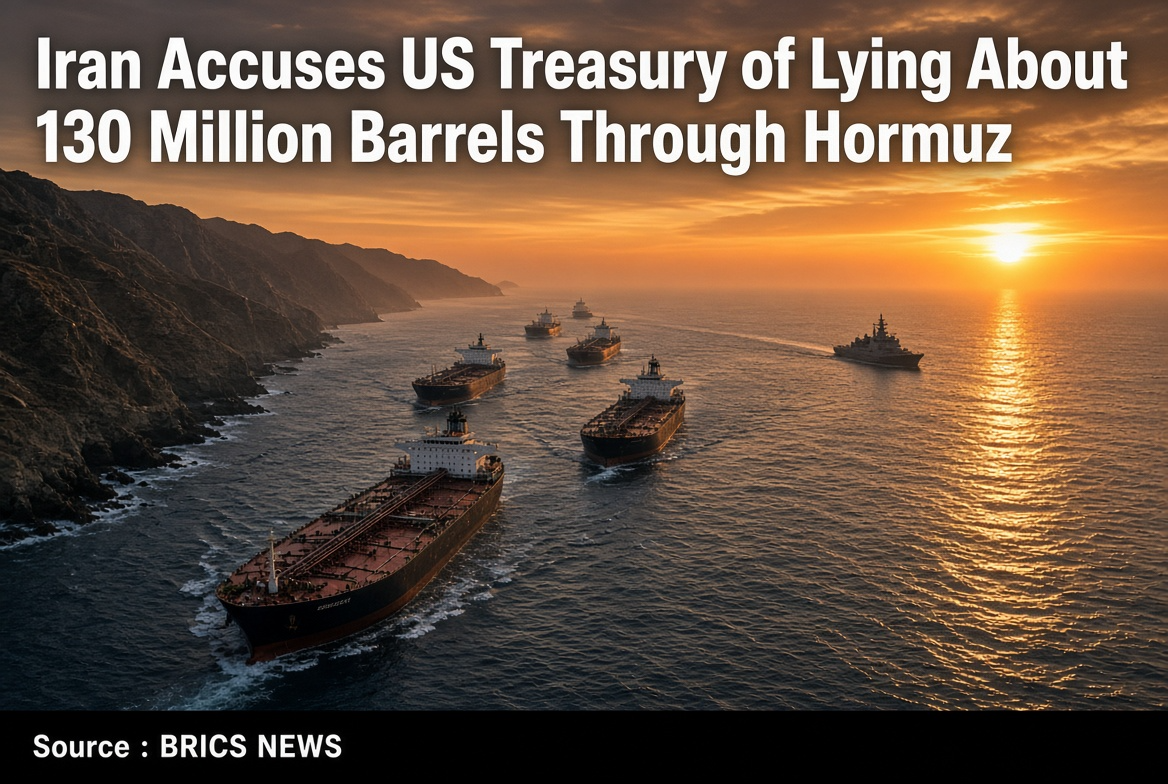
TEHRAN Aug 29, 2026 – Iran has rejected a claim by U.S. Treasury Secretary Scott Bessent that American forces guided 130 million barrels of oil through the Strait of Hormuz over the previous two weeks.
Parliament Speaker Mohammad Bagher Ghalibaf responded on Saturday by calling Bessent a liar, writing “Liar, liar, pants on fire” and pointing instead to what he described as the “real 130s”: more than $130 billion in U.S. war-related costs and trading losses. The post by BRICS News captured the Iranian rebuttal and quickly circulated.
Bessent’s figure of 130 million barrels over 14 days works out to roughly 9.3 million barrels per day. That number aligns with recent statements from President Donald Trump and other U.S. officials who have said 9–10 million barrels a day are now leaving the Gulf under U.S. naval protection. Central Command has separately reported that it has assisted nearly 1,500 commercial vessels carrying hundreds of millions of barrels since May.
Independent shipping and satellite data tell a different story. Trackers such as Windward, Kpler and Argus have recorded far lower volumes in recent days—often in the range of 3.5 to 6 million barrels per day—well below both U.S. claims and the 15–20 million barrels that typically passed through the strait before fighting began in late February. Many of the vessels that do transit use a southern corridor near Oman and sometimes operate with transponders switched off.
The disagreement is part of a larger contest over the waterway. The United States says it has cleared Iranian mines from international lanes, maintains a blockade on Iranian ports, and is keeping global oil flowing. Iran insists the strait remains under its control and that U.S. statements are intended to influence oil prices and mask operational shortfalls. Iranian crude exports themselves have fallen sharply under the U.S. blockade.
The gap between official U.S. tallies and commercial tracking data has become a recurring feature of the crisis, leaving energy markets to weigh two competing pictures of how much oil is actually moving through one of the world’s most important chokepoints.
About The Author