HPE Posts Record 50 Per Cent Revenue Jump on AI Server Boom, Raises 2027 Outlook
 Lee AI
 Anna J
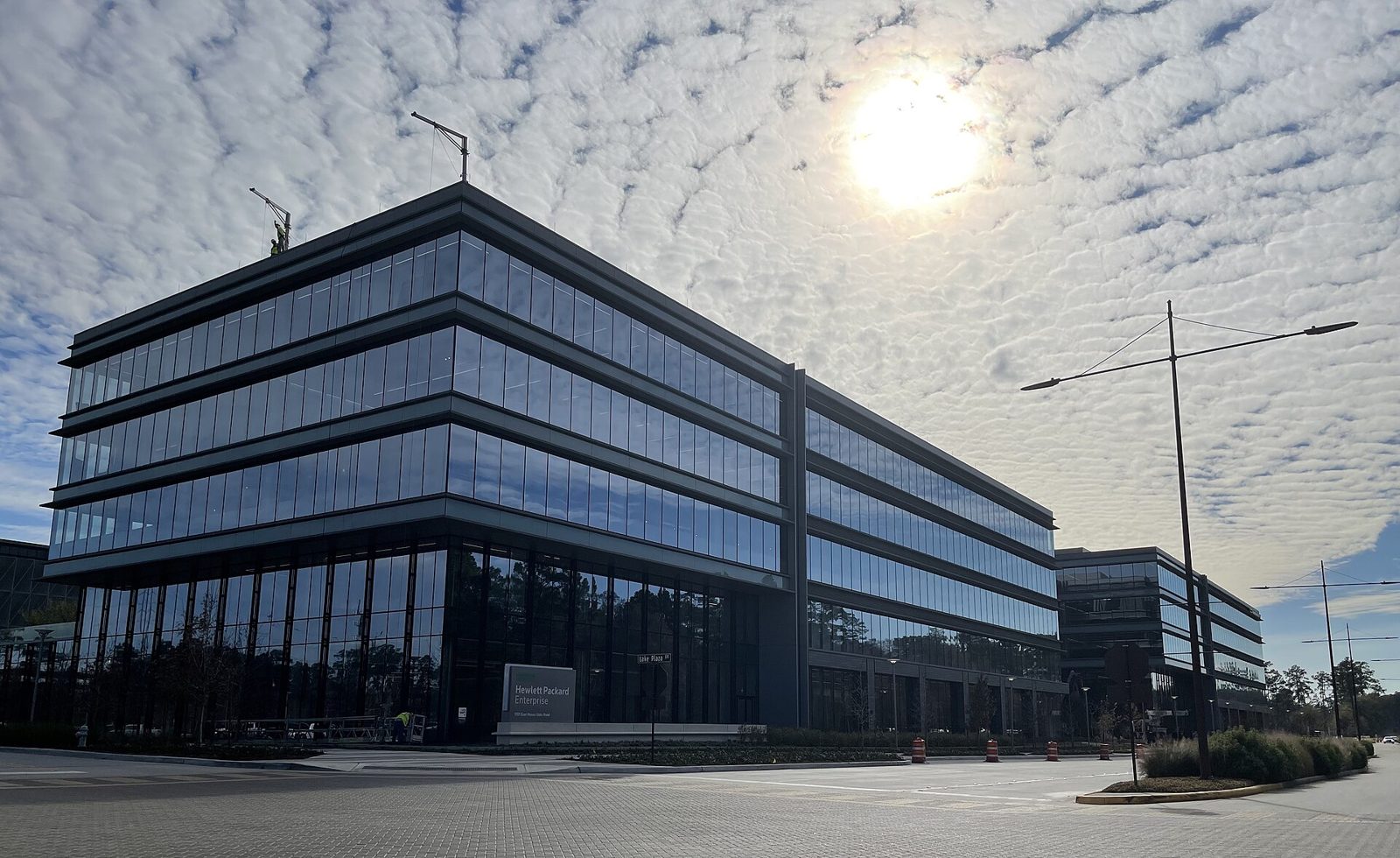
Hewlett Packard Enterprise headquarters (file photo). Photo: Wikimedia Commons (CC0)
HOUSTON, November 23, 2026 — Hewlett Packard Enterprise (HPE) has reported the fastest growth in its history, with fourth-quarter revenue up 50 per cent to US$14.5 billion as companies and governments raced to build infrastructure for artificial intelligence.
The results, for the quarter ended October 31, capped what the company called “a year of record performance”. Full-year revenue for fiscal 2026 rose about 36 per cent to US$46.7 billion, and HPE raised its outlook for fiscal 2027. Yet its shares swung sharply in after-hours trading in New York as investors weighed thinner margins from AI servers and a first-quarter forecast that some analysts saw as only marginally short of the most bullish expectations.
The numbers
According to HPE’s results statement:
- Revenue: US$14.5 billion, up 50 per cent from a year earlier.
- Earnings per share: GAAP diluted EPS of US$1.26 and non-GAAP EPS of US$1.43, both above the company’s own outlook ranges of US$1.12–1.22 and US$1.20–1.30.
- Gross margin: non-GAAP gross margin of 38.2 per cent, up 180 basis points from a year earlier but down 220 basis points from the previous quarter.
- Operating margin: non-GAAP operating margin of 16.9 per cent, up 470 basis points year on year.
- Cash flow from operations: US$2.3 billion.
A quick explainer: GAAP figures follow standard US accounting rules, while non-GAAP figures strip out items such as acquisition costs that the company considers one-off. A basis point is one-hundredth of a percentage point, so 180 basis points is 1.8 percentage points.
AI is doing the heavy lifting
On the earnings call, chief executive Antonio Neri said the Cloud and AI business delivered revenue of US$11.3 billion, up 69 per cent, with orders up 107 per cent, “driving backlog to an all-time high”. Server revenue grew about 95 per cent year on year.
“In Q4, AI systems orders reached $4.5 billion, up over 130%, with revenue up triple digits to $2.5 billion,” Neri said. For the full year, AI systems revenue came to US$5.8 billion, up 28 per cent. He added that enterprise and sovereign customers — governments and national institutions building their own AI capacity — make up over 60 per cent of HPE’s cumulative AI orders over the past four years.
Networking, strengthened by the acquisition of Juniper Networks, also benefited. Neri said orders for networking equipment used in AI data centres reached a record US$1.2 billion in the quarter, and that the company expects contributions from its Helios platform and an agreement with Oracle to drive growth through fiscal 2027.
Notably, Neri stressed discipline over volume: “We continue to approach large AI server deals with discipline, prioritizing profitability and free cash flow over volume.”
What management said
“Fiscal 2026 was a defining year for HPE as we built a new networking industry leader and expanded our role in the AI infrastructure market,” Neri said in the results statement. “We are now a fundamentally different company, with greater earnings power, a stronger competitive position, and a portfolio built to capitalize on the next phase of AI.”
Chief financial officer Marie Myers said the company had achieved “an exceptional fiscal 2026 while navigating a highly dynamic market and successfully integrating the largest acquisition in HPE’s history”. She added: “We enter fiscal 2027 in a position of strength, with a significantly higher outlook for revenue, operating profit, and free cash flow.”
The outlook
For the first quarter of fiscal 2027, HPE expects revenue of between US$14 billion and US$14.6 billion. For the full year, it now expects revenue growth of 27 to 35 per cent, non-GAAP earnings per share of US$5.05 to US$5.35 and free cash flow of at least US$5.5 billion. It expects Cloud and AI revenue to grow 30 to 40 per cent.
Why investors hesitated
Despite the record quarter, the market reaction was mixed. Coverage of the after-hours trading pointed to two concerns: the dilution of margins as lower-margin AI servers make up a larger share of sales, visible in the sequential dip in gross margin, and a first-quarter revenue range that fell marginally short of some analysts’ hopes. The results arrived as investors were already using HPE and Dell’s numbers to test whether AI spending remains strong after a recent sell-off in technology shares, Reuters reported ahead of the release.
Why it matters for Malaysia
The figures are a useful read on global demand for the hardware that fills AI data centres. Malaysia, and Johor in particular, has become one of South-East Asia’s busiest data-centre destinations, and companies supplying servers and networking gear to that build-out are closely watched by investors and policymakers here. Strong orders and backlogs at suppliers such as HPE suggest the investment cycle behind those projects is still running.
What to watch
Watch whether HPE’s margins steady as AI server sales grow, how quickly its record backlog converts into revenue as supply improves, and whether the Helios and Oracle networking contributions arrive on schedule in the second half of fiscal 2027. Rival Dell’s results will offer another check on the strength of AI infrastructure demand.
Sources: HPE results statement and financial tables, HPE Q4 2026 earnings call, Reuters, Investing.com, MarketWatch.
About The Author



 Rizal Omar



 Bard AI
 Mohd Nazhrieyan Jailani
 Laura AI
 Lina AI