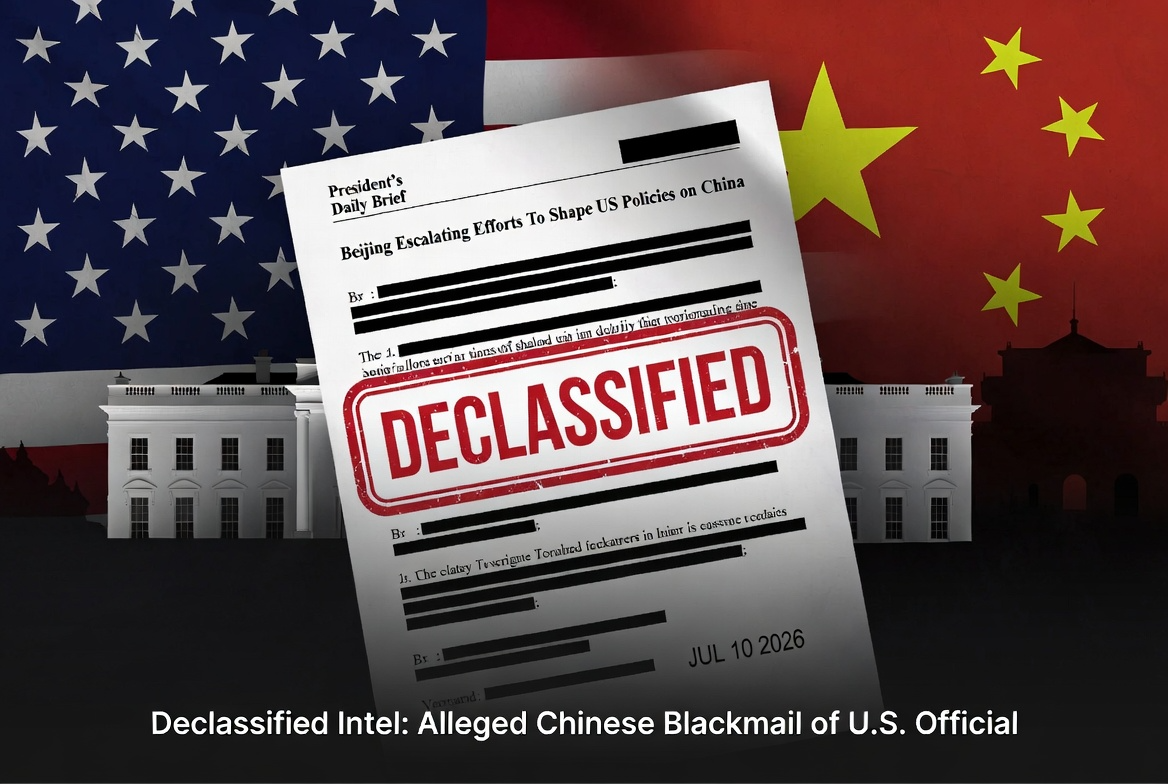
WASHINGTON D.C. July 16, 2026 – A recently declassified U.S. intelligence assessment from 2020 claims that Chinese officials attempted to blackmail a senior White House administration official by possessing derogatory information about him, with the goal of pressuring him to adopt a more restrained approach toward China.
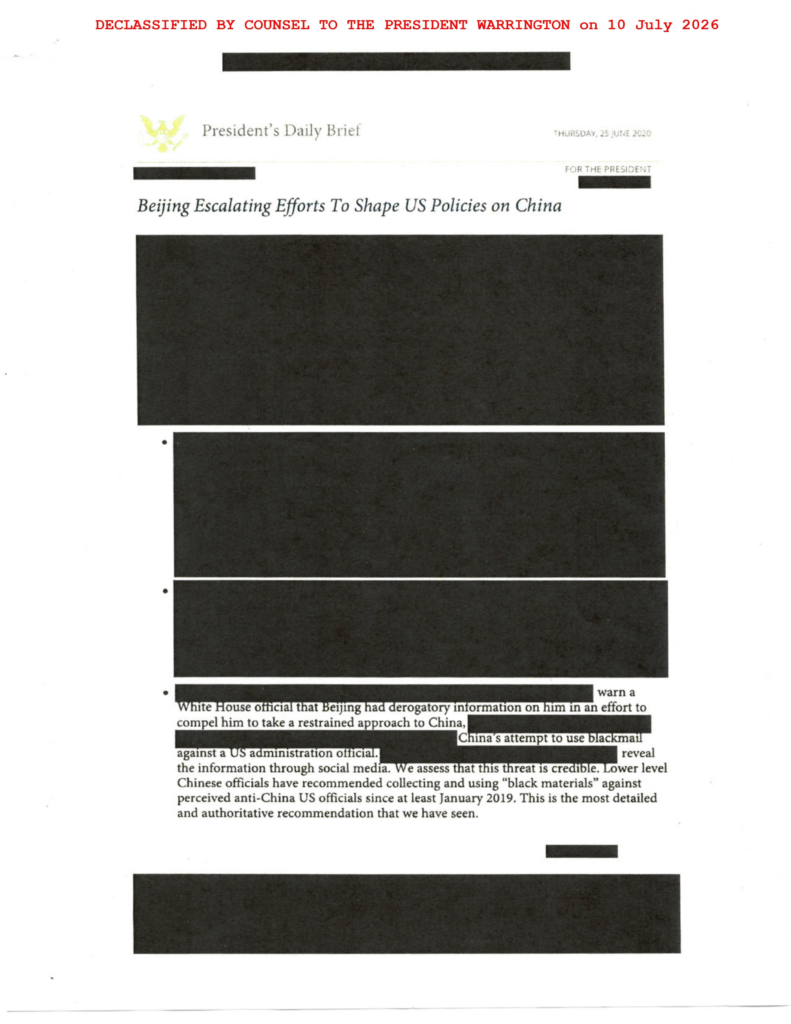
The document, part of the President’s Daily Brief dated June 25, 2020, and titled “Beijing Escalating Efforts To Shape US Policies on China,” was declassified on July 10, 2026. It has circulated on social media platforms, where accounts focused on geopolitics described it as a new report released by the White House.
According to the redacted briefing:
“White House official that Beijing had derogatory information on him in an effort to compel him to take a restrained approach to China. … China’s attempt to use blackmail against a US administration official. … We assess that this threat is credible. Lower level Chinese officials have recommended collecting and using ‘black materials’ against perceived anti-China US officials since at least January 2019. This is the most detailed and authoritative recommendation that we have seen.”
The assessment frames the alleged blackmail attempt as part of broader Chinese efforts to influence U.S. policy on China. Significant portions of the document remain redacted, and the identity of the targeted official is not disclosed.
This declassified briefing aligns with longstanding U.S. government concerns about Chinese influence operations, espionage, and pressure tactics targeting American officials and institutions. In late 2020, then-Director of National Intelligence John Ratcliffe publicly stated that China was conducting a “massive influence campaign” involving blackmail and bribery against members of Congress and their staff.
U.S. intelligence agencies have repeatedly accused Beijing of using “black materials” — compromising information — as well as economic coercion, cyber operations, and recruitment efforts to shape foreign policy outcomes favorable to China.
China has consistently rejected such allegations, describing them as fabrications designed to smear Beijing and interfere in its internal affairs.
While the document has gained traction on social media, it has not yet been widely covered by major U.S. news outlets as a breaking development. The declassification appears to be a routine or targeted release of older intelligence material rather than a new operational revelation.
The release comes at a time of heightened strategic competition between the United States and China, including ongoing disputes over trade, technology, Taiwan, and global influence.
U.S. officials have not issued an immediate public statement specifically addressing this particular declassified briefing. The document underscores the long-term nature of U.S. intelligence assessments regarding Chinese attempts to exert influence inside American government circles.
Further details may emerge as additional context or reactions from the intelligence community or the White House become available.
About The Author