Source : Prime Minister's Office
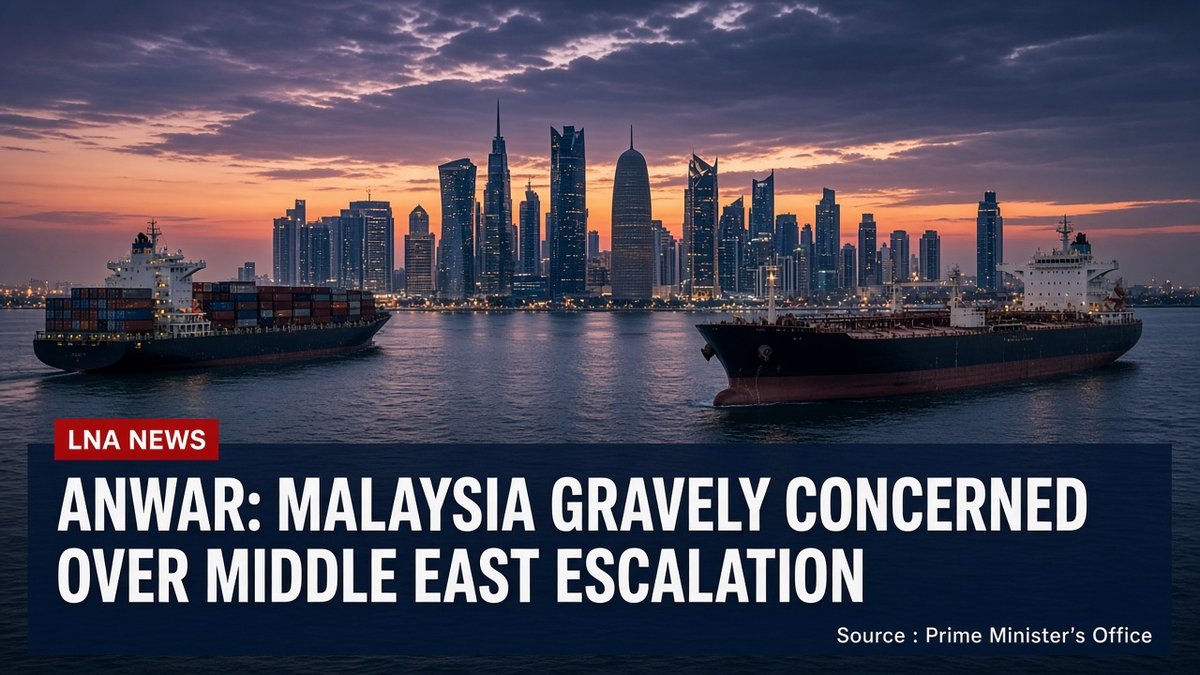
PUTRAJAYA, October 21, 2026 – Prime Minister Datuk Seri Anwar Ibrahim said Malaysia views with great concern the escalating conflict across the Middle East, and that he has been in close contact with Gulf leaders, including Saudi Crown Prince Mohammed bin Salman and Qatar’s Prime Minister Sheikh Mohammed bin Abdulrahman Al Thani, as the crisis threatens to spread.
In a statement shared on X on Wednesday, October 21, Anwar said the conversations with the two leaders, as well as other leaders across the Gulf, “reflect the gravity with which Malaysia regards the present crisis, and the urgency of preventing it from spreading further.”
“Malaysia’s position is clear. We remain steadfast in our call for peace and justice for the Palestinian people, in our unequivocal condemnation of the genocide in Gaza, and in our opposition to the indiscriminate bombing of southern Lebanon,” he said.
Anwar said the same conviction obliged Malaysia to speak with equal clarity and firmness when civilians were attacked elsewhere. He reiterated Malaysia’s condemnation of attacks by Yemen’s Houthis on civilians and civilian infrastructure, including airports and oil and energy installations, “whether in Saudi Arabia or in any other GCC state,” referring to the six-member Gulf Cooperation Council.
He singled out the recent attack on King Khalid International Airport in Riyadh, which he said resulted in the tragic loss of innocent civilian lives, including pilgrims, describing it as “a sad reminder of what such violence costs ordinary people.”
The Prime Minister was careful to draw a line between the attackers and the wider population of Yemen. “I wish to emphasise that our concern lies with those responsible for these attacks, not with the Yemeni people, who have endured years of conflict and deserve a lasting political settlement,” he said.
Anwar also stressed that the security of the Middle East’s sea lanes was paramount. “As a trading nation, Malaysia’s prosperity rests upon open and secure maritime routes,” he said, adding that he had repeatedly underlined the need for safe passage of civilian and commercial shipping through the Strait of Hormuz. Malaysia, he said, would continue to support diplomatic efforts to de-escalate the crisis and safeguard freedom of navigation.
Deadliest strike on Saudi soil in a decade
The Riyadh attack Anwar referred to took place on Saturday, October 10, when a missile struck a passenger terminal at King Khalid International Airport. Saudi Arabia’s General Authority of Civil Aviation said 12 people were killed and 309 injured, with the dead including four Saudi citizens, two Bangladeshis and one national each from the United States, Jordan, Palestine, Syria, Sudan and Egypt. The toll later rose to 13 after an injured Indian national died, according to The National.
Footage from the terminal showed pilgrims dressed in white waiting at departure gates to travel to Mecca and Medina when the blast struck, and Umrah pilgrims were among the casualties, Gulf News reported. The BBC said it was the deadliest attack in the kingdom since May 2015. The Saudi-led coalition blamed the Houthis and called the strike a “full-fledged war crime”, while UN Secretary-General António Guterres said he was “deeply shocked” by the attacks. The Houthis later claimed responsibility for a series of strikes on Saudi airports.
Malaysia’s earlier diplomatic moves
Malaysia has already voiced solidarity with Riyadh. Foreign Minister Datuk Seri Mohamad Hasan condemned the attacks targeting civilians in Saudi Arabia in a phone call with Saudi Foreign Minister Prince Faisal bin Farhan, and expressed support for measures to safeguard the kingdom’s sovereignty, security and stability, Arab News reported on October 13.
Anwar has also made shipping security in the Gulf a recurring theme. On September 30, he spoke by telephone with Qatar’s Emir Sheikh Tamim bin Hamad Al Thani about Gaza, tensions around the Strait of Hormuz and efforts to reduce escalation. Earlier, on September 12, on the sidelines of the 18th BRICS Leaders’ Summit, he reiterated the importance of maintaining freedom and safety of maritime passage through the Strait of Hormuz in line with international law, and urged all parties to return to dialogue, The Star reported.
Malaysia and Saudi Arabia established diplomatic ties in 1961, and the kingdom is among Malaysia’s most important economic partners in the Middle East.
About The Author