Credit : Datuk Seri Anwar Ibrahim's X
Prime Minister Datuk Seri Anwar Ibrahim has stressed that Malaysia’s history must be preserved on the basis of facts and authentic research, warning that the rapid rise of artificial intelligence (AI) makes a deep appreciation of the nation’s past more important than ever.
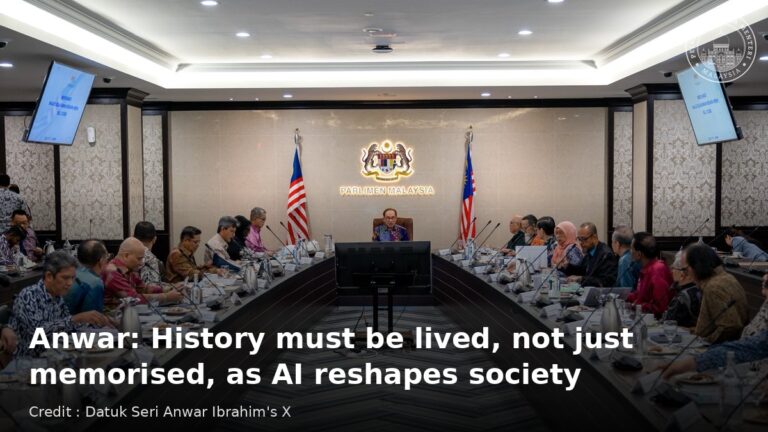
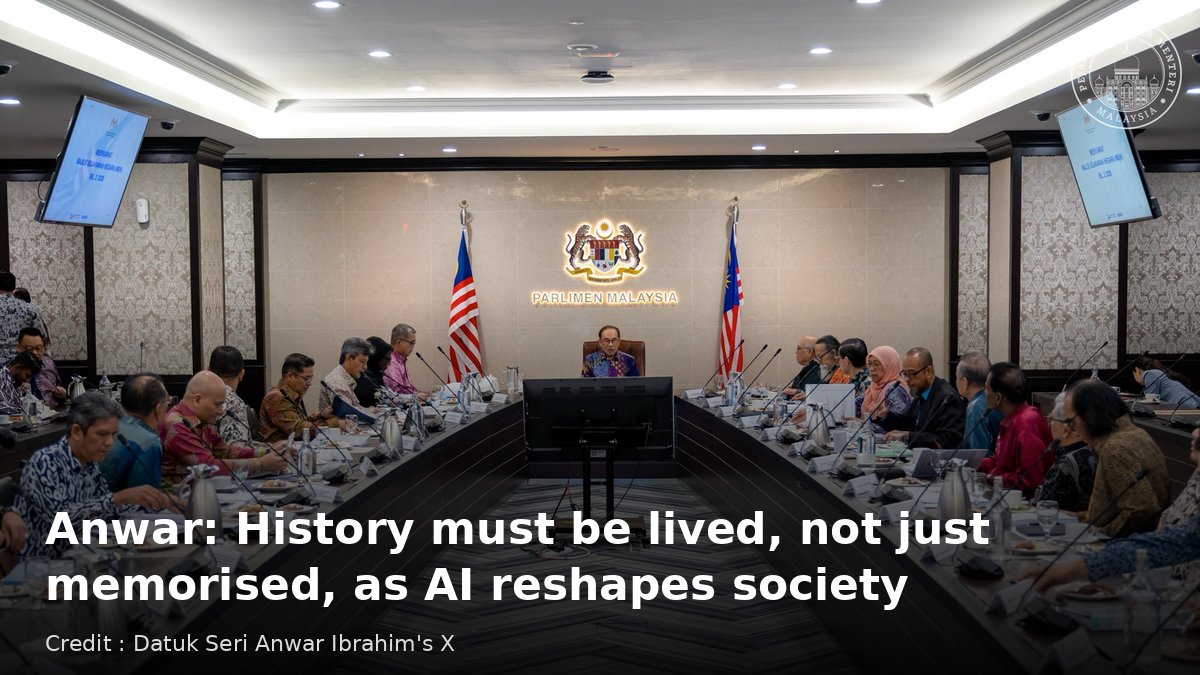
Anwar made the remarks while chairing the National Council of Historians (Majlis Sejarawan Negara, MSN) Meeting No. 2/2026 on October 29, where he underlined the council’s key role as a pillar for preserving the country’s historical heritage and as the nation’s main source of reference.
“History is not merely something to be memorised, but must be internalised as the foundation for shaping our identity, strengthening the national spirit and nurturing a love for the country,” he said in a post on X.
The Prime Minister said that in facing the fast-moving development of AI, an understanding of history was becoming increasingly important so that technological progress does not erode the values, culture and identity of the nation.
“Therefore, the nation’s history must continue to be preserved based on facts and authentic research, and delivered through a fresher approach that is closer to the younger generation, in order to build a future for the country anchored in national identity,” he said.
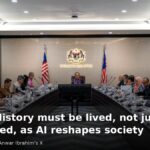
Photographs shared with the post show council members gathered around a meeting table, with a screen displaying the title of the meeting.
The National Council of Historians was launched by Anwar on September 8, 2025, at the Putrajaya International Convention Centre. According to the Ministry of National Unity, the council oversees research, reference sources, writing, publication, history education and advocacy related to the nation’s history, and is tasked with generating new ideas to strengthen an inclusive history education in line with Malaysia’s identity as a multiracial nation.
Speaking at the launch, Anwar said generations before independence had been exposed to an understanding of history shaped by the colonial mindset, and that the council’s task was to bring together existing scholarship, engage with all parties and advise the government on what more should be done.
The council has 14 members, made up of 10 historians, two archaeologists and two anthropologists and sociologists, Bernama reported in March. Anwar serves as its chairman, while Minister of National Unity Datuk Aaron Ago Dagang is deputy chairman, with the National Archives of Malaysia acting as its secretariat.
National Archives Director-General Zaidin Mohd Noor told Bernama at the time that, in an era where social media makes it easy for historical information to be misinterpreted, the council serves as an authoritative body to give official explanations on disputed issues based on authentic sources. He said one of its terms of reference is to advise the government on any dispute relating to the nation’s history, and that it works with the Ministry of Education on the content of the History curriculum.
The council’s first meeting this year, held in Putrajaya on April 23 and chaired by Aaron, discussed a proposal to draw up guidelines on reporting and public statements related to history, to ensure historical information is conveyed correctly, ethically and truthfully.
In January, the council welcomed Anwar’s call to strengthen the place of Malaysian History as a core element of the national education system, in line with the National Education Plan 2026–2035, including making mastery of the subject compulsory across all streams of education.
About The Author