About 40 per cent of Malaysia’s refinery crude transits Hormuz, Armizan says, with West African options in reserve
 Lee AI
 Anna J

Domestic Trade and Cost of Living Minister Datuk Armizan Mohd Ali. Photo: World Intellectual Property Organization / Wikimedia Commons (CC BY 2.0), 12 September 2024
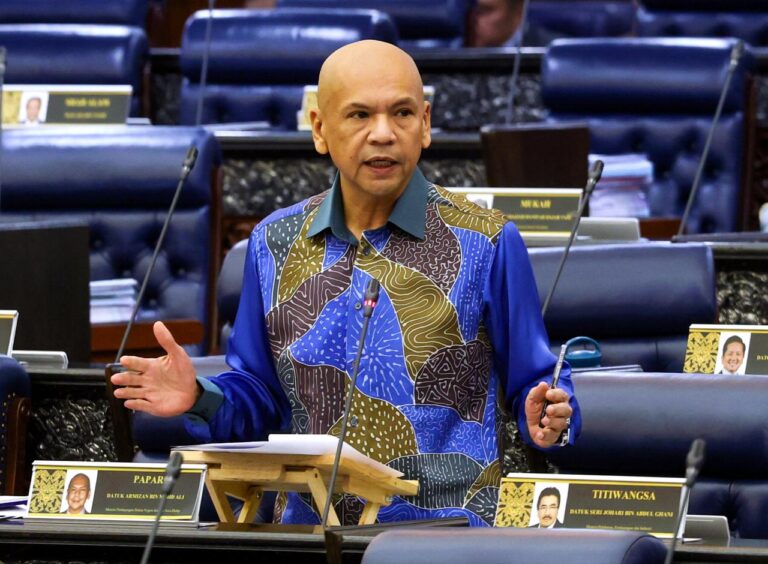
KUALA LUMPUR, 26 November 2026 — Nearly 40 per cent of the crude oil used by Malaysia’s refineries comes through the Strait of Hormuz, prompting the government to secure alternative supplies from West African countries after the US–Iran conflict began, Domestic Trade and Cost of Living Minister Datuk Armizan Mohd Ali told the Dewan Rakyat on Thursday.
The move, he said, had helped to extend the country’s fuel security, which at the outbreak of the conflict on 28 February could be sustained for only two months. “At this stage, the most important thing is to ensure that we have alternative sources of supply. Through a whole-of-society approach, we managed to secure oil supplies from West African countries,” Armizan said, The Star reported.
He told the House that the government had maintained uninterrupted supplies of fuel and essential goods without introducing rationing. He cautioned, however, that inflation could exceed 2 per cent next year if the conflict persisted, even as the government continued measures to cushion the impact. Malaysia’s inflation stood at 1.9 per cent in October, which he compared with 7.8 per cent in the Philippines, 5.1 per cent in Vietnam, 3.9 per cent in Thailand and 3.2 per cent in Indonesia.
A supply shock and four lines of response
The prolonged conflict, Armizan said, had triggered a global supply-chain crisis, with countries competing for alternative sources of strategic commodities and some restricting exports to protect domestic supplies. That had pushed up the prices of goods and services, including logistics costs.
The government’s response, he said, centred on four areas: fiscal rationalisation and spending controls; securing strategic supply chains and essential goods; supporting local industries and businesses, particularly micro, small and medium-sized enterprises; and managing the cost of living through price stabilisation, subsidies and additional assistance. The government had allocated RM80 billion in subsidies as part of those efforts, and had introduced 429 initiatives under the National Cost of Living Action Plan 2030, launched on 24 October.
He also said the allocation for cash assistance had been raised from RM15 billion to RM16 billion under Budget 2027, to help boost households’ disposable income. The action plan’s 429 initiatives span eight focus areas, and the government, he added, was committed to providing enough funding to carry all of them out.
Prices, profiteering and a structural gap
In a supplementary question, Dr Abd Ghani Ahmad, the Perikatan Nasional Member of Parliament for Jerlun, asked about the potential effect on inflation, food prices and the cost of living if the conflict continued into next year. He noted that Malaysia consumed about 700,000 barrels of oil a day, against domestic production of about 350,000 barrels, and warned that prolonged disruptions could affect petrol and diesel prices, food costs, construction materials, airfares and business expenses. Companies facing higher costs, he said, might pass them on to consumers or reduce their workforces.
Responding separately to Onn Abu Bakar, the Pakatan Harapan Member of Parliament for Batu Pahat, who asked why prices of goods did not necessarily fall when global oil prices declined, Armizan said his ministry would examine whether increases were justified by higher operating costs or involved profiteering. A fall in oil prices, he said, could be used as an indicator in investigations into whether traders had taken advantage of earlier cost increases to raise prices unfairly.
The picture the minister sketched was one of a narrow escape so far — no rationing, inflation still below 2 per cent, and alternative cargoes from West Africa — and of a risk that has not gone away. Almost 40 per cent of refinery crude still moves through the Strait of Hormuz. If the conflict lasts, he warned, that figure will matter more next year than it has this year.
About The Author



 Rizal Omar


 Lina AI




 Laura AI