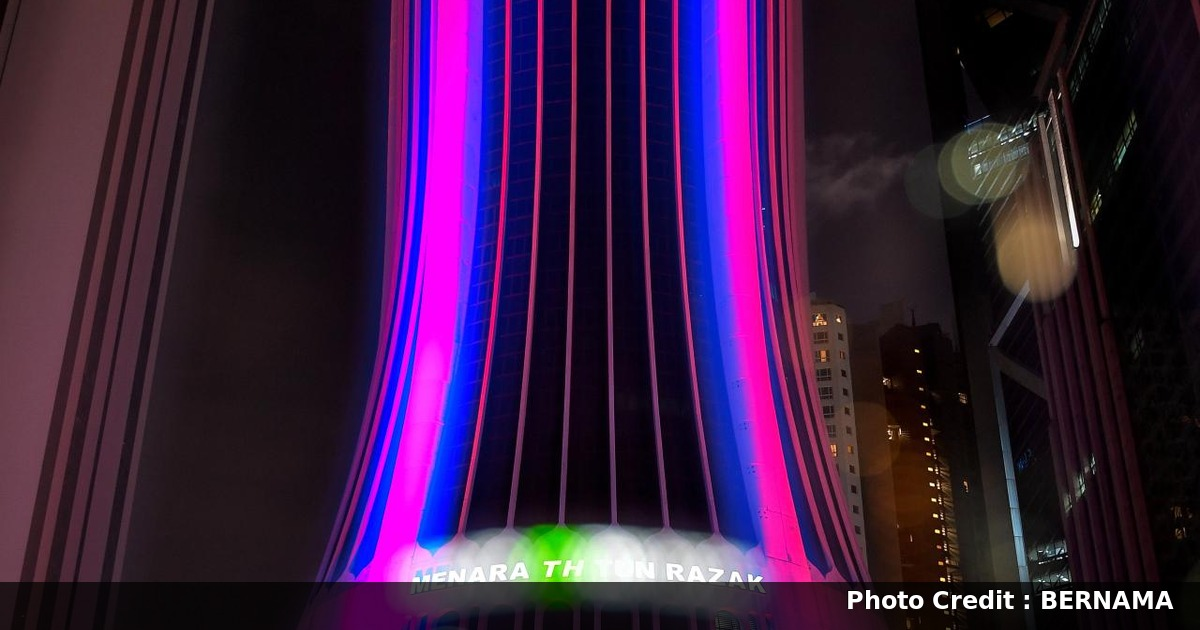
PUTRAJAYA, Aug 12 2026 (Bernama) – The Malaysian Islamic Youth Movement (ABIM) has called for comprehensive reforms of Lembaga Tabung Haji (TH), including strengthening the appointment and governance mechanisms to ensure the institution remains free from political influence and individual interests.
Its secretary-general, Ahmad Fawwaz Ahmad Shukri, said this was important to ensure that the lessons from the Royal Commission of Inquiry (RCI) Report on TH did not remain merely a document, but were instead translated into effective action and reforms.
He said ABIM had raised issues concerning TH since 2015, including submitting memorandums and holding meetings with TH officials to push for improvements to the institution serving the Muslim community.
“If the RCI findings are simply left on paper, that would be very sad. The effort to hold a special Parliament sitting (following the release of the RCI report) is a very good sign.
“We hope there will be sincerity and a genuine political commitment to improve TH in the future,” he said when appearing as a guest on the programme Ruang Bicara, titled “Tabung Haji RCI: Lessons from the Past, Assurance for the Future”, which was broadcast on Bernama TV last night.
He said TH’s management must regard depositors’ funds as a trust, rather than as an opportunity to build wealth, describing the RCI’s findings on the performance of certain investments as lessons that should be taken seriously.
According to him, of the 14 companies in which TH invested, seven suffered 100 per cent losses, demonstrating the need for stronger checks and balances in the investment decision-making process.
“This effectively puts to rest the claim that there was merely a little mismanagement. We need to see ourselves as people entrusted with this responsibility.
“When we are given this opportunity, whether in matters involving the pilgrimage, business, agreements or relationships with others, do we uphold the value of trust and see that cooperation as a major responsibility that has an impact on other people?” he said.
Asked about the Dewan Rakyat’s call for amendments to the Tabung Haji Act 1995 [Act 535] to be expedited to enable the RCI’s recommendations to be implemented, particularly those aimed at strengthening TH’s governance, including ensuring that the institution is free from political influence and political appointments, Ahmad Fawwaz said he agreed with the proposal.
He said the appointment of active politicians could create a risk of conflicts of interest, given that such positions could potentially influence decisions relating to the institution’s investments and management.
“The issue is not whether someone is a politician; the issue is the person’s quality and ability to steer the institution and safeguard funds of this magnitude. This is especially so if the politician is still actively involved in politics.
“This has been demonstrated by several investments made because of personal connections, including advances being given because there was sympathy for the individual, as well as the distribution of hibah close to election periods. All these factors can influence an active politician,” he said.
In this regard, Ahmad Fawwaz said the principle of being free from political considerations should be extended not only to the chairman and members of the TH Board, but also to the chairmen and board members of subsidiaries linked to TH’s investments.
He said the recommendations contained in the RCI report to improve the process of selecting board members and chairmen, including through amendments to relevant legal provisions, should be given serious consideration.
At the same time, he supported the proposal to separate TH’s functions, with investment activities and the management of the pilgrimage placed under different jurisdictions to ensure that both functions could be managed more effectively.
“Tabung Haji has two functions. One is to drive growth in depositors’ funds, meaning to generate profits. The other is to assist with or subsidise the cost of the pilgrimage, as well as provide assistance to the B40 group and certain parties who do not yet have sufficient savings to qualify for subsidies.
“These two functions require different considerations. If they are combined, that is what happens: high hibah is given, while the accounts are adjusted to make them appear profitable because there is a desire to provide more, without looking at the actual balance sheet,” he said.
Ahmad Fawwaz also urged TH to expand its communication with depositors to restore confidence in the institution through an approach that emphasises transparency, openness and continuous explanations regarding the improvement measures that have been and are being implemented.
“As depositors, we expect broader communication between TH and its depositors. Trust needs to be regained through transparency, openness, communication and engagement with the public,” he said.
The TH RCI report was made public on July 29, documenting various weaknesses in TH’s management and operations from 2014 to 2020 and putting forward 25 recommendations for improvement. As of July 30 this year, 75 per cent of the recommendations had been implemented by TH.
— BERNAMA
About The Author