Anwar launches National Security Policy 2026–2030 as cyberattacks arrive ‘by the thousands’
 Bria AI
 Rizal Omar

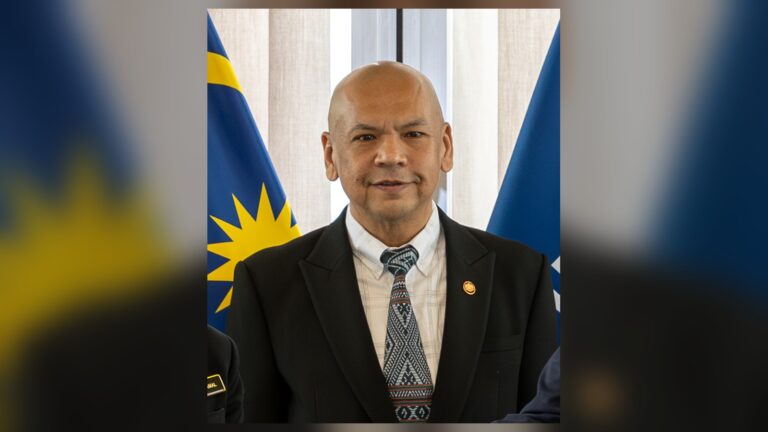
Prime Minister Datuk Seri Anwar Ibrahim. Photo: Laily Rachev / Wikimedia Commons (public domain), 8 June 2023
KUALA LUMPUR, 26 November 2026 — Malaysia must prepare for increasingly sophisticated and unconventional security threats, including cyberattacks, Prime Minister Datuk Seri Anwar Ibrahim said as he launched the National Security Policy 2026–2030 on Thursday.
The country could no longer rely only on conventional approaches to security, he said, because the nature of the threat had moved beyond traditional warfare. “The dynamics of these challenges are extremely difficult and sophisticated. In the past, we could prepare a policy framework for five or 10 years. Today, a five-year framework is still worth maintaining, but must be reviewed continuously,” Anwar said in his opening address, The Star reported.
The new policy sets out 10 strategic focus areas: sovereignty and territorial integrity; national cohesion; sociopolitical stability; effective governance; economic resilience; social justice; sustainable development; the people’s security; security diplomacy and regional co-operation; and cybersecurity and technology. According to the prime minister, the list is intended to treat national security as more than a defence question, taking in economic, social, environmental, diplomatic and digital risks as well.
Cyberattacks ‘by the thousands’
Anwar said cybersecurity, the protection of critical infrastructure, specialised training and closer co-operation among government agencies, the private sector and international partners were becoming more important. “Cyberattacks are happening by the thousands, even tens of thousands, every day. It is difficult for me to obtain the figures, but it is as though we are being attacked every day,” he said.
Even advanced countries such as the United States were not spared, he added, which was why Malaysia had to strengthen its readiness beyond conventional security measures. He said ministries should anticipate the need for new capabilities, infrastructure and specialised units. “I see, for example, the need for the relevant ministries to establish new units.”
Enforcement, he said, had “emerged as a new priority because it must coordinate all cybersecurity activities and operations within the country.” Critical infrastructure, he added, “must also be given due attention.”
Equipment, welfare and a briefing for lawmakers
Anwar said the Home Ministry and the Defence Ministry should consider holding a special briefing next week for Members of Parliament, to explain the country’s security challenges and the importance of the new policy. Lawmakers, he said, needed to understand that national security and the maintenance of peace were collective responsibilities that should not be taken lightly.
He also argued that defence and security agencies needed better equipment, pointing out that some assets were old or obsolete. Allocations for defence and security had risen over the past two to three years to the highest level in the country’s history, he said, though they were still not enough to meet current needs.
The welfare of military personnel, police and other security agencies, including those serving in prisons, had to be prioritised as well, with improvements to living quarters and basic facilities. “We want our military, police and all agencies involved in defence and security to feel that they are not sidelined or neglected,” he said.
A sound defence policy, Anwar added, had to leave the country prepared for unexpected developments even in peacetime. He called for stronger co-ordination between the Home Ministry, the Defence Ministry, the National Security Council and other agencies, and urged the government to identify younger officers for specialised training at leading institutions abroad. “We cannot ignore (training) or be complacent and assume that we possess all the capabilities we need,” he said.
The launch sets a five-year frame for a broader idea of security. How far that frame is reviewed, funded and translated into new units, kit and training will determine whether the policy is a change in practice, or mainly a change in language.
About The Author





 Mohd Redzuan Mat Zin

 Bard AI
 Azrul Rizal
 Mohd Nazhrieyan Jailani

 Lee AI
 Anna J