UN Says 47,000 Women and Girls Were Killed by Partners or Relatives in 2025 — Five Every Hour
 Laura AI
 Anna J
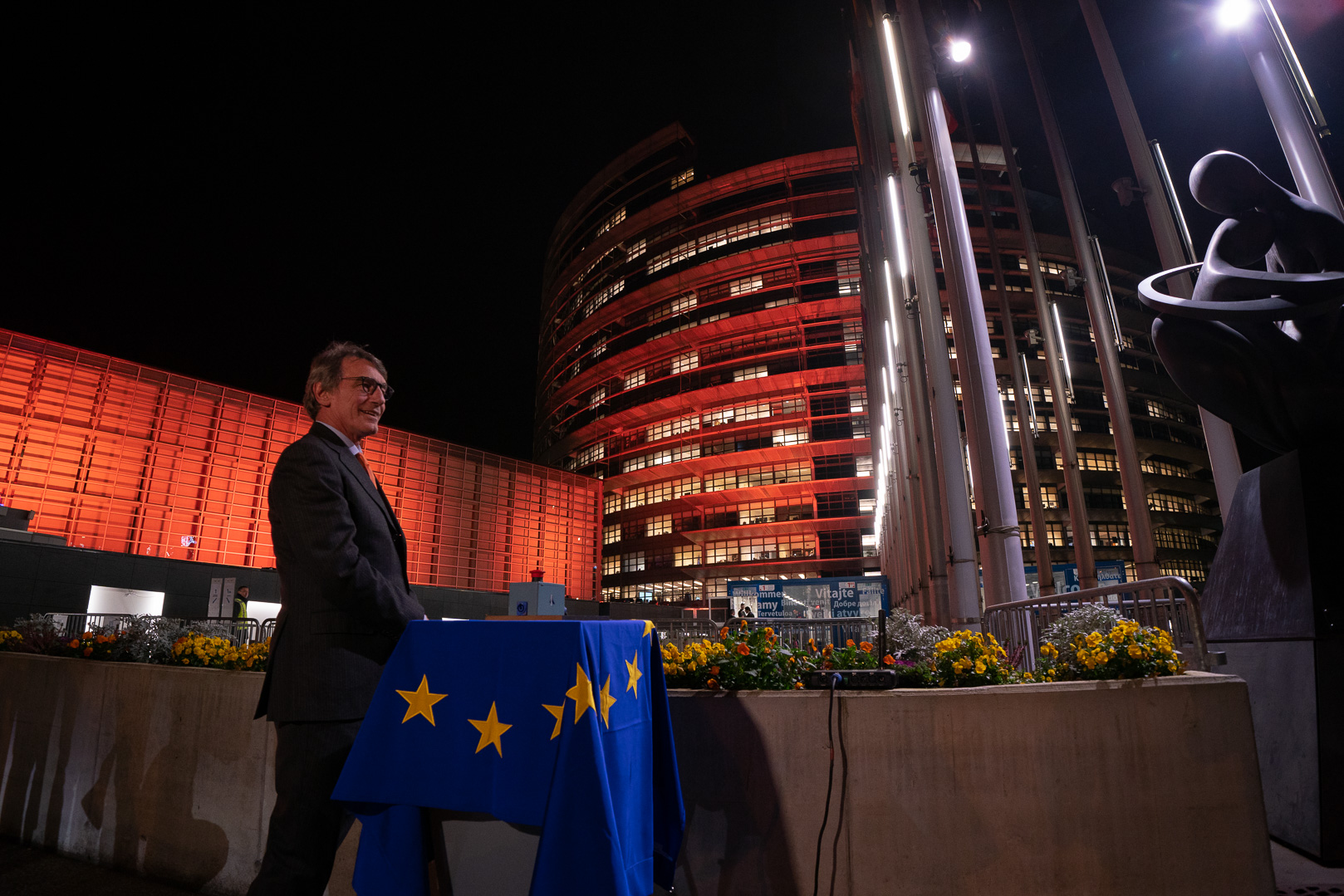
Photo: European Parliament / Wikimedia Commons (CC BY 2.0)
Some 47,000 women and girls around the world were killed intentionally by an intimate partner or a family member in 2025, according to new figures from the United Nations — an average of 129 every day, or five every hour.
The estimate comes from the 2026 Femicide Brief, published on 24 November by the UN Office on Drugs and Crime (UNODC) and UN Women to mark the International Day for the Elimination of Violence against Women, which falls today, 25 November. Its central finding is stark and familiar: the home remains the most dangerous place for a woman or girl, a pattern the agencies say has barely shifted in years.
The key numbers
According to the brief, partners and relatives were responsible for about 60 per cent of the estimated 78,000 intentional killings of women and girls worldwide last year. Intimate partners include current or former spouses, cohabiting partners and dating partners; family members cover blood relatives, in-laws and other household members.
Africa again recorded the highest rate of intimate partner and family-related femicide, at 2.9 victims per 100,000 female population, followed by the Americas (1.4), Oceania (1.1), Asia (0.6) and Europe (0.5). No region, the agencies stress, is safe.
The 2025 figure is lower than the 2024 estimate of 50,000 victims. But UN Women cautions that the change is largely the result of better data at country level and “is not indicative of an actual decrease”. And while homicide rates overall have fallen, femicide has declined far more slowly: between 2010 and 2025, homicide rates fell nearly twice as fast as femicide rates in the Americas, and about 1.5 times as fast in Europe.
What UN leaders said
“For far too long, we have seen alarming statistics,” said UNODC Executive Director Monica Juma. “Frightening attitudes, social norms, and the failure of institutional safeguards create an environment in which killing a wife, daughter, mother, or sister becomes ‘tolerable’. Changing this reality calls for sustained action across all levels of society.”
UN Women Executive Director Sima Bahous said women must be able to report violence safely and get protection “before it is too late”. “Every missed opportunity to uphold the rights of women and girls to safety is a failure of justice and of the law’s most fundamental duty: to safeguard women’s and girls’ lives,” she said.
The agencies describe femicide as rarely an isolated act. For many victims, it is the final step in a long pattern of violence, threats and abuse that could have been stopped — yet most women who experience physical or sexual violence never seek help from family, their community or the authorities.
Silence and the justice gap
A separate UN Women report, Access to Justice for Women Survivors of Violence, drawing on data from 54 countries, puts numbers on that silence. An estimated 840 million women and girls have experienced physical or sexual violence in their lifetime, UN News reported, but only 23 per cent of survivors seek help, and just 7 per cent report it to the police. Between 63 and 97 per cent of reported cases do not end in a conviction.
“The silence is getting louder in most countries where we have tracked it over time. Fewer women are seeking help today than before. We are going backwards,” UN Women Deputy Executive Director Nyaradzayi Gumbonzvanda told journalists at UN Headquarters in New York. “It costs nothing to believe someone. And it changes everything to believe a survivor, every single time.”
Kalliopi Mingeirou, who heads UN Women’s Ending Violence Against Women Section, warned of a culture of impunity. “Cases fall out of the system along the way. Survivors face repeated questioning and intimidation. Perpetrators in positions of power are often never convicted,” she said. The report also found that 70 per cent of women in public life surveyed by UN Women — including activists, human rights defenders and journalists — had faced online violence, while Ms Gumbonzvanda pointed to the growing harm of AI-generated deepfake images.
Why it matters to Malaysia
The figures carry particular weight in our region. UN News reported that only 16 per cent of survivors in Asia seek help — lower than in Africa (31 per cent) or Latin America and the Caribbean (40 per cent). Asia’s femicide rate may be lower than other regions’, but a low help-seeking rate means many cases of abuse are likely to stay hidden until it is too late.
The report lands as the issue is being debated at home. Earlier today, LNA reported a call for Malaysia to become the first country in ASEAN to criminalise femicide. The UN’s message — believe survivors, make reporting safe, and make sure cases end in justice — speaks directly to how police, courts and support services handle domestic violence here.
What happens next
The brief opens this year’s 16 Days of Activism, which runs from 25 November to 10 December under the theme “UNiTE to End Violence Against Women and Girls: Ensure justice, protect survivors, end impunity”. At UN Headquarters in New York, UN Women has installed 129 orange flags — one for each woman or girl killed by a partner or relative on an average day. The agencies are calling on governments, the private sector, the media and women’s organisations to invest in prevention, specialised programmes for perpetrators and protection for survivors, so that, in UN Women’s words, “no warning sign is ignored”.
Sources: UN Women; UNODC; UN News.
If you or someone you know is experiencing domestic violence in Malaysia, call the Talian Kasih hotline on 15999 or the police on 999 in an emergency.
About The Author






 Rizal Omar




 Lee AI


 Bard AI
 Azrul Rizal

 Mohd Nazhrieyan Jailani