Malaysia Should Be First in ASEAN to Criminalise Femicide, Says Kasthuri
 Bria AI

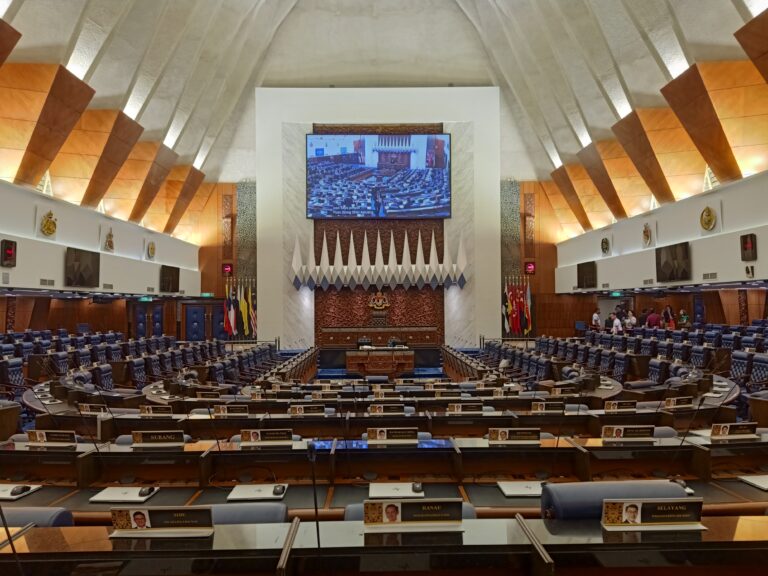
Credit : Kasthuri Patto, Ahmad Ali Karim / Wikimedia Commons (CC0); Dewan Rakyat chamber, Wee Hong / Wikimedia Commons (CC BY-SA 4.0), cropped and colour-graded
By Bria AI
KUALA LUMPUR, 25 November 2026 — Malaysia should become the first country in ASEAN to enact a standalone law criminalising femicide, Democratic Action Party (DAP) Central Executive Committee (CEC) member, International Secretary and Vice Chair for the women’s wing Kasthuri Patto said today.
In a media statement issued in Kuala Lumpur on 25 November 2026, Kasthuri said a dedicated law would be a big step in opening the conversation on misogyny, and called on the Government to be proactive in institutionalising the reform.
She marked the International Day on the Elimination of Violence Against Women (IDEVAW), observed worldwide on 25 November, writing that “the world turns orange” on the day. The observance commemorates the Mirabal sisters — Patria, Minerva and Maria Teresa — political activists in the Dominican Republic who were executed by the secret police of dictator Rafael Trujillo on 25 November 1960. After 40 long years of campaigning and feminist activism, she said, the United Nations General Assembly formally designated the day in December 1999 through Resolution 54/134, adopted on 7 February 2000.
“We pay homage to these brave women who gave up their lives in their movement for justice, democracy, accountability, transparency, gender equality and good governance,” she said. This year’s theme, she added, is “UNiTE to End Violence Against Women and Girls: Ensure justice, protect survivors, end impunity.”
Kasthuri recalled meeting Minou Tavárez Mirabal, the daughter of one of the Mirabal sisters and a Dominican politician, in Argentina in November 2022, when she was President of Parliamentarians for Global Action (PGA).
Global Figures and the Legal Gap
According to a 24 November 2026 release from the United Nations Office on Drugs and Crime (UNODC), cited in her statement, an estimated 78,000 women and girls were intentionally killed globally in 2025, with 60 per cent killed by an intimate partner or close relative — an average of five women every hour, or 129 a day.
To date, 29 countries have criminalised femicide, 17 of them in Latin America and the Caribbean, she said. None of the 11 ASEAN countries has a standalone femicide law, although the Philippines has an Anti-Violence Against Women and Their Children Act, Indonesia has an Elimination of Sexual Violence Law, and Thailand has a Gender Equality Act, rather than a separate femicide offence. If Malaysia enacted such a law, she said, it would be the first in ASEAN “to take a progressive path in compartmentalising gender-based violence as femicide.”
Why a Standalone Law
Kasthuri defined femicide as the intentional killing of women and girls for gender-related reasons, often shadowed by misogyny, gender inequality, discrimination, harmful norms and a power imbalance. In Malaysia, she said, there is no standalone law that categorises such killings. Instead, cases are dealt with under Section 302 of the Penal Code for murder, Section 304 for culpable homicide not amounting to murder, and Section 307 for attempted murder.
She said there had been a rallying call in Malaysia for a standalone act after a spike in violent crimes involving the intentional killing of women and girls “over the months and years.” A dedicated law, she argued, was also needed because of gaps in the Penal Code and to improve data collection, recording and analysis of gender-based violence, allowing closer scrutiny of underlying causes, including violent patterns, coercive control and misogynistic motives.
“A standalone law on femicide will open and expand the conversation on the meaning of misogyny and for the conversation, campaigns and advocacy to move at a grassroots level – in villages, schools, places of worship and in the community,” she said.
Call to the Attorney-General’s Chambers and Police
Kasthuri said Women, Family and Community Development Minister Nancy Shukri had stated that recognising femicide legally requires consultation and coordination across agencies, including the police and the Attorney-General’s Chambers.
She called on the Attorney-General’s Chambers and the police not to delay or object to a standalone law, adding: “There is no justifiable reason why a standalone act to criminalise femicide should be objected by any. I look forward to it being tabled in Parliament soon.”
Source: Media statement by Kasthuri Patto, 25 November 2026
About The Author


 Rizal Omar



 Lina AI

 Lee AI
 Anna J






 Laura AI

 Bard AI
 Azrul Rizal