Inspiring future generations of Ungku Aziz
 Professor Dato’ Dr. Ahmad Ibrahim
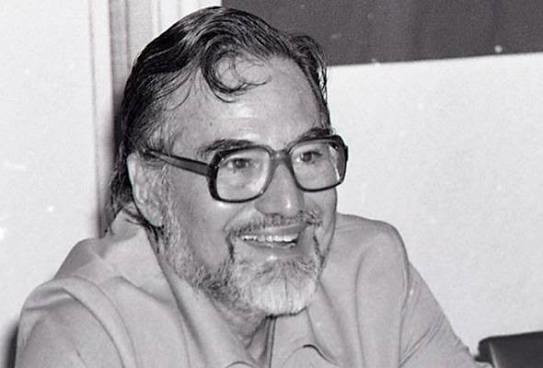
Photo: Astro AWANI
The core mission of UAC is to carry forward Ungku Aziz’s intellectual legacy in poverty research, inclusive development, and interdisciplinary engagement. To inspire the future generation of “Ungku Azizs,” the key is to transform UAC’s existing academic resources into growth platforms that young people can participate in, practise through, and speak from—rather than leaving the legacy confined to commemoration and display.
Drawing on UAC’s existing projects and resources, the following suggestions are organised across four levels:
Embed “Ungku Aziz’s Thought” into Youth Development Programmes
UAC already has the “Ungku Aziz Thought and Public Policy” public lecture series, which can serve as a starting point for reaching younger audiences. Specifically:
- Establish an “Ungku Aziz Young Scholars Programme”: Drawing on the existing scholars network, open research assistant positions or micro-research grants specifically for undergraduates and postgraduates, allowing them to participate in real poverty research and policy analysis projects. UAC’s Poverty Research Lab can serve as their training ground.
- Promote interdisciplinary courses and case-based teaching: Ungku Aziz himself was a model of interdisciplinarity, blending economics, anthropology, and social concern in his research. UAC can collaborate with various faculties at UM to develop case-based teaching modules centred on real development challenges (such as the plight of the B40 community, urban-rural disparities), replacing purely exam-oriented learning and encouraging students to “seek answers in rice fields and fishing villages,” just as Ungku Aziz did.
Create “Action-Oriented” Youth Participation Channels
UAC’s extensive community projects (such as Inisiatif Basmi Miskin Tegar and community labs) already have mature implementation frameworks. Young people should not be mere bystanders but co-solvers of problems.
- Youth in-residence/community researcher placements: Recruit students as short-term interns or volunteers embedded in BMT projects or community development initiatives, directly participating in data collection, needs assessment, or skills training assistance. For example, UAC has conducted lectures on differentiated teaching methods for B40 children—such activities can be designed to involve students in teaching assistance or evaluation.
- “Local Problems, Local Solutions” youth proposal mechanism: UAC already advocates the “local problem–local solution” methodology. Building on this, an annual youth proposal competition can be established, encouraging university students to submit actionable policy or project proposals addressing development issues in their own hometowns or specific communities, with UAC providing mentorship and assistance in connecting resources.
Activate Legacy Transmission through Creativity and Public Expression
UAC already has experience with creative competitions such as poetry and digital poster contests, demonstrating that “telling Ungku Aziz’s story in young people’s language” is feasible.
- Expand the genres of creative competitions: Beyond poetry and posters, add short videos, podcasts, data visualisation, or policy memo writing competitions. The focus should be on letting students reinterpret Ungku Aziz’s core proposition in their own way—”poverty is not ordained by fate, but man-made”—and reflect on its resonance today.
- Provide students with mainstream platforms to speak: The power of Ungku Aziz’s thought lay largely in his refusal to be confined to academic journals, actively engaging in public discourse instead. UAC can partner with media or policy forums to offer students opportunities to publish commentaries and participate in policy debates. For instance, a youth-focused “Ungku Aziz Development Forum” could be held regularly, with students leading agenda-setting and discussion.
Build Sustained Mentorship and Network Support
The “future Ungku Azizs” will not grow in a vacuum. UAC has accumulated extensive academic, governmental, and international cooperation networks (such as exchanges with Soka University in Japan and collaboration with Angkasa), all of which can be transformed into growth resources for young people.
- Mentorship matching and shadowing programmes: Drawing on the idea of “national retired experts guiding young researchers,” UAC can establish long-term mentorship relationships between its advisory panel, adjunct professors, and young students. Students can shadow mentors in policy meetings, field research, or international exchanges, learning in the real world how to “speak truth based on data.”
- Build an “Ungku Aziz Youth Alumni Network”: Weave students who have participated in UAC projects, competitions, or research into asustained interactive community. Even after they leave campus, this network can serve as a peer support system for them to practise the Ungku Aziz spirit, and in turn become a bridge for UAC to connect with even younger generations.
In summary, UAC’s unique advantage lies in its combination of academic depth, community-rooted action, and the rallying power of a spiritual icon. By fusing these three and transforming young people from “audience members” into “participants” and “actors,” Ungku Aziz’s intellectual legacy can truly become something that generation after generation consciously inherits and practises.
The author is affiliated with the Tan Sri Omar Centre for STI Policy Studies at UCSI University and is an Adjunct Professor at the Ungku Aziz Centre for Development Studies, Universiti Malaya. He can be reached at ahmadibrahim@ucsiuniversity.edu.my.
About The Author





 Ng Kwan Hoong
 Lina AI


 Bard AI
 Azrul Rizal

 Mohd Nazhrieyan Jailani




 Laura AI
 Anna J