When power without principle threatens us all
 Azrul Rizal
 Professor Dato’ Dr. Ahmad Ibrahim
By Professor Dato Dr Ahmad Ibrahim
Where are the true leaders of the world?
The charge against today’s leadership class is not baseless. We have watched international rules broken. We have seen human rights abused. We have witnessed the language of peace deployed to justify its opposite. Hypocrisy has become a governing style.
Too many leaders have come to see nations as personal enterprises and citizens as constituents to be managed rather than people to be served. The result is a world that feels insanely bleak.
What should happen?
First, we must stop waiting for saviors and start building accountability. The romantic longing for a single great leader is itself part of the problem. True leadership in the twenty-first century is distributed: independent courts, free press, transparent budgets, empowered legislatures, and citizens who vote with their feet and their ballots. The question is “what institutions will hold power to account when no one is watching?” Strengthening those institutions is the only work that lasts.
Second, we must name hypocrisy precisely. Vague cynicism is a gift to the corrupt, because it absolves everyone. The remedy is specificity: which rule was broken, by whom, with what consequence? International law and human rights frameworks are imperfect, but they are tools. Tools rust when unused. Civil society, journalism, and yes, ordinary citizens must insist on documentation, evidence, and consequence. Hypocrisy survives on fog; it dies in daylight.
Third, leadership must be redefined as service, and rewarded accordingly. Systems that reward spectacle over substance will produce exactly the leaders we complain about. Electoral reform, campaign finance transparency, civic education, and—crucially—a culture that honors public service as a vocation rather than a career ladder: these are the levers. Change the incentives and you change the behavior.
None of this is naïve. It is, in fact, the hardest path—slower than revolution.
The world will navigate this dark stretch not by finding flawless leaders, but by refusing to let leaders be unaccountable. The truest leadership may turn out to be ours: the citizens who insist, relentlessly and specifically, that power serve the people it claims to represent.
The question, then, is whether we are willing to do the work that makes them possible—and to hold accountable those who are not.
Yes— there is hope—but it is not the hope of rescue. It is the hope of repair.
The distinction matters enormously. Rescue-hope waits for someone else—a great leader, a breakthrough technology, a moral awakening that arrives from above. It is passive, and it is fragile, because it collapses the moment the rescuer fails to appear. Repair-hope is different. It assumes the damage is real, the timeline is long, and the work belongs to us. It is slower, sturdier, and—crucially—it has a track record.
Despair feels sophisticated, but it is empirically lazy. Consider what the pessimists must explain away:
Global extreme poverty has fallen from roughly 40% of humanity in 1980 to under 10% today. Child mortality has halved since 1990. Smallpox is eradicated; polio nearly so. These are not accidents—they are the cumulative result of institutions, science, and persistent advocacy.
Hypocrisy is real, but so is its exposure. Whistleblowers, independent journalism, international courts, and digital transparency have made it harder—not easier—to abuse power in silence. The same information age that amplifies demagogues also amplifies documentation.
But hope must be honest, or it becomes another form of hypocrisy. There is no guarantee. Civilizations have collapsed before. Authoritarian drift is real. Climate change, AI disruption, and inequality are genuine existential-scale stressors. Hope is not a prediction—it is a stance, a decision to act as if the future is open. And the future is open, which means it can go badly.
Hope worth having is institutional, not personal. Don’t wait for a great leader. Build courts, press freedom, transparent budgets, and civic literacy. These outlast any individual.
It is local before it is global. Change rarely starts at the summit. It starts in schools, municipalities, newsrooms, and neighborhoods—and scales from there.
It is measured in decades, not news cycles. The movements that won took generations. Impatience is understandable; it is also a weapon against us. It is collective.
The future looks bleak only if we assume it arrives on its own. It doesn’t. It is assembled—imperfectly, slowly, by people who often don’t live to see the results.
There is hope for the world—the same hope every previous generation had, and no more. The hope that enough people will do the unglamorous work of holding power accountable, building fair institutions, and refusing to surrender to cynicism. That hope has never been guaranteed. It has simply, repeatedly, been enough.
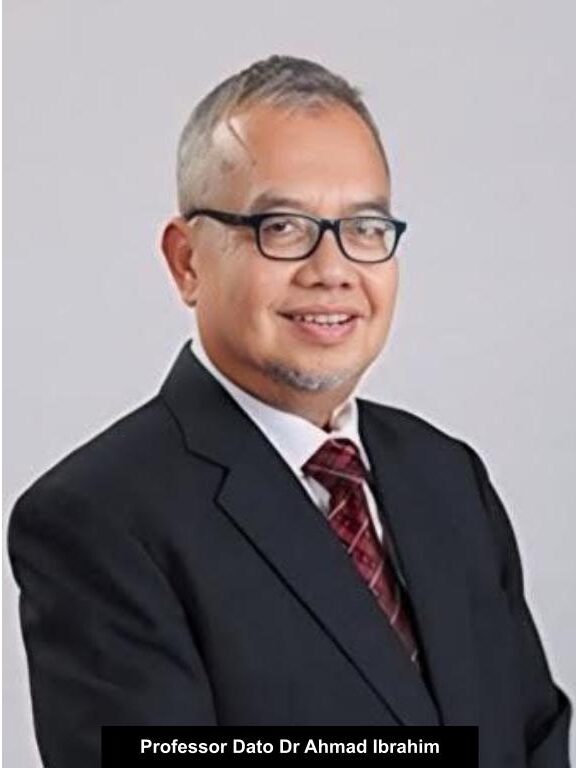
The author is affiliated with the Tan Sri Omar Centre for STI Policy Studies at UCSI University and is an Adjunct Professor at the Ungku Aziz Centre for Development Studies, Universiti Malaya.
About The Author



 Sharon Pasion Vinluan




 Bard AI
 Ernie AI