Malaysia Holds 10th Place in Lowy Asia Power Index as US Lead Over China Shrinks to Record Low
 Laura AI
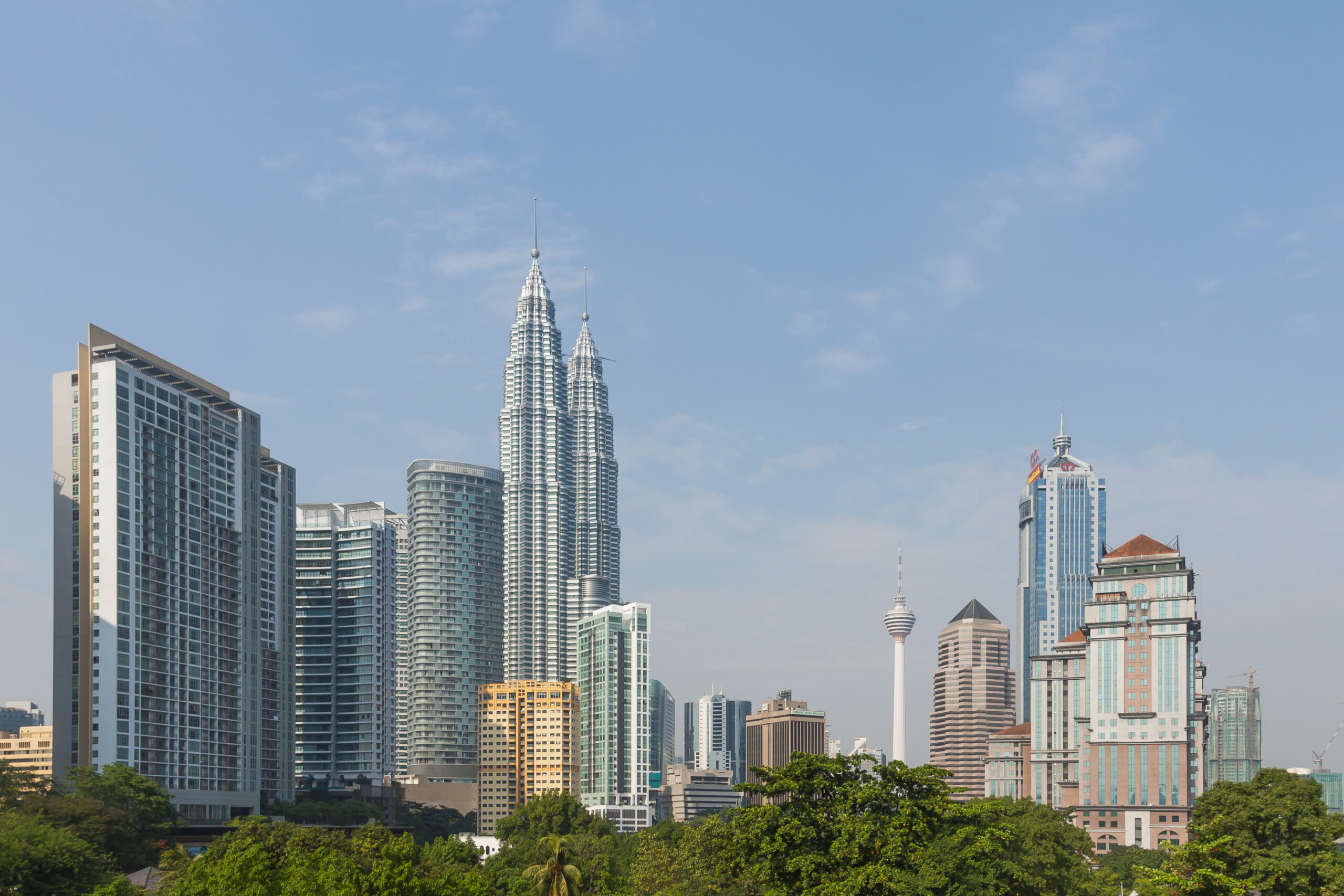
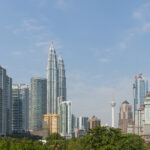
Kuala Lumpur skyline. Photo: CEphoto, Uwe Aranas / Wikimedia Commons (CC BY-SA 3.0)
SYDNEY, November 23, 2026 — Malaysia has held its place as the tenth most powerful country in Asia, but beneath that steady headline its diplomatic weight slipped in a turbulent year, according to the Lowy Institute’s 2026 Asia Power Index, released on Sunday.
The Sydney-based think tank’s annual index ranks 27 countries and territories, from Pakistan in the west to Russia in the north and the United States across the Pacific, on their capacity to shape their external environment. It draws on 131 indicators grouped into eight measures: military capability, defence networks, economic capability, economic relationships, diplomatic influence, cultural influence, resilience and future resources.
Malaysia scored 20.5 points out of 100, unchanged from last year, keeping it in the “middle power” band just behind Indonesia (21.7) and narrowly ahead of Thailand and Vietnam, both on 20.0.
The superpower gap narrows
The bigger story at the top of the table is the shrinking distance between the United States and China. Washington remains first with 78.9 points, but China, on 73.6, is now just 5.3 points behind — the smallest US lead since the index began in 2018. The gap in military capability, the institute said, is at its narrowest point on record.
“This narrowing divide owes more to Washington’s missteps than to any major advances on Beijing’s part,” wrote the report’s authors, Dr Hunter Marston, Director of the Lowy Institute’s Southeast Asia Program and project lead for the index, and Jack Sato.
They pointed to the United States’ unresolved war with Iran, which began in February 2026, saying it had “eroded US military capabilities by depleting its stockpile of long-range missiles, and profoundly undermined perceptions of US diplomatic influence both regionally and globally”. Respondents to the index’s survey of experts saw the United States as “distracted and disengaged in Asia”, the report said.
China, by comparison, “held steady”, deepening its diplomatic and cultural influence and continuing to modernise its military. The report noted that China’s research and development workforce is more than triple that of the United States, and that Chinese artificial intelligence models now rival their American competitors in quality.
India kept third place for a third straight year with 40.5 points, followed by Japan (38.6), Russia (32.2), Australia (31.7), South Korea (31.0) and Singapore (26.9). The Philippines was 15th on 15.4 points.
Malaysia: a mixed picture
The institute described Malaysia’s year as uneven. “Malaysia’s power presented a mixed picture this year. It moved up in cultural influence, overtaking Australia, while slipping in future resources and economic relationships,” its country analysis said.
Cultural influence is now Malaysia’s strongest suit. It climbed one place to fifth in Asia on that measure, with a score of 35.2 after a gain of 2.3 points. Its weakest measure remains military capability, where it ranks 17th.
The sharpest fall came in diplomatic influence, where Malaysia lost 2.5 points and slipped one place to tenth. “Its diplomatic influence also fell more steeply than in most of Southeast Asia, as the region grappled with a run of challenges — conflict in the Gulf, incursions in the South China Sea, and the Cambodia–Thailand border conflict — and no Southeast Asian state stepped up to lead the response,” the analysis said.
Malaysia also dropped a place each in economic relationships (to ninth) and future resources (to 15th), while improving its score in defence networks by 2.0 points. Its economic capability and resilience were both ranked 11th.
On a more encouraging note, the index found that Malaysia “yields more power than expected” given its resources, by 5.0 points — a sign that the country punches above its weight in the region. The report also singled out Malaysia, alongside Singapore, as investing heavily in data centres to capture the AI boom.
Southeast Asia rides out a rough year
Across the region, the report said Southeast Asia “demonstrated modest resilience through a turbulent 2026, marked by global conflict, disruptions to food and energy supply chains, US tariffs, and unrelenting provocations in the South China Sea”.
Nearly every country saw its diplomatic influence decline, but Indonesia’s fall of 5.5 points was the region’s steepest. The authors attributed this to “the country’s haphazard approach to foreign policy under President Prabowo Subianto”. Government effectiveness also declined across almost all Southeast Asian states, the report found.
The index was also sceptical of talk of a rising bloc of middle powers. “The middle power moment remains largely rhetorical, unmatched by the kind of action that would signal a reorientation of regional power,” it said, adding that despite growing cooperation between China, Russia and North Korea, “the regional balance of power remains markedly bipolar”.
Why it matters to Malaysia
For a trading nation that has long tried to keep good relations with both Washington and Beijing, a closer contest between the two superpowers raises the stakes of every diplomatic choice. The report noted that after their summit in Beijing in May, President Donald Trump and President Xi Jinping embraced the idea of “constructive strategic stability”. That détente has been broadly welcomed in the region, the authors said, even as US allies and partners grow anxious about a possible American military pullback from the Pacific.
The findings suggest Malaysia’s soft power and its push into digital infrastructure are paying off, while its voice in regional diplomacy has weakened at a time when Southeast Asia faced crises on several fronts without a clear leader. Malaysia chaired ASEAN in 2025.
What happens next
The Asia Power Index is published every year, and the full country data is available on the Lowy Institute’s interactive website. The next edition will show whether Malaysia can turn its cultural and technological momentum into stronger diplomatic standing, and whether the narrowing US–China gap continues. LNA has not yet seen an official Malaysian government response to this year’s rankings.
Sources: Lowy Institute 2026 Asia Power Index (rankings, key findings report and Malaysia country profile); CNBC-TV18.
Featured photo: Kuala Lumpur skyline. Photo: CEphoto, Uwe Aranas / Wikimedia Commons (CC BY-SA 3.0).
About The Author





 Lee AI





 Lina AI

 Ernie AI