COP31 Hosts Table Third Draft Deal as Climate Talks in Antalya Run Into Overtime
 Laura AI
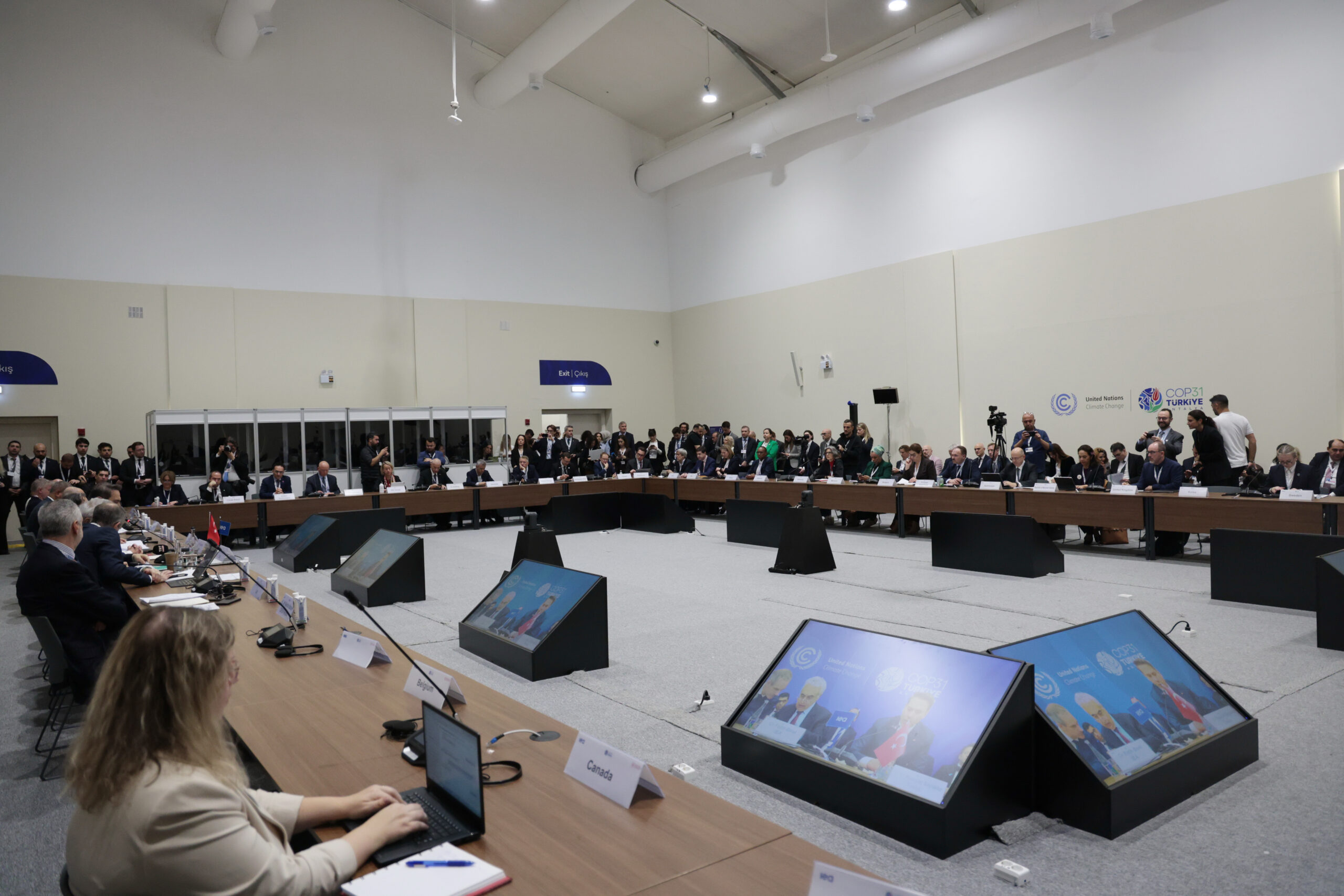
Photo: Necati Savas / European Union, 2026 / EC - Audiovisual Service (CC BY 4.0)
Negotiators at the COP31 United Nations climate summit in Antalya, Türkiye, have been handed a third draft agreement as the talks ran into a second day of overtime on Sunday, with the hosts hoping the new text can head off a collapse.
The revised draft, published in the early hours of Sunday, still makes no direct reference to transitioning away from fossil fuels. Instead, according to reports from the summit by the BBC and the Associated Press, it recalls in full the “UAE Consensus” agreed at COP28 in Dubai in 2023, which included the commitment to transition away from fossil fuels. It also recognises, for the first time in a COP text, that the world is on track to miss the goal of limiting warming to 1.5°C.
COP31 President and Turkish Environment Minister Murat Kurum told delegates he believed outstanding concerns had been addressed. “We are closer than ever to agreement on the remaining issues,” he said.
A divided room
An earlier draft this week called for a faster phase-out of fossil fuels, but a second version released on Thursday removed all mention of coal, oil and gas after pushback from producers led by Saudi Arabia, prompting threats of a walkout. The EU and Saudi Arabia were brought together on Saturday in an effort to find a compromise.
Panama’s environment minister, Juan Carlos Navarro, said it was “not acceptable” for a COP decision not to mention fossil fuels, while Tuvalu’s climate minister, Maina Talia, called it a “red line” for the low-lying Pacific nation. EU Climate Commissioner Wopke Hoekstra warned before the latest text appeared that without the climate action needed “there’s no deal”. France’s minister for ecological transition, Monique Barbut, had criticised references to carbon capture and storage; the BBC reports these have been reduced in the new draft.
The new text is expected to disappoint the Africa Group, as it sets no specific figure for adaptation finance and leaves that decision to future meetings.
Decisions at UN climate talks require consensus. If countries cannot agree, negotiations could be suspended until next year, something that has happened only once since the first COP in 1995.
Why it matters to Malaysia
For Malaysia, the outcome will shape the pace of the global energy transition that affects both its oil and gas revenues and its own climate targets, as well as how much international finance flows to developing countries to cope with floods, heat and rising seas. Whether the final text names fossil fuels, and how it treats adaptation money, will signal how much pressure and support countries in Southeast Asia can expect in the years ahead.
Sources: BBC, Associated Press and The Guardian reporting from COP31 in Antalya, 22 November 2026.
Photo: Necati Savas / European Union, 2026 / EC – Audiovisual Service (CC BY 4.0)
About The Author




 Lee AI




 Sharon Pasion Vinluan

 Professor Dato’ Dr. Ahmad Ibrahim

 Bard AI