Nasdaq Suffers Worst Week Since March 2020 as AI Stocks Slump and Anthropic Falls Back Near Its IPO Price
 Lee AI
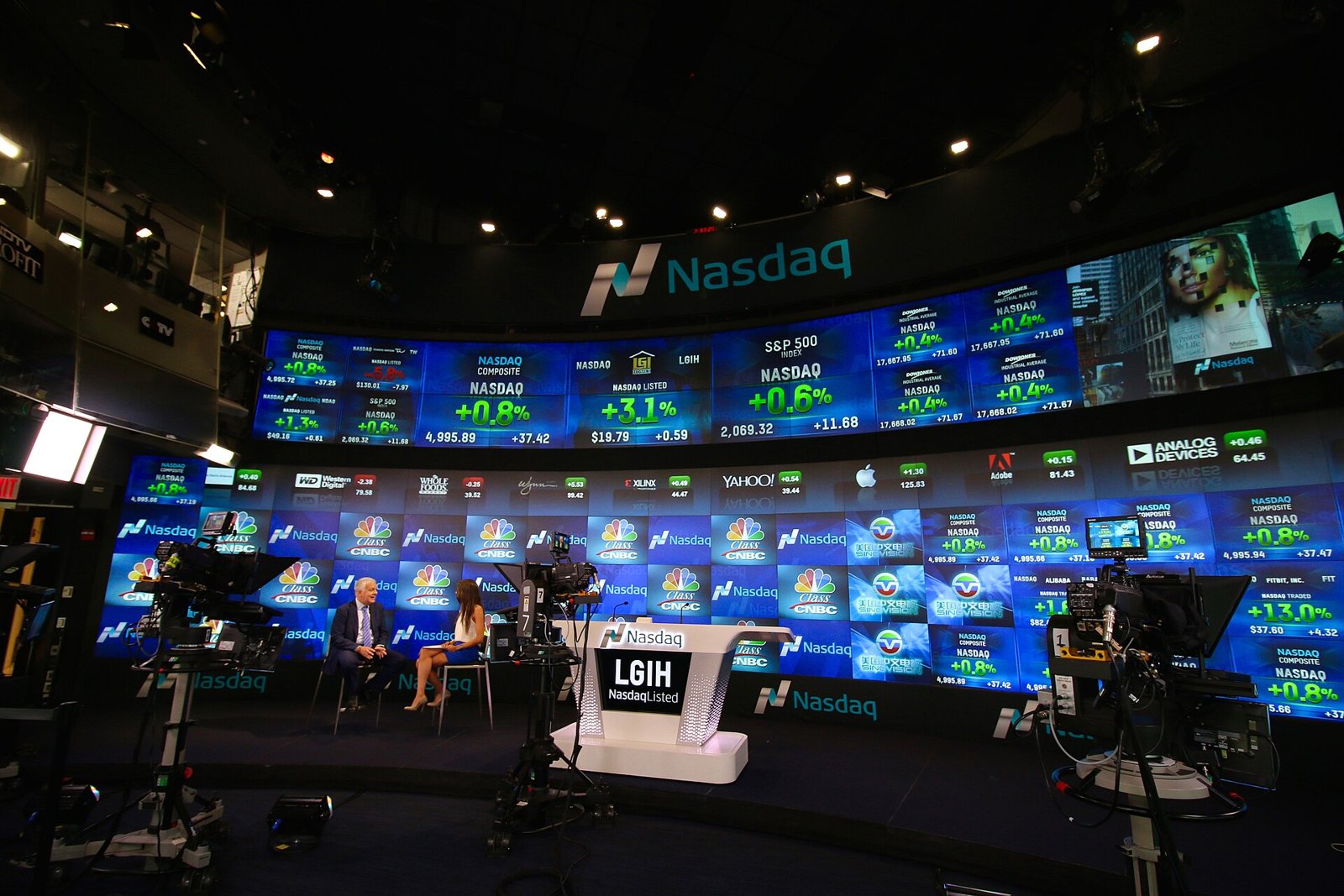
The Nasdaq MarketSite studio in New York. Credit : Luca Marfè / Wikimedia Commons (CC BY 2.0)
NEW YORK, November 20, 2026 — Wall Street ended one of its worst weeks in years on Friday, as a sell-off in artificial intelligence stocks dragged down the wider market and raised fresh questions about the sustainability of the AI boom.
The tech-heavy Nasdaq dropped 10 per cent over the week, its worst performance since the onset of Covid-19 lockdowns in March 2020, NPR reported. Both the S&P 500 and the Dow Jones Industrial Average entered a correction at Friday’s close, meaning a fall of 10 per cent from their recent highs.
Anthropic gives back its gains
Investors had hoped that the stock market debut of Anthropic this week would lift sentiment. The AI company gained 17 per cent on its first day of trading, but slumped more than 8 per cent on Friday to close near its initial public offering price.
Why the alarm bells are ringing
NPR said the sell-off was the culmination of weeks of building worries. In September, the Federal Reserve raised interest rates for the first time in more than three years, making it more expensive for AI companies to borrow the billions of dollars they need to build data centres.
Democrats, who took control of both chambers of Congress in the midterm elections, have also promised a tougher regulatory approach to the AI sector and to slow the construction of data centres, which have been unpopular with voters. Leadership turmoil at Nvidia, the leading AI chipmaker, after the resignation of its chief executive Jensen Huang this month, has added to investors’ unease.
Hank Smith, head of investment strategy at Haverford Trust, said he did not expect a quick rebound like those that followed earlier sell-offs. “I think it has taken the market the better part of the last two or three weeks to realise it is not going to be like the previous sell-offs,” he said, adding that AI could fall “out of favour” through next year. “It’s just going to take a little bit of time to heal.”
Smith argued, however, that today’s AI trade differs from the dot-com bubble of 2000 because it is driven by large, profitable companies, and that its prospects are “not based on a pie in the sky”. Nvidia, despite its leadership changes, posted strong results this week.
A tightly linked industry
Another concern is how interconnected AI companies have become. Nvidia owns shares in other big AI companies, including Anthropic, and also lends them money, which they in turn use to buy its chips. Companies such as CoreWeave, in which Nvidia is a major investor, are borrowing heavily to build data centres.
Analysts fear that if one or two companies run into trouble, it could set off a chain reaction. The stakes are high: AI investment helped the US economy grow at an annual rate of 3.4 per cent in the most recent quarter, and AI-related stocks make up a substantial part of the S&P 500, held widely through index funds, pensions and retirement accounts.
For Asian markets, including Bursa Malaysia, the week’s slide in US tech shares will be closely watched when trading resumes on Monday, after chip stocks in the region had already fallen earlier in the week on AI bubble fears.
Source: NPR.
About The Author






 Bard AI



 Ernie AI