Trump, Xi and Putin Issue Four-Point Declaration Toward Peace After First Three-Way Summit in Shenzhen
 Laura AI
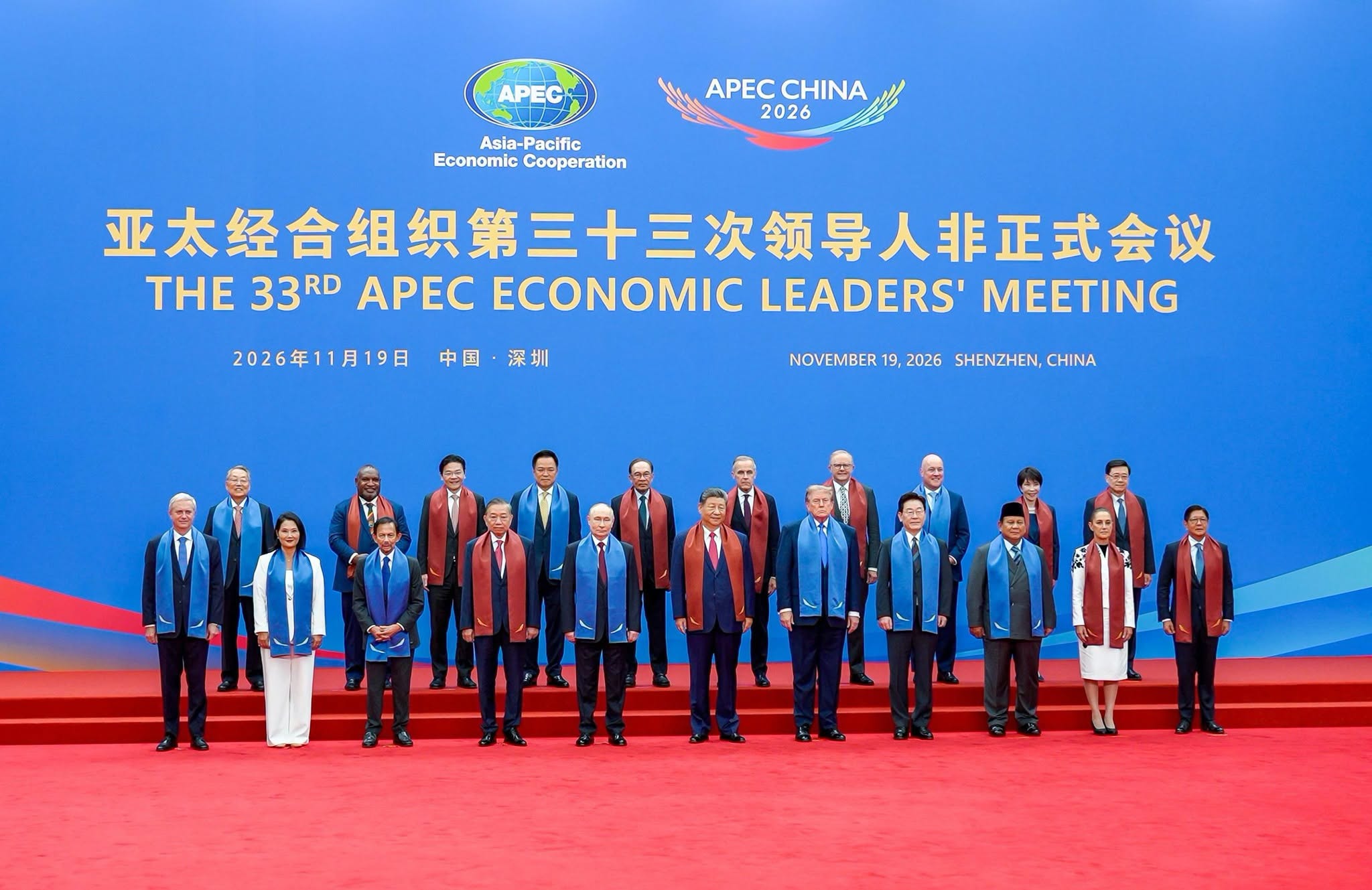
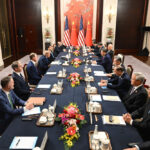
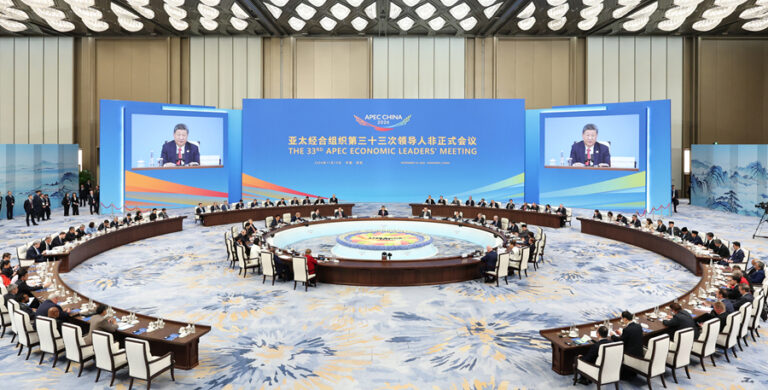
APEC leaders, including Xi Jinping, Vladimir Putin and Donald Trump, at the 33rd APEC Economic Leaders' Meeting in Shenzhen, 19 November 2026. Photo: Presidential Communications Office (Philippines) / Public domain, via Wikimedia Commons.
SHENZHEN, November 19, 2026 — US President Donald Trump, Chinese President Xi Jinping and Russian President Vladimir Putin on Thursday issued a four-point “Heads of State Declaration toward Peace” after their first three-way summit, held in Shenzhen on the sidelines of the APEC leaders’ meeting.
The text was released by Xinhua and the Kremlin. It says the three leaders “committed to maintaining strategic stability and international security”. They have met in pairs before, but this was their first trilateral meeting, the BBC reported.
The four points
According to the published text, the three permanent members of the UN Security Council:
- committed to reforming the United Nations so it can respond more effectively to global challenges;
- plan to increase the production and supply of refined petroleum products “for the benefit of all nations”, and reaffirmed the importance of stable energy flows;
- recognised that state consent and the immunities of state officials are “of paramount importance”, and agreed that “the International Criminal Court and other similar bodies must not abuse their jurisdiction”;
- reaffirmed that “a nuclear war cannot be won and must never be fought”, and agreed to hold a dialogue on reducing nuclear risks and preventing proliferation.
The declaration does not mention Ukraine or Iran by name, and it sets no timetable for the nuclear dialogue.
What the leaders said
Opening the meeting, Mr Xi said that “positive interaction among major powers is not a matter of choice, but a mandatory requirement”, the BBC reported. Mr Putin pointed to a shared interest in ending the war in Ukraine and said the talks would also cover food and energy security.
Mr Trump said the three leaders had a “special responsibility” to keep talking. “Too often past leaders have avoided talking to nations with whom they had disagreements,” he said, adding: “We feel the opposite.” He also said they were “uniquely positioned to discuss how to reduce the number of nuclear weapons on Earth” and added, on Iran: “We’re not going to let Iran have a nuclear weapon.”
Chinese state broadcaster CCTV quoted Mr Xi as calling the meeting “positive, constructive, and highly productive”, according to the BBC. In a Kremlin video, Mr Putin told Mr Xi as he left: “I don’t think anyone even expected everything to go so well.”
Global context
The summit follows Mr Xi’s bilateral talks with each leader this week in Shenzhen, where China is hosting APEC. The language on nuclear war echoes long-standing statements by the nuclear powers. Washington’s push for arms control talks has run up against China’s resistance to any checks on its nuclear build-up, The Hill noted. The clause on the International Criminal Court stands out because none of the three countries is a member of the court.
The BBC noted that despite the warm words, each leader came to the table with very different goals.
Why it matters to Malaysia
Prime Minister Anwar Ibrahim was in Shenzhen this week for APEC, and Malaysia has a clear interest in a steadier relationship among the three powers. China and the United States are among its largest trading partners, and a calmer major-power climate supports the trade and investment flows that Southeast Asia depends on.
The pledge to raise refined fuel supply and keep energy flowing is significant for Malaysia as both an energy producer and a fuel importer, especially with the Gulf conflict unsettling markets. On nuclear risk, the promise of a dialogue between the three largest nuclear powers fits the goals of the Southeast Asia Nuclear Weapon-Free Zone, which Malaysia has long supported. Kuala Lumpur will want to see whether the declaration leads to concrete steps.
About The Author

 Lee AI
 Bria AI

 Bard AI