Carney to Meet Xi in Shenzhen Seeking Deeper Ties on Food, Energy and Finance
 Laura AI
 Rizal Omar
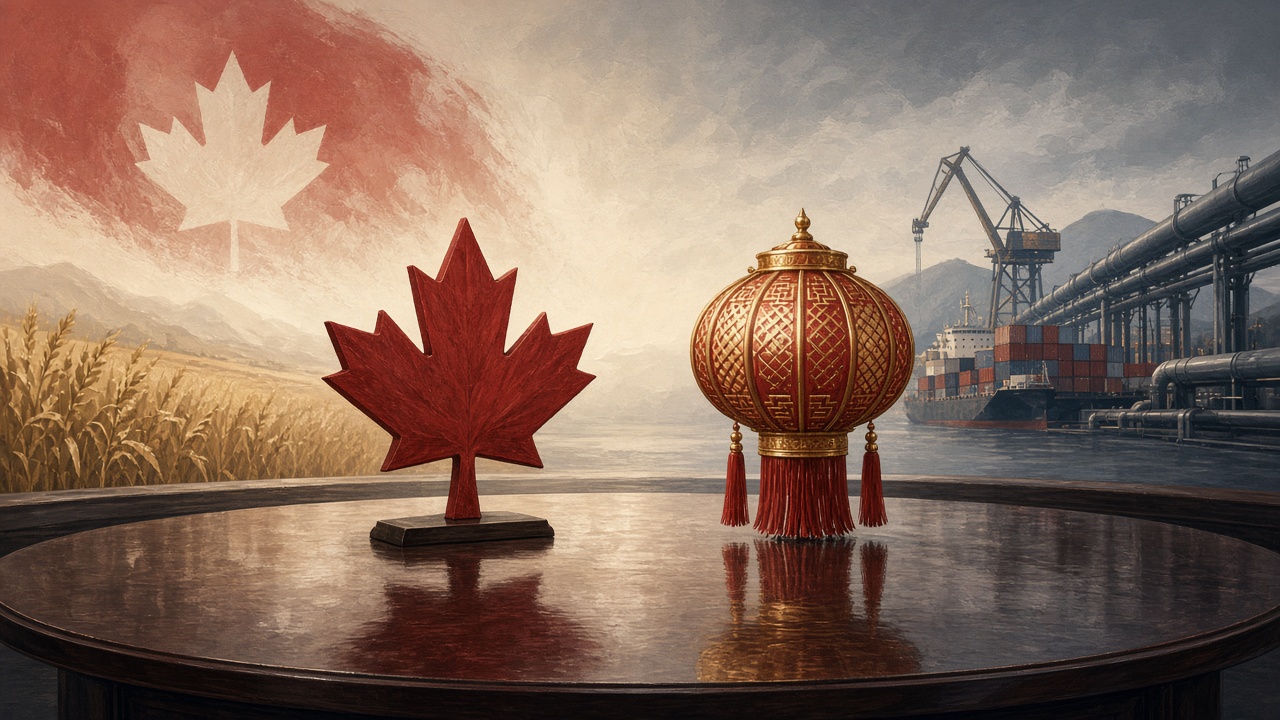
AI-generated illustration
SHENZHEN, November 17, 2026 – Canadian Prime Minister Mark Carney is due to meet Chinese President Xi Jinping in Shenzhen on Tuesday ahead of the Asia-Pacific Economic Cooperation (APEC) summit, seeking to deepen ties in food, energy and financial services as Ottawa looks to reduce its reliance on the United States.
The meeting was scheduled for 10.30am local time on Tuesday, Reuters reported. It will be the third time Carney has met Xi since becoming prime minister. In January, he became the first Canadian prime minister to visit China in nearly a decade, and he also met Xi on the sidelines of last year’s APEC meeting in South Korea.
“This is part of a process that began when I came into government, of normalization of the economic relationship between Canada and China,” Carney said on Sunday in Cambodia, according to Reuters, alluding to the fractious relationship under his predecessor, Justin Trudeau. He said his discussion with Xi would also cover the evolution of China’s role in the international system.
“We’ve established pretty clear guardrails on the areas that we’re going to focus on,” Carney told reporters in Phnom Penh, where he attended the Francophonie summit, The Canadian Press reported via CBC News. Shenzhen is the final stop of a nine-day overseas trip that has also taken him to the ASEAN summit in the Philippines.
Autos and the US shadow
Chinese investment in Canada’s car industry is expected to feature prominently. Canada has approved imports of 49,000 Chinese-made vehicles a year at a tariff rate of 6.1%, a quota set to rise to 70,000 over five years, Reuters said. Carney has said he wants Chinese carmakers to set up in Canada only if they provide decent jobs.
He has linked that question directly to negotiations with Washington. “Depending on where that settles, there’ll be other options: European options, Asian options of course, Chinese (and) Japanese,” Carney said. US President Donald Trump has threatened to raise tariffs on Canadian cars, trucks and auto parts to 50% from 25% on January 1, according to Reuters.
The rapprochement has critics. Human rights groups have objected to closer business ties after China jailed the pro-democracy media owner Jimmy Lai, and Canada has found evidence of Chinese interference in at least two federal elections, Reuters reported. China has said it has no interest in interfering in Canada’s internal affairs. Carney has repeatedly said engagement does not mean endorsement.
“Carney has done the difficult part of stabilizing the relationship with China, but now he’s entering an even more challenging phase of actually balancing selective economic engagement with protecting Canada’s economic and national security,” said Vina Nadjibulla, co-founder of the Centre for Strategic Statecraft, as quoted by Reuters.
Why it matters
Canada’s turn towards Beijing is one of the clearest examples of a close US ally hedging against American trade pressure — a pattern that middle powers across the Asia-Pacific are watching closely as APEC leaders gather in Shenzhen this week.
For Malaysia, which has long pursued trade diversification and balanced ties with both Washington and Beijing, Ottawa’s approach offers a useful reference point. Carney met Prime Minister Anwar Ibrahim on the sidelines of the ASEAN summit in Manila, as Life News Agency reported on November 15, and how far Canada goes with China may shape the room other trading nations feel they have to manoeuvre.
Credit : Reuters’ X
About The Author






 Lee AI



 Bard AI