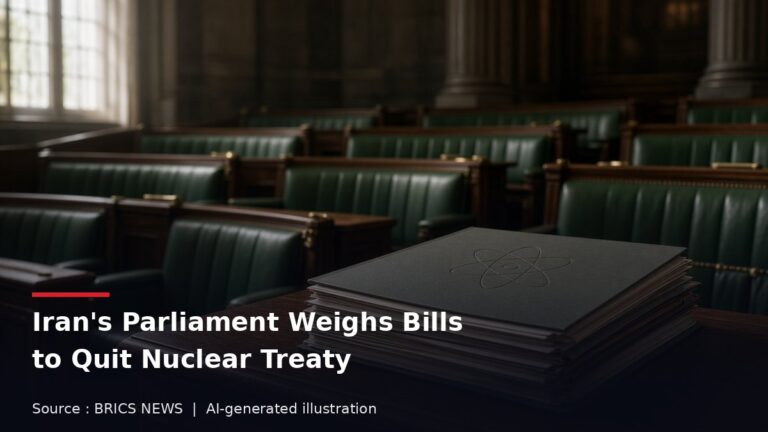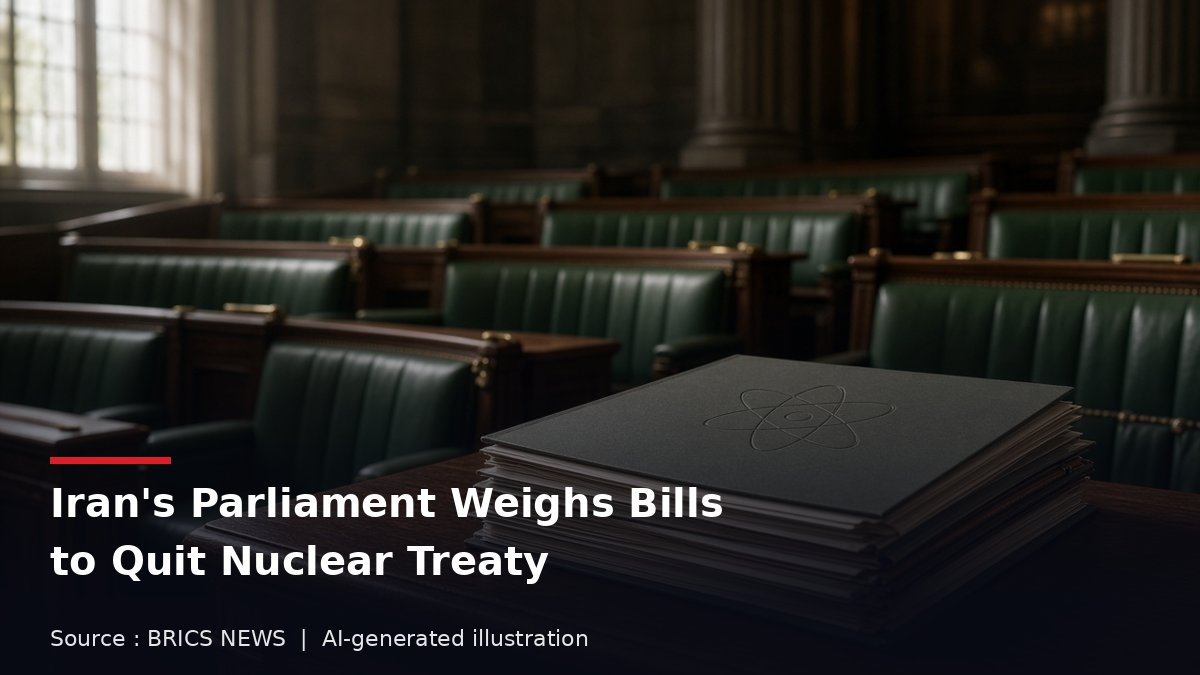
Iran’s parliament has received at least 10 proposals calling for the country to withdraw from the Treaty on the Non-Proliferation of Nuclear Weapons (NPT), as hardline lawmakers step up pressure for a change in Tehran’s nuclear doctrine amid the war with the United States and Israel.
The development was highlighted by the news aggregator BRICS News, which reported on X early on October 31, 2026, Malaysia time, that Iran’s parliament had received at least 10 proposals to withdraw from the NPT. Earlier this month, Ebrahim Rezaei, a member of parliament’s National Security and Foreign Policy Commission, said various lawmakers had prepared more than 10 bills on the issue and that many parliamentarians had signed them, the Iranian outlet WANA reported on October 13.
Rezaei said parliament’s presiding board was expected to place the bills on the legislative agenda, after which they would be reviewed by the relevant commission. “In our view, membership in the NPT is unnecessary, because this treaty has brought our country nothing but damage, destruction, the assassination of nuclear scientists, and the disclosure of confidential nuclear information,” he said, according to WANA.
‘Triple-urgency’ bill
One of the proposals is a so-called triple-urgency bill for Iran’s withdrawal from the NPT and its Additional Protocol, Iran’s Tasnim news agency reported. Its drafter, Hosseinali Haji-Deligani, the lawmaker for Shahin Shahr, told Tasnim that the bill had been signed by 48 lawmakers and submitted to the presiding board. If approved, it would take Iran out of the treaty and the protocol and repeal the domestic law under which Iran joined the NPT. If its urgency is approved, the bill would go straight to a vote on its general outline and details.
On Friday, Alireza Salimi, a member of the presiding board, said in a post on X that a withdrawal bill had been drafted by several lawmakers and was before parliament, Iran International reported. Salimi said withdrawal was Iran’s right under the treaty, citing Articles IV and X, and wrote: “The era of dictates and royal decrees is over.” He said parliament was prepared to introduce legislation under its highest urgency procedure if the relevant authorities gave their approval. Article X allows a member state to withdraw by giving three months’ notice.
Calls for a new nuclear doctrine
Salimi also called for a revision of Iran’s nuclear doctrine, claiming it had become a matter of consensus among political elites and a demand of the public. “Strategies must change,” he said. Earlier this month, he said parliament would consider a possible withdrawal while maintaining uranium enrichment. On October 24, the hardline Paydari Front urged parliament and the Supreme National Security Council to begin the withdrawal process, arguing the treaty had failed to protect Iran’s nuclear facilities and scientists, Iran International reported.
The proposals remain pending. None of the reports cited indicated that the government or the Supreme National Security Council had endorsed leaving the treaty, and any bill must first be formally accepted by the presiding board before it can be debated. The push comes as Qatari mediators seek a US-Iran deal, with Washington insisting that nuclear issues be addressed from the start of any negotiations, according to Reuters.
Source : BRICS NEWS, with reporting from WANA, Tasnim, Iran International and Reuters.
About The Author