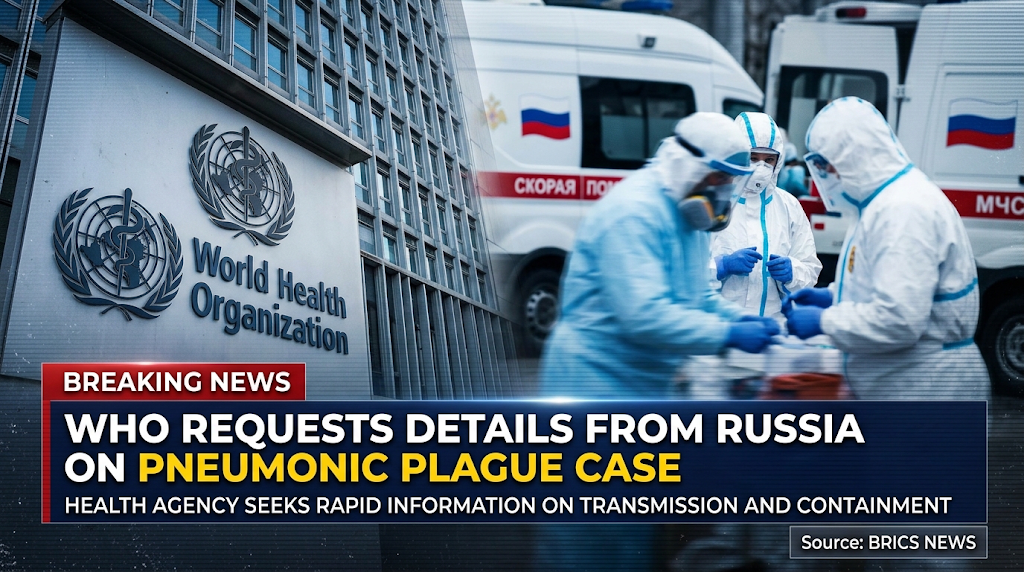
GENEVA Oct. 7, 2026 — The World Health Organization (WHO) has officially requested additional epidemiological information from Russian health authorities regarding a reported case of pneumonic plague within the country.
The inquiry aims to clarify the circumstances of the infection, assess the risk of transmission, and review the containment measures currently in place.
Pneumonic plague, caused by the bacterium Yersinia pestis, is the rarest, most severe, and highly contagious form of the plague. Unlike the more common bubonic variant, pneumonic plague directly infects the lungs and can be transmitted from person to person through airborne respiratory droplets, making rapid public health intervention critical.
Specific details regarding the exact location of the case, the patient’s current condition, and the status of potential contacts have not yet been broadly disclosed. Under International Health Regulations, the WHO routinely requests expedited data from member states when highly transmissible diseases are detected to ensure global public health safety.
Russia occasionally records isolated plague cases, most notably in remote areas such as the Altai Mountains or regions bordering Mongolia. These cases are historically linked to exposure to infected wildlife, such as marmots, via flea bites or the handling of infected animals. However, human-to-human transmission of the pneumonic form typically triggers heightened domestic and international surveillance protocols.
Global health officials are currently awaiting Moscow’s official response to the WHO’s data request. Further updates are expected as local authorities provide a detailed epidemiological breakdown and outline their active containment strategy.
About The Author