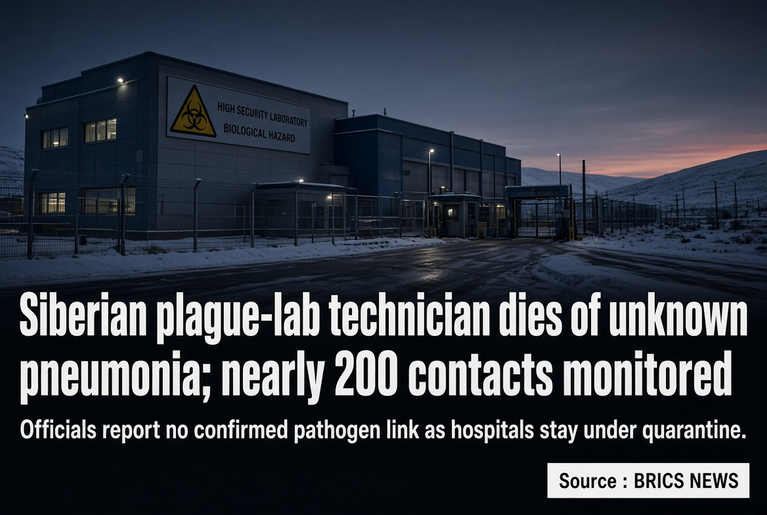
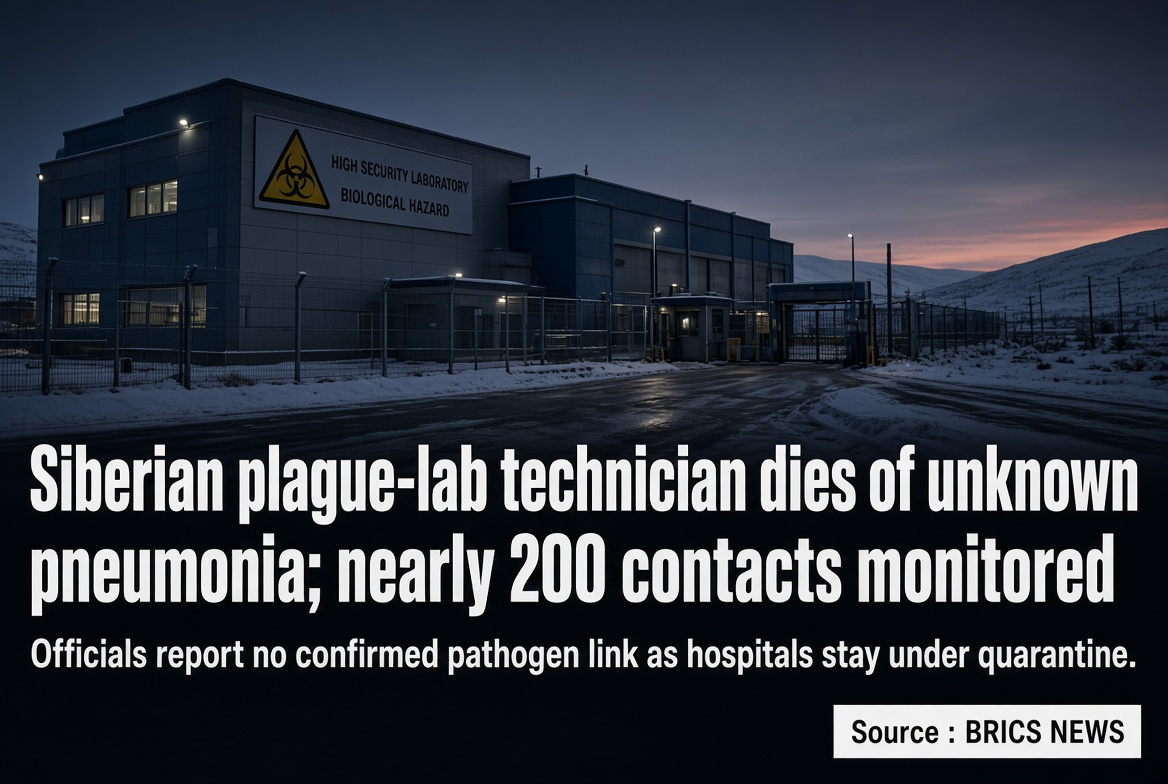
SIBERIA Oct 5, 2026 – A 28-year-old laboratory technician at Russia’s Irkutsk Anti-Plague Research Institute died of pneumonia of unknown origin last week, prompting quarantines and medical observation for nearly 200 contacts even as federal health officials said tests found no link to the pathogens she handled at work.
Darya Shipilova was hospitalised on 29 September in Shelekhov, about 20 kilometres from Irkutsk, and died overnight between 1 and 2 October, according to regional officials and local media. Russia’s public-health agency, Rospotrebnadzor, said she was diagnosed with “pneumonia of unknown etiology.” Expanded testing of her samples detected no microorganisms associated with her professional duties, the agency said, and an inspection of the institute found no emergency involving pathogenic organisms. The sanitary situation in Irkutsk and Shelekhov was described as stable, with no further cases reported among institute staff.
Unconfirmed accounts from independent Siberian outlets, including Lyudi Baikala, said Shipilova accidentally broke a test tube containing live Yersinia pestis — the bacterium that causes plague — around 25 September while working at the high-security laboratory. Officials have not confirmed that account. Other reports have pointed to a recent trip to neighbouring Buryatia, where plague circulates naturally among wild rodents such as marmots. The head of Buryatia, Alexey Tsydenov, initially wrote that she had died of plague, then edited the post to say she had “possibly” died of the disease.
Precautionary measures have been extensive. More than 60 institute staff were reported isolated at the workplace. Almost 200 contacts — colleagues, family members and healthcare workers — were placed under medical observation. The inpatient department of the Shelekhov hospital where she was treated was closed to admissions and discharges, and local media said several other hospitals in the region, including a maternity ward, were also restricted. Contacts under monitoring have so far shown no signs of the same illness; a small number tested positive only for common respiratory viruses.
The Irkutsk institute, founded in 1934, researches plague control, vaccines and other dangerous infections including cholera, brucellosis and anthrax. Pneumonic plague, the lung form of the disease, can spread person to person and is fatal without prompt antibiotics, but modern treatment is effective when given early and outbreaks are rare.
The United States said it was monitoring the case. President Donald Trump said Washington was looking at it “very strongly.” Secretary of State Marco Rubio described the reports as cause for focus but not alarm, noting Russian quarantine measures and the absence of confirmed wider spread.
About The Author