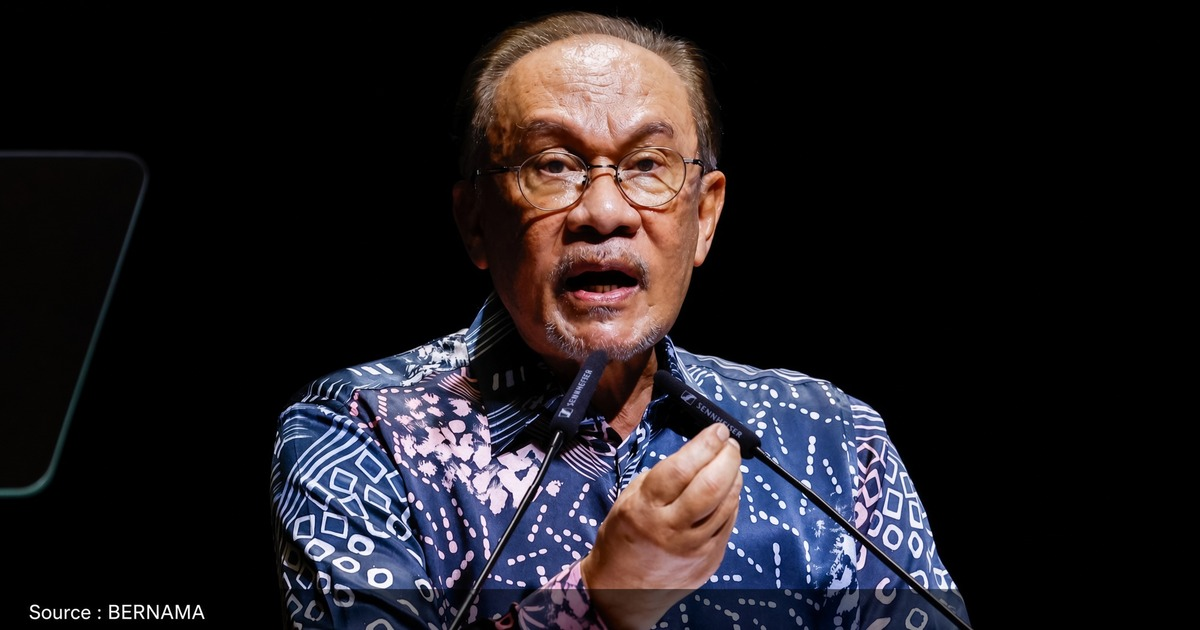
PUTRAJAYA, Sept 2 2026 — Prime Minister Datuk Seri Anwar Ibrahim on Wednesday expressed grave concern over the latest exchange of strikes between the United States and Iran, warning that the fighting now risks drawing the wider Middle East into a more destructive war.
In a statement posted on X, Anwar said the renewed hostilities had “extended beyond the immediate parties and into other states in the region.” He called on both sides to stop further military action and return immediately to diplomacy and the understandings reached in June.
“The party with the greatest capacity to shape events bears a particular responsibility to exercise restraint and prevent further escalation,” he said. “The sovereignty of other states cannot be cast aside. No military objective justifies exposing civilians to an expanding conflict.”
Anwar also criticised economic measures that inflict hardship on civilians and impede diplomatic engagement, saying they risked worsening rather than resolving the crisis.
“This conflict can ultimately be resolved only through political and diplomatic means,” he wrote. “The world must not be made to pay the price for a wider regional war.”
The statement was accompanied by an AFP photograph of damage at a coastal facility.
The remarks follow a sharp flare-up that ended a period of relative calm. US Central Command said American forces struck Islamic Revolutionary Guard Corps targets in Iran, including air-defence sites, radar systems, maritime assets and mine-laying capabilities, after what Washington described as Iranian attempts to attack commercial shipping in the Strait of Hormuz and US forces in the region. President Donald Trump called the operation “large and powerful” and warned of a harsher response if Iran retaliated.
Iran’s Revolutionary Guards said they responded with ballistic missiles and drones against US-linked facilities in Jordan, Bahrain and Iraq. Jordan said it intercepted most of the incoming missiles; Bahrain and Kuwait reported air-defence activity. Iranian officials and media also reported civilian deaths, including at a wedding near Sirik after a US strike.
The Strait of Hormuz, a critical energy corridor, has been at the centre of the conflict since fighting intensified earlier this year. A June understanding between Washington and Tehran was meant to halt hostilities and restore shipping, but both sides have repeatedly accused the other of violating it.
Malaysia has consistently argued that the waterway must remain open and that the dispute can only be settled through talks. Anwar has previously welcomed mediation efforts, including by Pakistan and Gulf states, and has stressed the impact of Hormuz disruptions on energy prices, trade and livelihoods in Asia.
His latest statement stops short of assigning exclusive blame, but places particular responsibility on the side with greater military capacity — widely read as a reference to the United States — to exercise restraint, respect other states’ sovereignty and avoid measures that punish civilians.
About The Author