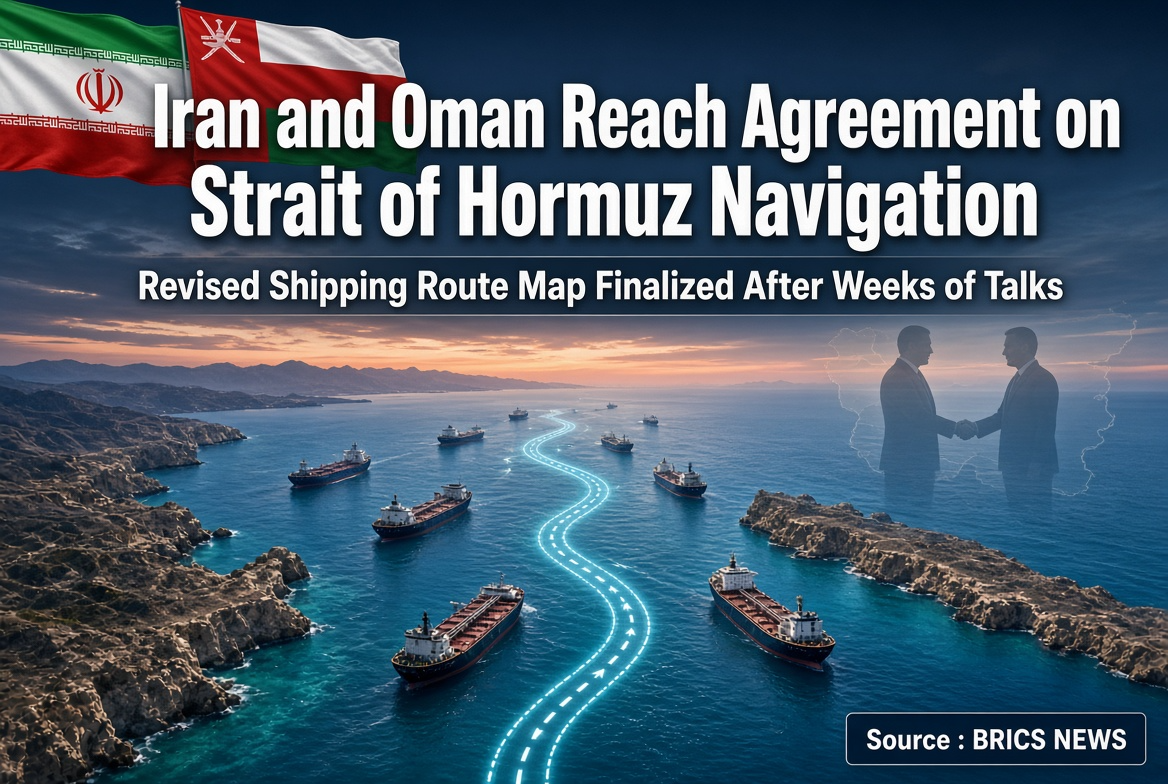
TEHRAN Aug 15, 2026 — Iran and Oman have reached an agreement on a revised shipping route map for the strategic Strait of Hormuz after weeks of technical talks between the two coastal states, Iranian Foreign Ministry spokesman Esmaeil Baghaei announced on Saturday.
Baghaei said the deal followed intensive negotiations that began roughly three months ago in the wake of a June memorandum of understanding aimed at establishing safe navigation routes through the vital waterway. “Despite US obstruction, the talks have made positive progress over the past three weeks, and an agreement has been reached on the shipping route map,” he stated.
The arrangement is the product of coordination led by Iran’s Foreign Ministry, involving defense, security, and environmental authorities. Officials described it as an independent bilateral understanding between the two littoral states focused on ensuring safe passage for vessels while upholding the sovereignty and sovereign rights of both countries over their territorial waters in the strait.
Baghaei noted that discussions on remaining issues, including a formal joint statement, are ongoing and that exchanges between Tehran and Muscat will continue until the process is fully finalized.
However, he stressed that the agreement alone does not restore full security or allow the resumption of normal commercial shipping. Full reopening of the Strait of Hormuz, which handles a significant share of global oil and energy shipments, remains contingent on an end to what Iran describes as illegal US actions, military threats, and the ongoing naval blockade, as well as compensation for alleged US breaches of prior commitments.
The development comes amid prolonged disruptions to maritime traffic in the strait following the outbreak of hostilities involving the United States, Israel, and Iran earlier this year. Temporary corridors and working groups had previously been discussed under the framework of the June memorandum, with both sides affirming commitment to safe passage in accordance with international law while asserting control over their respective waters.
International observers note that under the United Nations Convention on the Law of the Sea (UNCLOS), the Strait of Hormuz is subject to the regime of transit passage for international shipping, though Iran is not a party to the convention. The new route map represents a technical step forward in bilateral coordination but leaves broader geopolitical conditions unresolved.
About The Author