LEIPZIG, GERMANY Aug 7, 2026 — An explosive-laden drone discovered on the tarmac of Leipzig/Halle Airport earlier this week was likely operated by the Russian government, according to U.S. intelligence assessments reported on Friday.
The device, a modified quadcopter carrying a fist-sized package of professional explosives believed to include Semtex, was found late on the night of August 4 near parked Ukrainian Antonov An-124 cargo aircraft in a secure cargo area of the eastern German airport. An airport employee spotted the drone hovering low to the ground; one lawmaker later said a bus driver kicked it out of the air, preventing it from reaching its apparent target.
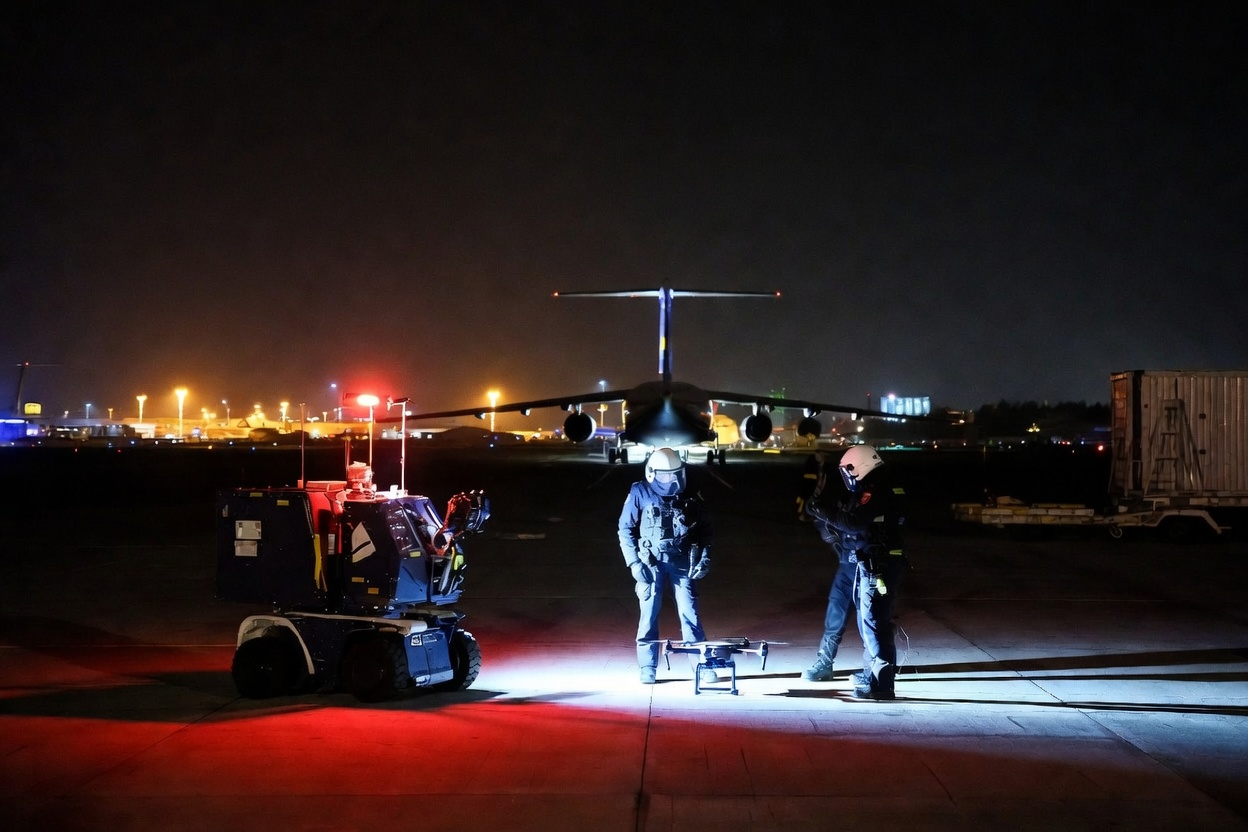
A bomb-disposal robot removed the faulty detonator, and authorities conducted a controlled explosion of the remaining material. The incident forced a temporary shutdown of parts of the airport, one of Europe’s busiest cargo hubs and a key logistics site for NATO’s Strategic Airlift International Solution program as well as Ukrainian military-related shipments. A second unidentified object later collided with a DHL cargo plane that had aborted its approach, causing minor damage.
German Interior Minister Alexander Dobrindt described the event as representing “a new level of danger” and a “professional hybrid threat scenario.” He said investigators could not rule out involvement by foreign powers. Germany’s federal prosecutor has taken over the case, treating it as a serious attack on the country’s transport and logistics infrastructure that threatened both internal and external security.
U.S. officials familiar with intelligence reports told The Wall Street Journal that the drone “likely belongs to the Russian government.” The assessment comes amid broader American warnings that Moscow may seek to test NATO’s resolve through limited provocations in the coming years.
Russian officials have not publicly commented on the specific incident. German authorities have not yet issued an official attribution, though several lawmakers and security experts have pointed to Russia based on the sophistication of the device, its location near Ukrainian aircraft, and a pattern of prior suspected sabotage and drone activity across Europe.
Leipzig/Halle Airport resumed normal operations shortly after the discovery, but the episode has heightened concerns about hybrid warfare tactics targeting critical infrastructure in NATO countries. Investigations by German federal and state authorities continue.
About The Author