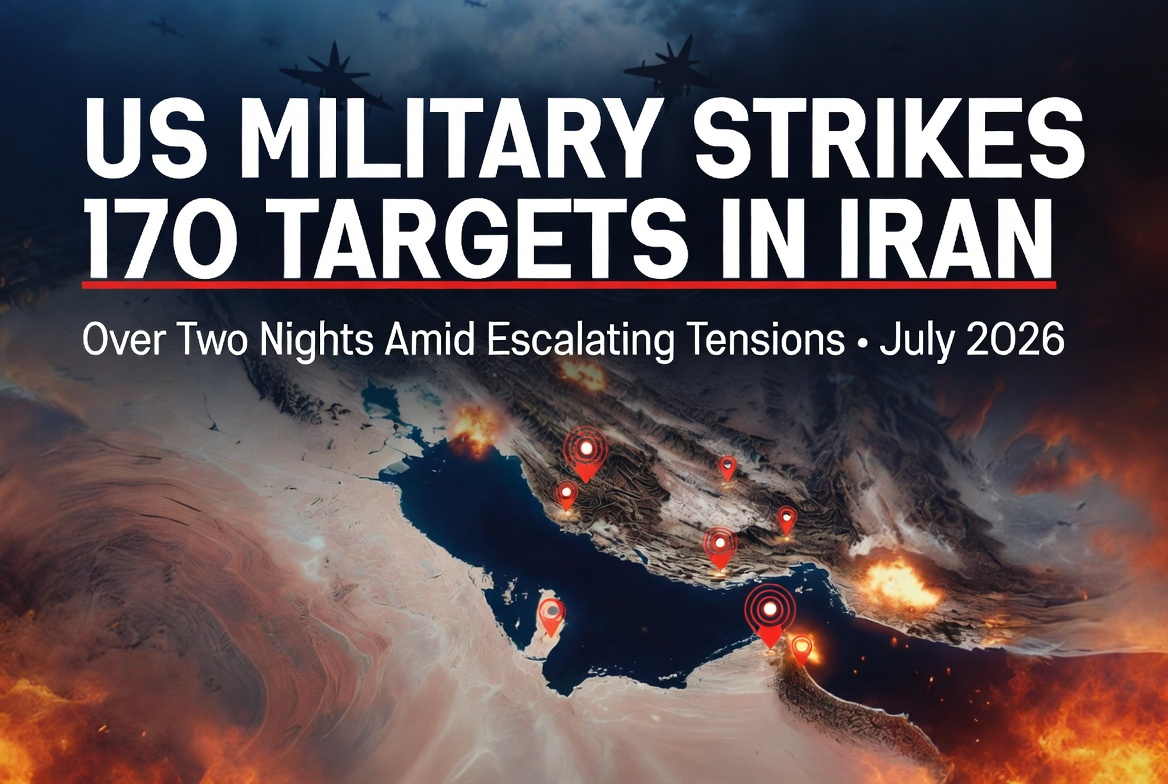
WASHINGTON D.C July 9, 2026 – The U.S. Central Command (CENTCOM) has confirmed that American forces struck a cumulative total of roughly 170 Iranian military targets over the past two nights, according to statements and live reporting from the region.
The strikes came in two waves:
- On July 7, approximately 80 targets were hit, including more than 60 Islamic Revolutionary Guard Corps (IRGC) small boats.
- On July 8, an additional round targeted approximately 90 sites.
Targets included air defense systems, coastal surveillance assets, missile and drone storage facilities, naval capabilities, and military logistics infrastructure along Iran’s southern coastline.
The U.S. actions were described as a direct response to Iranian attacks on commercial vessels transiting the strategic Strait of Hormuz. Iran had struck three commercial ships in the waterway, prompting the U.S. to impose heavy costs for violating a fragile ceasefire agreement reached in June 2026.
President Donald Trump declared the ceasefire “over” amid frustration that the strait had not been fully reopened and following the ship attacks during the NATO summit period. He warned that further Iranian aggression against shipping could lead to even stronger U.S. responses.
Iran’s Revolutionary Guards retaliated with missile and drone attacks targeting U.S. military facilities in Bahrain and Kuwait. Iranian officials have vowed continued retaliation and stated that the Strait of Hormuz “will only open with Iranian arrangements.”
Explosions and damage were reported in several southern Iranian locations, including areas near Bandar Abbas, Bushehr, Chabahar, and other coastal and port facilities. Iranian state media reported casualties among military personnel and some civilian impacts from debris.
Oil prices surged on the news, with Brent crude rising over 5% at one point, reflecting global concerns about potential disruptions to one of the world’s most critical oil shipping routes (through which roughly 20% of global oil passes).
The escalation marks the latest chapter in the ongoing 2026 U.S.-Iran conflict, which had seen a temporary easing through a June memorandum aimed at stabilizing shipping lanes and opening pathways for further talks.
U.S. officials emphasized that the strikes were precision operations focused on degrading Iran’s ability to threaten international commerce and civilian mariners. CENTCOM stated that forces “remain vigilant, lethal, and prepared to execute operations directed by the Commander in Chief.”
This development was first highlighted in real-time reporting on social media, including posts from geopolitics-focused accounts citing U.S. military claims.
The situation remains fluid, with both sides exchanging threats and the international community watching closely for further escalation or signs of de-escalation.
About The Author