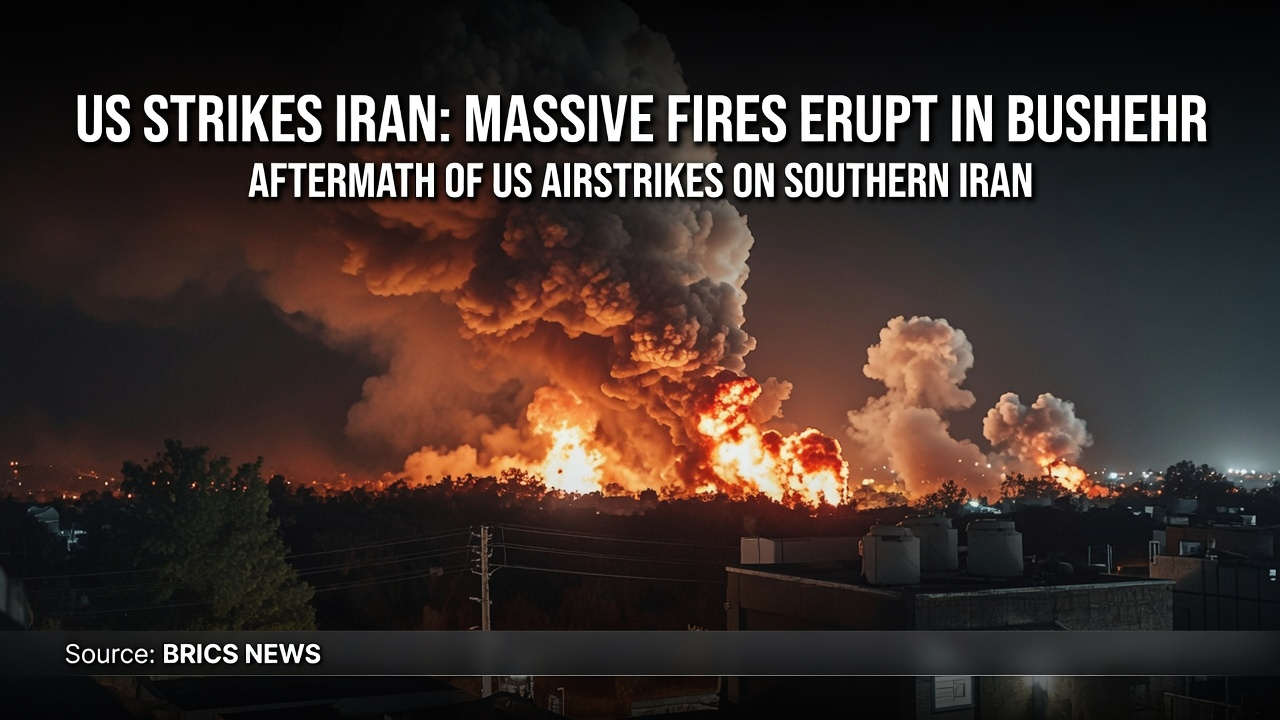
BUSHEHR, IRAN July 8, 2026 – Dramatic nighttime video footage circulating online shows massive fires and explosions lighting up the sky in Bushehr, southern Iran, following reported US military strikes on Iranian targets.
The video, shared by accounts including @BRICSinfo, depicts bright orange flames, thick plumes of smoke, and sparks rising from what appears to be an industrial or military area. Buildings and infrastructure are visible in the foreground against the fiery backdrop. The clip has quickly gained traction amid reports of escalating US-Iran tensions.
According to the US Central Command (CENTCOM), American forces carried out a series of strikes on July 7–8, 2026, targeting more than 80 Iranian sites in and near the Strait of Hormuz. These included air defense systems, command and control networks, coastal radar sites, anti-ship missile capabilities, and numerous Islamic Revolutionary Guard Corps (IRGC) small boats.
The operation was described as a response to Iranian attacks on three commercial vessels transiting the vital waterway, which handles a significant portion of global oil trade. CENTCOM stated the strikes aimed to “impose heavy costs” for endangering international shipping and to degrade Iran’s ability to threaten freedom of navigation.
Explosions were reported across southern Iran, including the Bushehr region, where state media and local accounts documented blasts and fires. Bushehr is home to Iran’s only operational nuclear power plant, though reports so far indicate strikes focused on military targets rather than the reactor itself.
The latest strikes come amid a fragile and recently broken ceasefire in the ongoing 2026 Iran conflict. US President Donald Trump declared the truce over, and the administration reimposed sanctions on Iranian oil sales. Iran has vowed retaliation, with reports of Iranian strikes targeting US military sites in Bahrain and Kuwait.
Oil prices have risen sharply on concerns over supply disruptions in the Strait of Hormuz.
Global leaders and analysts have urged de-escalation to avoid further civilian harm and broader regional instability. The exchange of strikes risks disrupting global energy markets and drawing in other actors.
The situation remains fluid, with both sides accusing the other of violating agreements and threatening further action. Observers are closely monitoring developments for signs of diplomatic off-ramps or further military escalation.
About The Author