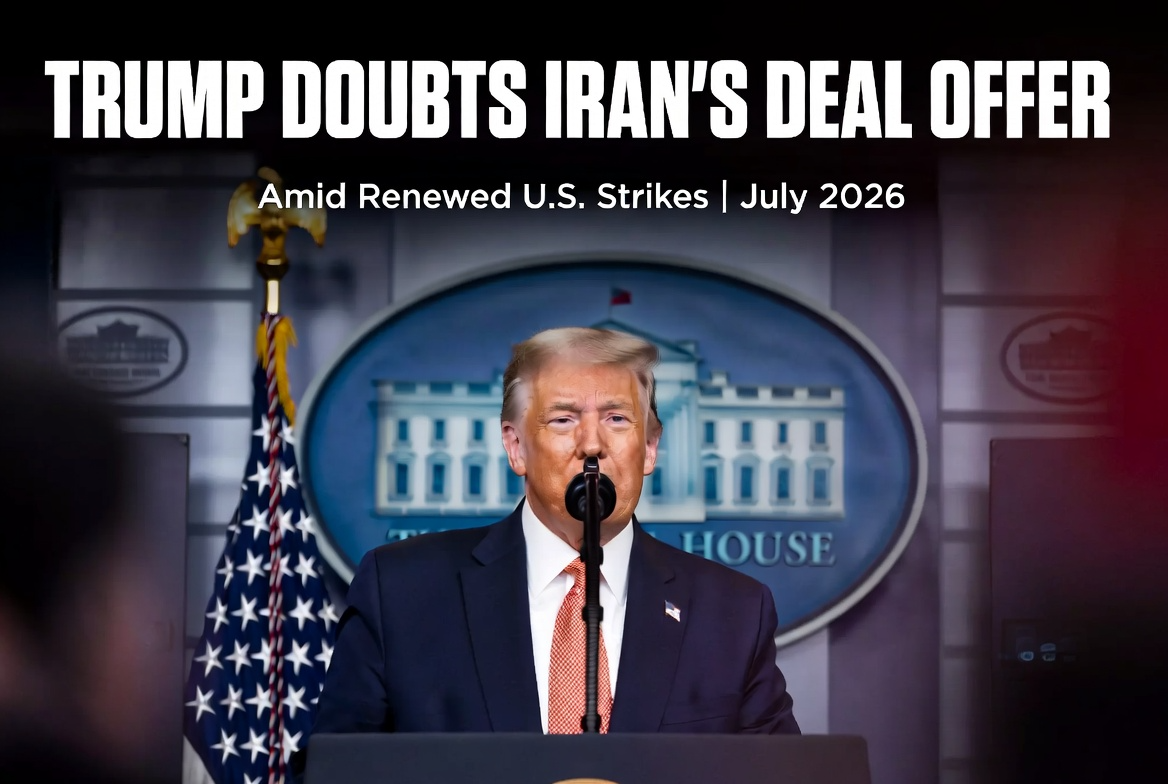
WASHINGTON, D.C. July 8, 2026 – President Donald Trump said Iran recently contacted the United States seeking a new agreement to de-escalate hostilities, but he voiced strong doubts about whether Tehran is serious or would honor any commitments.
Speaking to reporters, Trump stated: “They called a little while ago. They want to make a deal so badly — I just don’t know if they’re worthy of making a deal. I don’t know that they’re going to honor the deal. That’s the problem.”
The remarks, shared by the White House’s official Rapid Response account on X, come after the United States carried out a new round of strikes on Iranian targets earlier this week.
In mid-June 2026, Trump and Iranian officials signed the “Islamabad Memorandum,” a preliminary agreement aimed at ending the conflict between the U.S., Iran, and Israel. The deal included provisions for Iran to dilute its stockpile of highly enriched uranium, sanctions relief allowing oil exports, and measures to secure the Strait of Hormuz. It was framed as an interim step toward broader negotiations.
However, the ceasefire quickly unraveled. By early July, reports emerged of Iranian strikes on commercial shipping and renewed U.S. military action against Iranian targets. Trump had previously declared the interim agreement “over.”
The latest Iranian outreach reportedly followed the most recent U.S. strikes. Trump’s comments reflect ongoing skepticism rooted in past experiences with Iranian compliance on nuclear and regional security issues.
White House rapid response posts and contemporaneous social media reports indicate the statement was made shortly after the strikes, with the President highlighting both Iran’s apparent eagerness for talks and his concerns over trustworthiness.
Public and online reactions have been divided. Supporters of a hardline approach have urged the administration to continue military pressure rather than negotiate, citing Iran’s history of alleged violations. Critics have questioned the consistency of U.S. messaging and the cycle of strikes and diplomacy.
The situation remains fluid, with military operations ongoing and diplomatic channels apparently still active despite the breakdown of the June agreement.
This marks the latest chapter in the prolonged U.S.-Iran tensions that have included direct strikes, proxy conflicts, and multiple rounds of negotiations throughout 2025 and 2026.
Further updates are expected as both sides assess next steps.
About The Author